
A buckled seat belt still needs a fit check
The click confirms a latch. The belt’s path across the chest and hips determines whether the restraint is being worn as intended, in a truck cab or the family car.
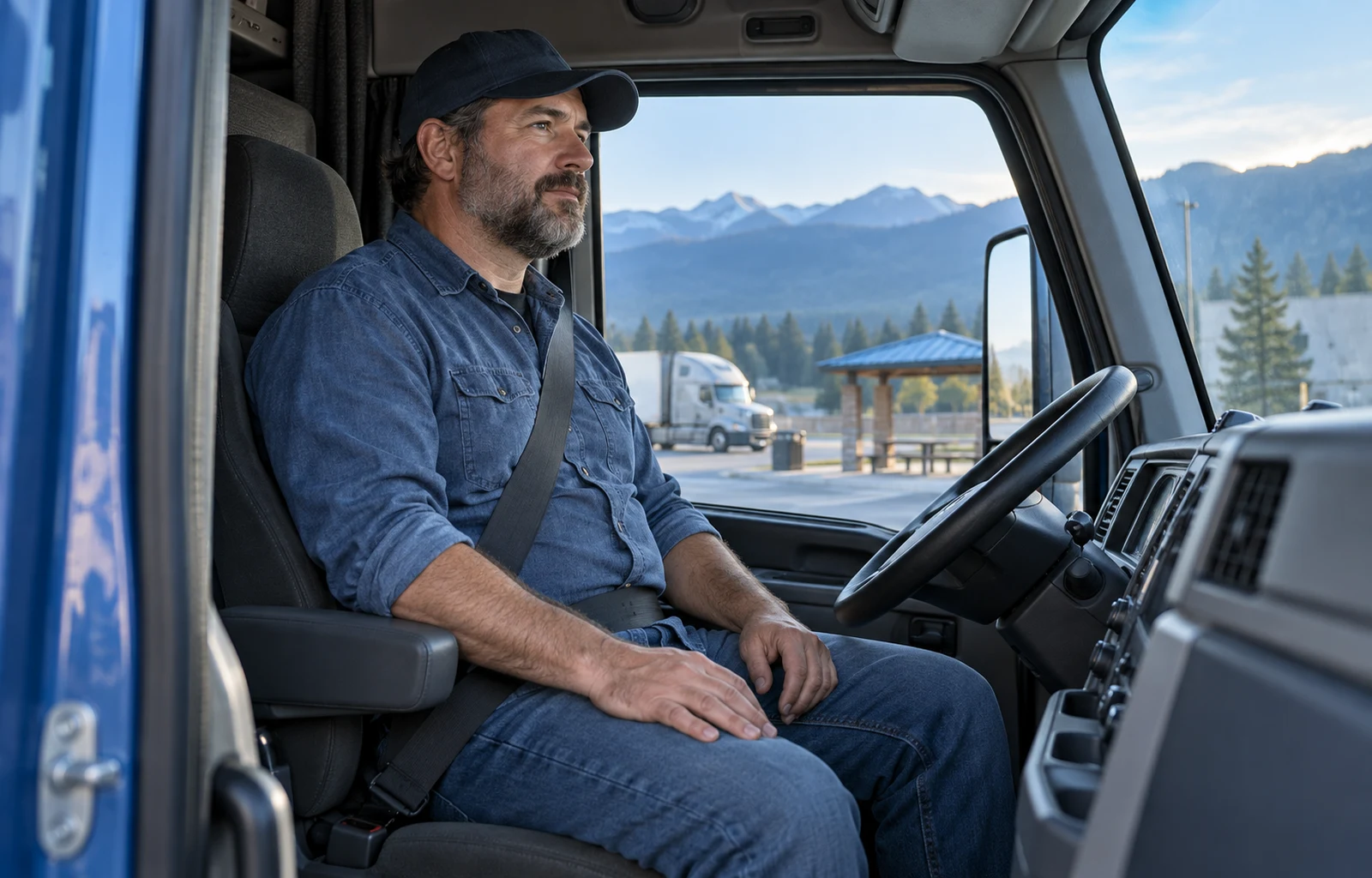
A departure check can end too soon at the sound of a seat-belt buckle. A shoulder strap tucked under an arm or a lap belt riding across the stomach may still latch, but that is not the fit the restraint is designed to provide. This resource uses federal safety guidance checked October 18 to answer a practical question for delivery drivers, commuters and families: what should be checked between taking a seat and moving the vehicle? It reports existing guidance, rather than a new rule or crash investigation.
NHTSA explains that a lap-and-shoulder belt places restraint across the pelvis and rib cage, parts of the body better able to withstand crash forces. Its adult guidance puts the shoulder portion across the middle of the chest, away from the neck, and the lap portion across the hips rather than the stomach. The shoulder portion must not go behind the back or under an arm. MilesNews practical advice: look at the whole belt path before departure, rather than use the dashboard reminder going dark as the only confirmation. That small pause is particularly useful when a different person has just used the seat.
Comfort problems deserve an equipment adjustment, not a shortcut around the shoulder. NHTSA advises asking a dealer about belt adjusters and contacting the vehicle manufacturer when a roomier belt or extender is needed. For a working truck, MilesNews recommends resolving a fit problem with the fleet and the vehicle’s instructions while safely parked. A driver should not have to improvise a belt arrangement to finish a shift. Repositioning the seat for comfortable control should be followed by another look at the belt; the adjustment changes where the occupant sits in relation to the restraint.
Industry sponsor Run the whole trip in one connected TMS.
See it in action ↗
The reason for doing this on a short trip is the same as on a long one. CDC recommends a seat belt on every trip and in front and back seats. It also notes that rear-seat passengers are less likely to buckle up and can injure themselves and other occupants in a crash. MilesNews interpretation: a delivery round with repeated stops needs repeated checks, and a family pickup after work deserves the same habit. Familiarity with the route does not establish that the next intersection will be free of someone else’s error. The departure routine should include everyone, rather than only the person holding the wheel.
An air bag adds protection without replacing the belt. NHTSA describes air bags as supplemental restraints designed to work with seat belts; they are not intended to deploy in every crash. Its guidance also explains why sitting properly matters around a rapidly deploying air bag. MilesNews advice is to follow the actual vehicle’s seating and restraint instructions instead of assuming that an air-bag badge makes belt position unimportant. This distinction matters when moving between a tractor, a delivery vehicle and a personal car: the equipment can differ, but an available belt still needs proper use.
There is a separate federal duty for covered commercial operations. Section 392.16 prohibits a driver from operating a commercial motor vehicle equipped with a driver’s belt unless the driver is properly restrained, and prohibits the carrier from requiring or permitting that operation. For a property-carrying commercial vehicle with belts installed at other occupant seats, the rule also addresses proper restraint of those occupants. That is an existing requirement, not a new October mandate. It does not settle every passenger-car law, child-restraint question or vehicle-specific installation. Those need their own applicable guidance; a general adult fit check cannot approve a child’s seating arrangement.
The useful departure sequence is brief: sit in the intended driving or passenger position, buckle, check the shoulder and lap routing, and resolve an uncomfortable or unsuitable fit before moving. MilesNews editorial advice for fleets is to give drivers a clear contact for restraint problems, so a complaint about fit produces an equipment review rather than a habit of moving the strap aside. For households, make the same check part of sharing a car. A buckle click is the start of the restraint check; the belt’s position completes it.
Route check
- Keep the shoulder belt across the chest and the lap belt across the hips.
- Resolve poor fit through vehicle instructions and appropriate manufacturer or fleet support.
- Check every occupant before every departure, including short trips.