
A cab exit needs free hands and a clear landing
A delivery stop is also a climb. Cab steps, handholds, carried belongings and the ground below need to work together before a driver leaves the seat.
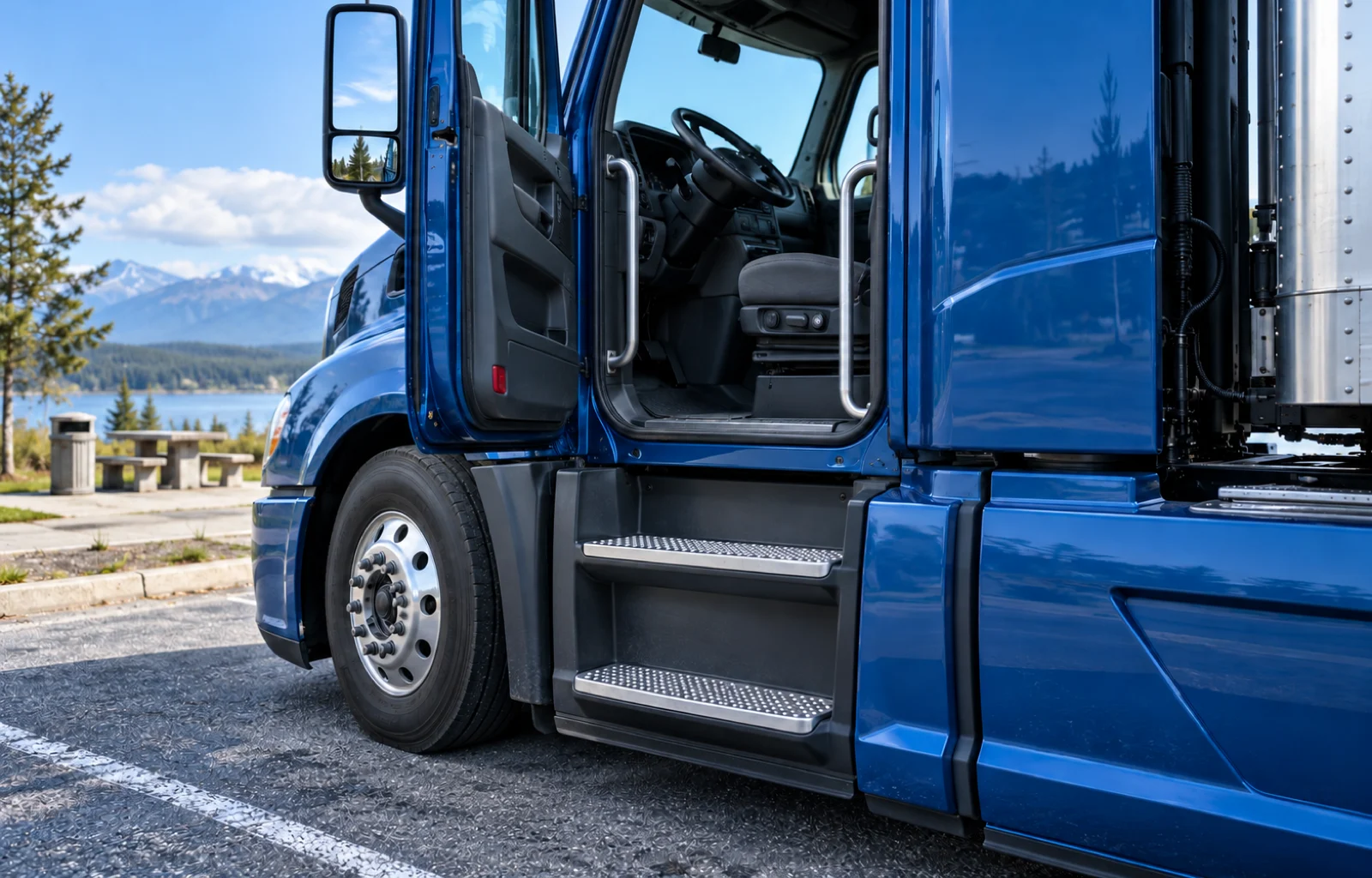
A truck can finish its road miles safely and still present an injury risk in the next few feet. The climb down at a fuel stop, customer yard or delivery entrance puts a driver between a high cab and a surface that may have changed since arrival. This resource examines existing cab-access guidance checked October 20, rather than a new rule or incident. Its practical question is what must be ready before the driver starts down: hands, footholds, belongings and the landing area. For customers and families who depend on that driver, a routine stop deserves the same attention as the moving trip.
NIOSH advises long-haul drivers to maintain three points of contact when entering or leaving a cab, grip the handholds securely and keep footwear clean and dry. Freightliner’s eCascadia manual explains the contact pattern as two hands and one foot, or two feet and one hand. That means preserving support while another limb moves, rather than briefly touching three places before descending. The manufacturer also instructs users to face the cab and avoid jumping. MilesNews practical interpretation: treat the access system as a climb, including the last step, rather than turn outward and drop to the ground.
The hands need a plan before the feet move. Washington’s Trucking Injury Reduction Emphasis program illustrates the conflict directly: hands full of belongings cannot provide the required support. Its example also warns that leaving items on the driver-side floor creates a trip or spill hazard, and recommends securing belongings on the passenger seat during the pre-trip inspection. The road-level lesson is to arrange belongings so climbing and carrying do not compete. A drink, phone, paperwork or overnight bag may each seem manageable by itself; together they can remove a handhold exactly when the driver needs it. Keep the climbing route clear.
The vehicle’s own instructions matter. The eCascadia manual identifies its grab handles and access steps and provides a specific entry sequence; another model or cab configuration may arrange those supports differently. Freightliner publishes manuals by model, so a familiar-looking replacement truck still deserves an access check. MilesNews advice: identify the intended supports from the applicable manual before relying on a remembered sequence. A general three-contact reminder does not establish which part of an unfamiliar vehicle is a suitable handhold. If the intended access equipment is damaged or cannot be used securely, report and resolve that problem through the carrier’s process.
Then inspect the landing, not just the truck. Washington’s driver injury-prevention guidance, preserved in the CDC archive, describes falls involving ice and a pothole and recommends scanning walking routes for uneven ground, slippery areas and trip hazards. It also calls for adequate lighting and maintained yards and docks. This widens the stop check: clean cab steps do not remove a puddle, broken surface or obstruction below them. MilesNews inference is that the stopping position and the walking path should be considered together. Where a designated parking area presents a hazard, seek a safe alternative through the site’s procedures before treating the stop as ready.
Industry sponsor Built for carriers that want one operational view.
Meet Pro FleetSync ↗
Footwear connects both sides of that check. NIOSH’s clean-and-dry advice addresses the grip available at the cab; Washington’s guidance also calls for footwear appropriate to the job. Mud picked up while walking across a yard can return to the steps on the next climb. MilesNews advice is to reassess after conditions change, rather than assume that a clear morning inspection settles every later stop. The same logic applies when rain begins or lighting deteriorates. Three points of contact are a method for maintaining support, not a guarantee that contaminated steps or an unseen landing have become safe.
The delivery site has a role as well. Washington’s guidance encourages reporting unsafe conditions at customer locations and alerting the customer, alongside maintaining clear surfaces and removing debris. For a receiving business, a usable walking route is part of a usable delivery entrance. For a carrier, a report about a loose support or poor landing should lead to a concrete correction, not merely another reminder to be careful. The practical sequence is simple enough to repeat at each stop: arrange belongings, check the intended supports and footwear, inspect the ground, then climb with the vehicle’s prescribed technique. The trip continues after the wheels stop.
Route check
- Keep hands available and belongings clear of the climbing route.
- Use the vehicle’s designated supports and follow its access instructions.
- Check the landing and report unsafe steps, lighting or walking surfaces.