
A clear windshield needs more than a moving wiper
Glass damage, worn blades, an empty washer and a weak defogger create different visibility problems. A parked check can separate them before the next delivery trip.
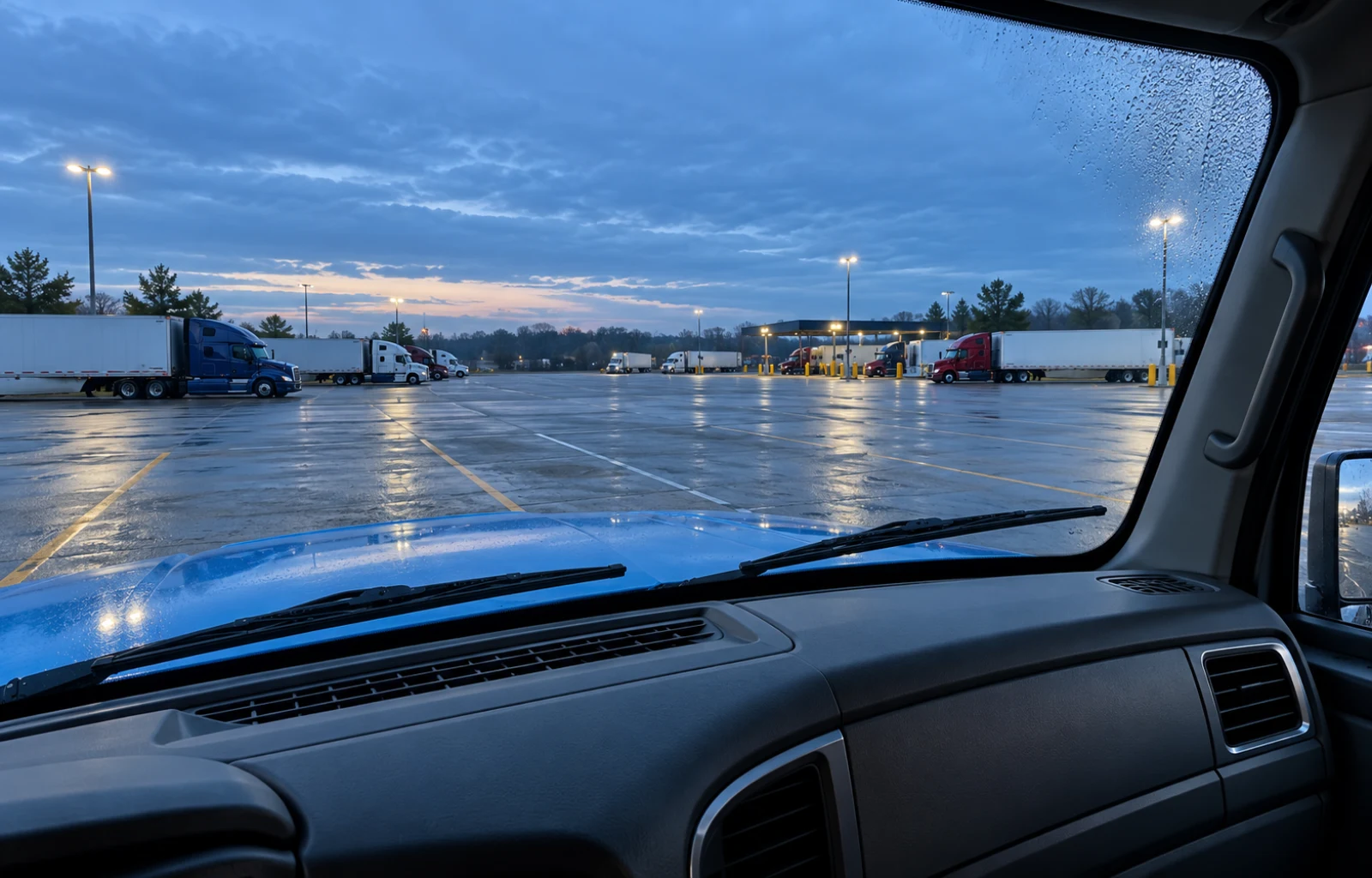
A windshield can look ready in a dry parking bay while the equipment needed to keep it clear has not been checked. The glass, wiping blades, washer supply and defogging system perform different jobs. A moving wiper alone cannot establish that all four are ready for road spray, cold mornings or a changing delivery route. This resource examines existing federal requirements and NHTSA preparation advice verified October 21; it reports no new regulation or weather event. Its practical question is what a driver can check while parked, before a visibility problem becomes a moving problem for the truck and everyone around it.
Start with the view through the glass, including damage that cleaning will not remove. Section 393.60 sets a windshield-condition requirement for the area above the top of the steering wheel, with specified top and side borders. It also contains exceptions: a crack not intersected by another crack, and a damaged area coverable by a three-quarter-inch disc when it is not within three inches of another similarly damaged area. Those details matter: a single size slogan cannot describe every crack or chip. MilesNews advice is to document the location, intersections and nearby damage for maintenance review rather than judge an unfamiliar pattern from a quick glance. This summary does not decide whether a particular windshield passes inspection.
Next, separate the blade from the system that moves it. Section 392.7 expressly includes windshield wipers among the equipment a commercial driver must be satisfied is in good working order before driving, and requires use when needed. Section 393.78 separately requires both wiping and washing systems meeting the applicable manufacturing standards on trucks and truck tractors built on or after December 25, 1968. MilesNews practical interpretation: seeing the arms move is only one observation. During a parked check conducted according to the vehicle manual, note whether the blades leave the needed view clear and whether washer fluid actually reaches the glass. Report smearing, missed areas or failed delivery as specific symptoms for correction.
The reservoir deserves its own check before a cold route. NHTSA warns that a snowstorm can consume substantial washer fluid and recommends filling with winter fluid containing de-icer before winter weather arrives. It also advises replacing worn blades and checking that the wipers work. MilesNews planning advice is to select a vehicle-compatible product for the expected conditions using the product label and vehicle instructions, rather than assume any liquid in the tank will suit every stop. Washer fluid and engine coolant serve different systems; use the designated reservoir and instructions. Buying fluid at the next stop is a weaker plan than establishing readiness before departure.
Inside condensation needs another control. Section 393.79 requires a defrosting and defogging system meeting the applicable manufacturing standard for trucks and truck tractors built on or after December 25, 1968. NHTSA likewise recommends checking that defrosters work. MilesNews advice: identify and test the prescribed controls while parked and allow the view to clear before moving. A working exterior blade does not demonstrate that the cab can keep the inside of the windshield clear. If the system cannot maintain the necessary view, report that failure through maintenance rather than treating repeated hand-wiping as a repair. The relevant observation is the view the equipment produces, not merely air noise from a vent.
Industry sponsor From load to settlement, keep it connected.
Follow the workflow ↗
For a carrier or receiving business, these findings should become a concrete trip decision. MilesNews recommends a short description that distinguishes damaged glass, poor wiping, absent washer spray and ineffective defogging, with the affected unit and conditions. That makes the next action clearer than a general complaint that visibility is bad. Arrange correction and reassess the equipment before departure; a delivery window cannot supply a missing clear view. For families and motorists sharing the route, the broader benefit is straightforward: the truck begins its miles with equipment able to preserve what the driver needs to see, rather than relying on a dry first mile to conceal an unresolved problem.
Route check
- Check glass, wiping, washer delivery and defogging separately while parked.
- Describe windshield damage precisely; the federal rule contains distinct exceptions.
- Correct visibility defects before the trip rather than defer them to the next stop.