
A cold EV trip starts before the charger is unplugged
Battery preparation, cabin heat and the next charging stop share the same winter energy budget. Delivery vans and family vehicles need a departure plan that accounts for all three.
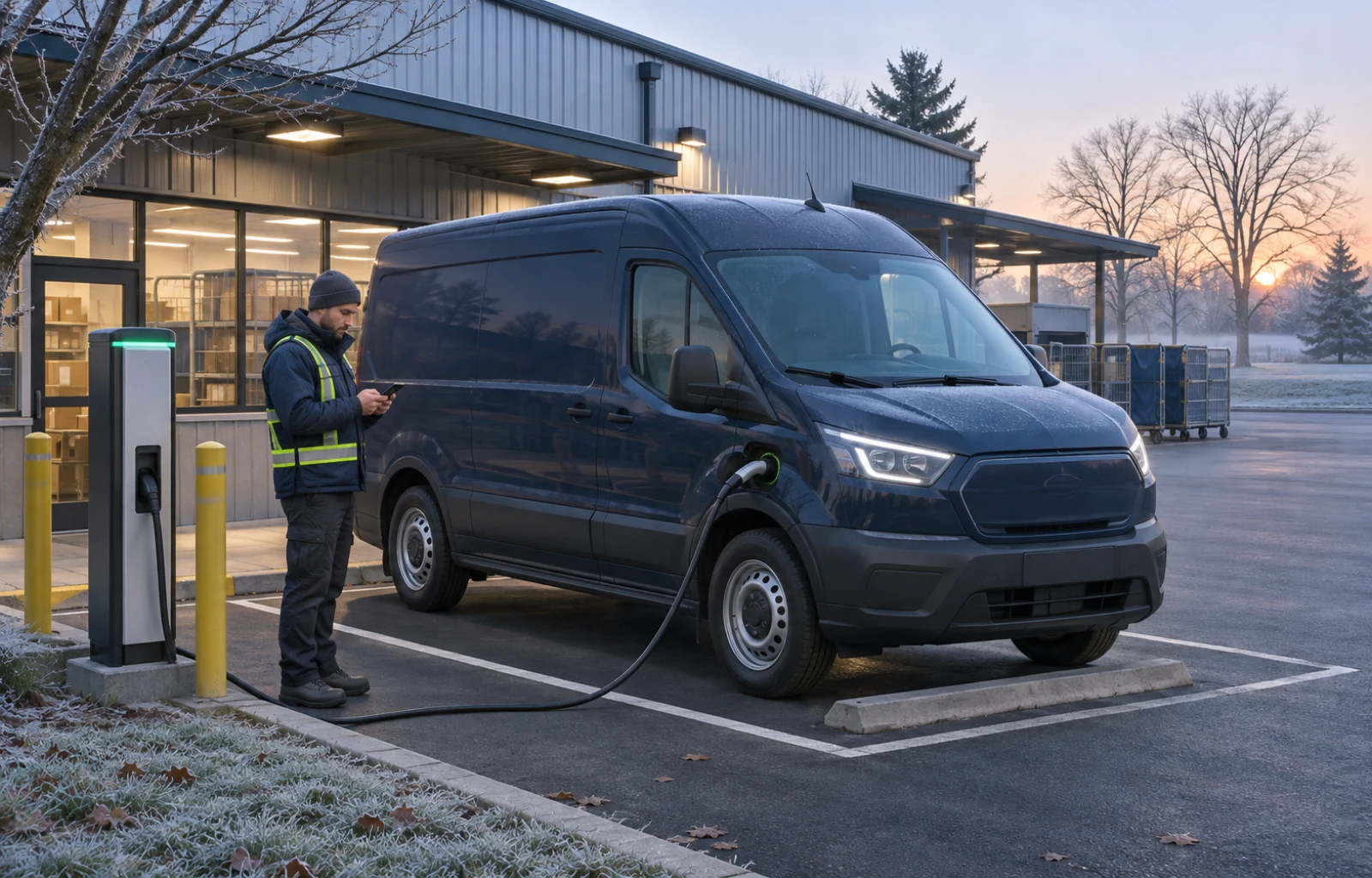
A delivery van can begin a cold morning with a familiar route and a different energy requirement. So can a family's electric car heading onto the interstate. Before disconnecting the charger, the useful question is whether the vehicle has been prepared for the temperature and the next dependable stop. This resource reviews existing federal and manufacturer guidance verified November 2. It reports no new winter emergency, vehicle defect or charging rule, and it does not assume that a passenger-car result predicts a loaded truck's range.
Cold changes more than the number on a dashboard. A September 2024 Department of Energy technical record identifies both reduced battery-cell performance and energy needed for cabin heating as reasons electric vehicles are sensitive to low temperatures. It reviews laboratory and road evidence across different vehicles and conditions. That makes a single winter range-loss percentage a poor universal trip allowance. MilesNews's planning implication is to use the actual vehicle, load, conditions and recent consumption when assessing the journey, rather than subtracting one widely repeated percentage from an advertised range.
Preparing the vehicle while connected can move some of the initial heating demand off the driving battery. DOE's January 2024 winter guide describes preconditioning the cabin and battery before departure, preferably while charging. Its separate technical record explains that drawing preparation energy from the grid preserves stored energy for driving. This is a head start, not free heat for the rest of the day. Subsequent cabin heating and changing conditions still belong in the trip calculation. For a working vehicle, the departure time entered in the system needs to reflect when the driver will actually leave.
Commercial guidance makes that distinction concrete. Ford Pro's E-Transit range brochure explains scheduling cabin and battery preparation while connected, and recommends keeping the van plugged in when parked in cold conditions. Its published comparison concerns the 2022 E-Transit under specified temperature and payload assumptions; it is not a forecast for every electric van or a heavy tractor. For a depot, MilesNews recommends checking that the correct vehicle is connected and its departure schedule is set, rather than assuming a warm driver's seat confirms that battery preparation occurred. Follow the instructions for the model and equipment actually in use.
Industry sponsor Keep every mile and every document connected.
Take a closer look ↗
The controls can mean different things even within a manufacturer's lineup. Ford's December 2025 U.S. winter guidance for its electric pickups and SUVs distinguishes a plugged-in departure schedule that prepares cabin and battery from an off-plug option that prepares cabin comfort. It also describes battery warming on the approach to a fast charger using supported vehicle navigation. Those features should not be assumed on another make, model or software version. Before a long drive, consult the vehicle's own instructions for departure conditioning and charging preparation; a phone's route guidance and a vehicle's battery-management command are not automatically the same operation.
The next stop needs time as well as a map pin. DOE's winter guide notes that fast-charging power generally declines as a battery approaches full charge, making the final portion slower, while colder conditions or longer distances may justify carrying more energy. The useful charge target therefore depends on the next leg and the vehicle's charging instructions. MilesNews recommends identifying a compatible alternative stop before leaving and allowing room for a changed charging session or an unavailable site. This is planning advice, not a guarantee of charger availability, a universal arrival-charge minimum or a promised charging duration.
Energy planning also cannot replace winter road preparation. NHTSA advises checking weather and road conditions, allowing extra travel time and postponing nonessential travel when roads are in poor condition. A charged vehicle still needs a safe route and usable visibility. For deliveries, the practical handoff is a departure plan that accounts for vehicle preparation and possible charging time before an arrival is promised. For families, it is the same small discipline: prepare while connected when the vehicle supports it, review the next leg, and leave enough flexibility to stop earlier or change the trip.
Route check
- Use the vehicle-specific departure-conditioning instructions while connected when supported.
- Plan charging time and a compatible alternative stop around actual conditions.
- Treat energy readiness and safe winter road conditions as separate departure checks.