
A cold no-start needs a check before the clamps
A jump pack can supply power without answering whether a battery is safe to boost. Before a working truck or family vehicle gets another start attempt, check the condition, the instructions and the reason it stopped.
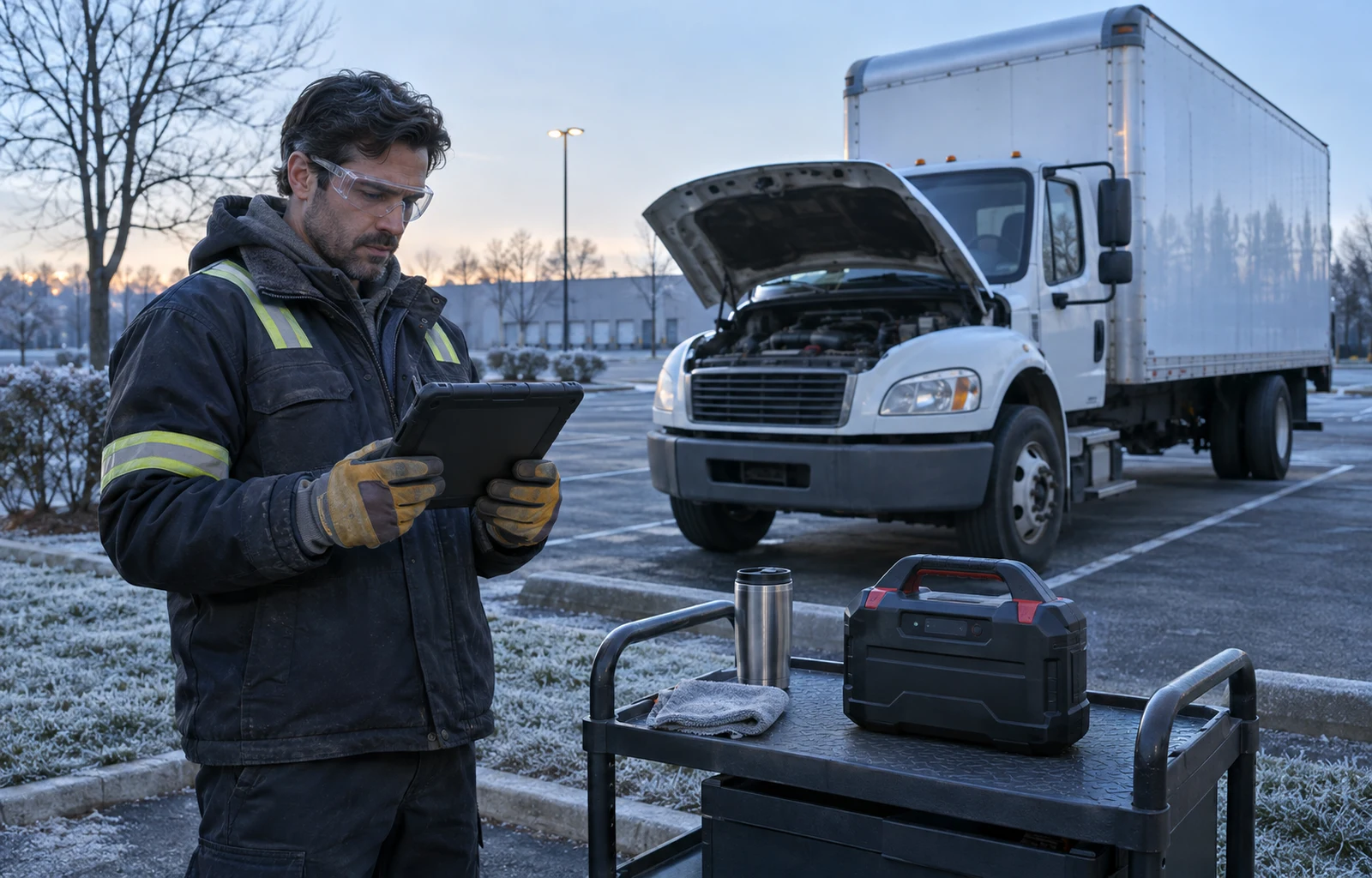
The delivery truck is loaded, the next appointment is on the calendar, and the engine will not start. Reaching for a jump pack feels like the quickest way to recover the morning. Yet the decision comes before the clamps: is the battery safe to boost, and is the equipment right for this vehicle? This resource draws on existing safety and manufacturer guidance checked November 3. It reports no new recall or weather emergency. Its focus is the starting battery, rather than the driving-range battery discussed in yesterday's electric-vehicle feature.
Begin by preserving useful observations. Rush Truck Centers' August 31 guidance distinguishes silence, clicking, slow cranking and an engine that turns without starting. Those symptoms have several possible causes; none alone proves the battery needs a boost. The national service network advises stopping troubleshooting for smoke, a burning smell, leaking electrolyte, battery damage or a vehicle that cannot be safely secured. For a driver calling for help, MilesNews recommends reporting what happened on the first attempt and any dashboard message, instead of treating 'dead battery' as an established diagnosis.
Cold adds a separate stop condition. The Canadian Centre for Occupational Health and Safety, a public occupational-safety organization, says not to charge or jump a frozen battery and not to recharge a damaged one. Its lead-acid guidance also identifies cracks and defective connections as inspection concerns. A cold morning alone does not establish that a battery is frozen, and an intact-looking case does not give a driver a reliable diagnosis. If freezing or damage is suspected, leave the boost attempt to a qualified service provider's assessment. Do not improvise a thawing or battery-opening procedure beside the vehicle.
The hazard is more than an unsuccessful start. CCOHS explains that lead-acid batteries can release hydrogen that may form an explosive mixture, and jumper-cable sparks can ignite it. It calls for ventilation, eye protection and keeping ignition sources away. This is why a cigarette, an improvised connection or leaning over the battery cannot be treated as a minor shortcut. A portable pack changes the power source; MilesNews's practical inference is that it does not remove the need to assess the battery and follow the equipment's safety instructions. Its presence in the cab is not permission to use it on every no-start.
Industry sponsor Keep every mile and every document connected.
Take a closer look ↗
Connection points also depend on the vehicle. A Ford online owner-manual example specifies a 12-volt supply and provides under-hood jump connections even though the battery is elsewhere. It warns against disconnecting the disabled vehicle's battery because that can damage its electrical system. Those instructions illustrate why a remembered cable sequence is insufficient; they are not a procedure for every Ford or commercial truck. Rush separately advises confirming system voltage and polarity, using designated terminals when supplied, and following both the vehicle and jump-source manufacturers. Locate the applicable manual before connecting anything; request assistance when compatibility or connection points remain uncertain.
A successful boost still leaves a question for the next stop. Rush notes that charging-system trouble can allow a truck to start with help and then fail again after shutdown. MilesNews recommends giving maintenance the original symptoms, warning messages and any recent repeat starts before promising the vehicle's next assignment. For households, the same question belongs in the repair conversation before another school run or interstate journey. Getting the engine running is an observation; determining why assistance was needed takes a separate check. Avoid repeated attempts as a substitute for diagnosis.
Prevention belongs before the cold departure window. NHTSA's winter guidance recommends having a mechanic check the battery, charging system and belts and make needed repairs; it notes that cold reduces battery power while starting demand rises in gasoline and diesel engines. For a fleet, that makes an unresolved starting complaint a scheduling input while the vehicle is still parked safely. For any driver, the useful preparation is to know where the correct instructions and assistance contact are before the morning turns into a recovery job. A few minutes spent deciding whether a boost is appropriate can change what happens after the next turn of the key.
Route check
- Stop for suspected battery freezing or damage and obtain qualified assessment.
- Confirm the actual vehicle and jump-source instructions before making connections.
- Report the original symptoms and arrange diagnosis after a repeat no-start.