
A fog shutdown needs a place off the highway
When visibility collapses, slowing down and finding a safe stopping place are separate decisions. Federal weather and truck guidance makes the destination of a fog stop part of the trip plan.
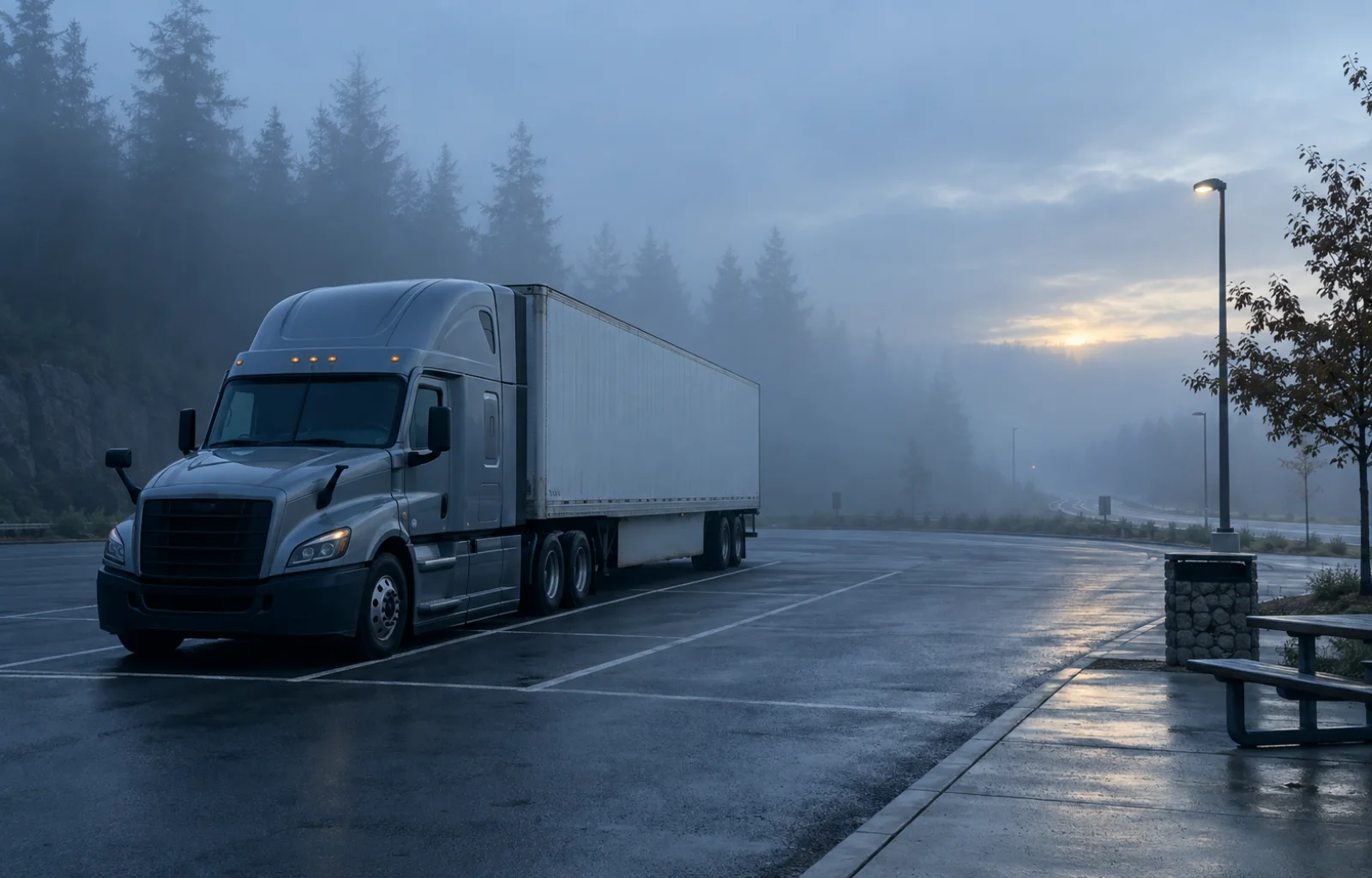
Fog can remove the next half-mile from view without moving the road itself. The lanes, trucks and exits are still there, but a driver has less time to recognize them. This road-safety resource is based on federal guidance and investigation records checked September 29; it reports no new fog event or rule. Its question is where a truck should go when the safe answer is to stop driving, but the shoulder is itself exposed to traffic.
The first decision comes before the wall of white. The National Weather Service says patchy fog can change visibility quickly and that a Dense Fog Advisory is a reason to consider delaying travel. Its driving guidance calls for slower speed, more following distance and low-beam headlights, which also illuminate the rear lights. High beams reflect glare back toward the driver. A forecast or advisory gives time to identify a rest area, truck stop or other lawful off-road stopping place before a trip enters the affected segment; it does not certify visibility on every mile.
For a commercial driver, the federal threshold is more than a suggestion to drive carefully. The Federal Motor Carrier Safety Administration’s hazardous-conditions guidance for 49 CFR 392.14 says fog, smoke, dust, rain and other conditions that impair visibility or traction call for extreme caution and reduced speed. If conditions become sufficiently dangerous, operation must be discontinued until it is safe again. The rule does not set one visibility distance or one truck speed for every road. That makes the actual sight distance, traffic and a safe place to stop central to the decision.
Stopping has geography. Federal Highway Administration training for pilot and escort vehicle operators says the best practice in fog is to leave the highway for a rest area or truck stop until visibility improves; it specifically cautions against parking on the shoulder in fog. The National Weather Service likewise puts a parking lot or driveway first in near-zero visibility. If there is no such option, its general road-user guidance describes pulling as far off the road as possible with hazard lights. Those are different situations, not permission to use a narrow highway shoulder as a planned waiting room for a tractor-trailer.
A driver who is already inside a dense patch may have no easy exit in sight. The route response is to reduce speed enough to preserve stopping room, avoid unnecessary passing or lane changes, follow posted controls, and locate the nearest safe place to leave the traffic stream. FHWA’s escort training warns that visible taillights ahead might belong to a vehicle stopped off the pavement; they are a poor substitute for knowing where the lane goes. This is a practical reading of the federal guidance, not a claim that one maneuver is safe in every near-zero-visibility situation.
Industry sponsor Built for carriers that want one operational view.
Meet Pro FleetSync ↗
Built for carriers that want one operational view.
Meet Pro FleetSync ↗
The public stakes reach beyond the cab. In its investigation of a 1995 Interstate 40 pileup in localized Arkansas fog, the National Transportation Safety Board found that many drivers entered the dense area too fast to avoid vehicles ahead or already stopped. Eight loaded tractor-trailer combinations and a delivery van became involved, and five people died. That is a historical example, not a current incident or a forecast for another corridor. Its transferable lesson is the mismatch between available sight distance and the speed of traffic entering the fog.
That mismatch can grow when motorists drive up behind a truck moving cautiously, then try to pass into visibility they do not have. FHWA notes that low visibility increases differences in vehicle speeds, raising crash risk. The safest response for everyone is to leave room for a sudden slowdown, watch for stationary vehicles, and treat a truck leaving for a rest area as a traffic movement rather than an invitation to close its gap. There is no benefit in pressing a driver to make up the delay while the road remains obscured.
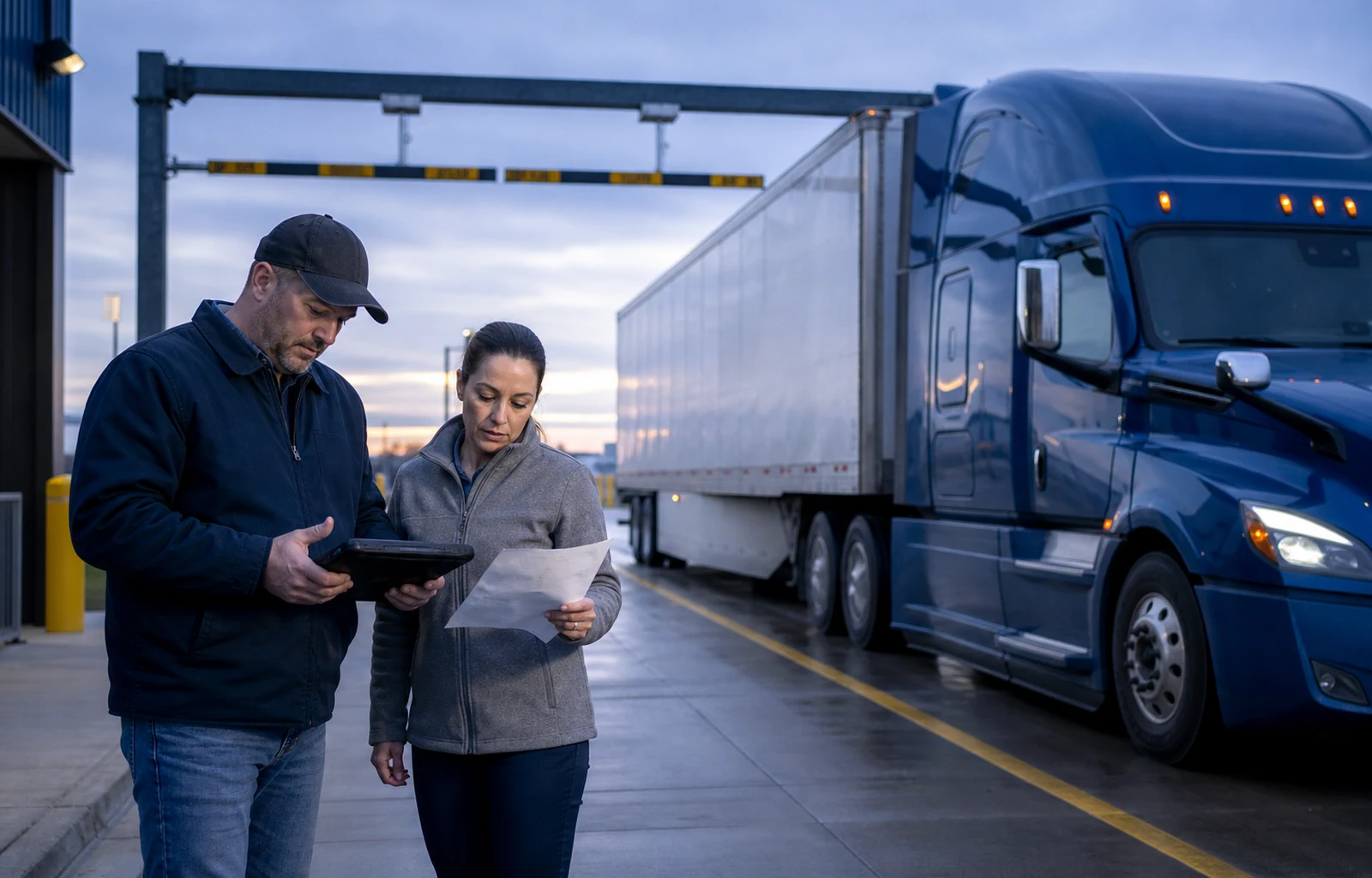
A shutdown also needs a handoff. MilesNews analysis: a carrier or dispatcher can help by preserving a route option to an off-road stop, recording the location and weather reason for the pause, and resetting an arrival estimate without demanding a particular speed through the fog. For a family or business waiting on a delivery, the revised time is a consequence of keeping stopping distance and a safe exit available. Before resuming, the driver needs actual improvement in visibility and current road information, not merely the passage of a few minutes or the disappearance of an advisory from one screen.
The useful plan is therefore made in two parts: decide early whether visibility permits travel, and know where the truck can safely leave the highway if the answer changes. Low beams, reduced speed and distance help while the vehicle is moving; a real off-road space makes the stop itself safer. Fog can cross any freight region, so this is not a local closure story. It is a road decision whose success depends on both the moving lane and the place beyond it.
Route check
- Use an advisory to identify a lawful off-road stopping option before entering a low-visibility segment.
- Reduce speed and increase following room in fog; use low beams instead of high beams and do not follow taillights as a lane guide.
- When visibility makes continued commercial driving unsafe, stop until it improves; a rest area or truck stop is preferable to planning a wait on the shoulder.