
A mountain descent needs its own gear decision
The gear that carried a truck uphill may not control it downhill. Current driver guidance turns the summit brake check into a decision about the actual load, grade and vehicle before heat takes away options.
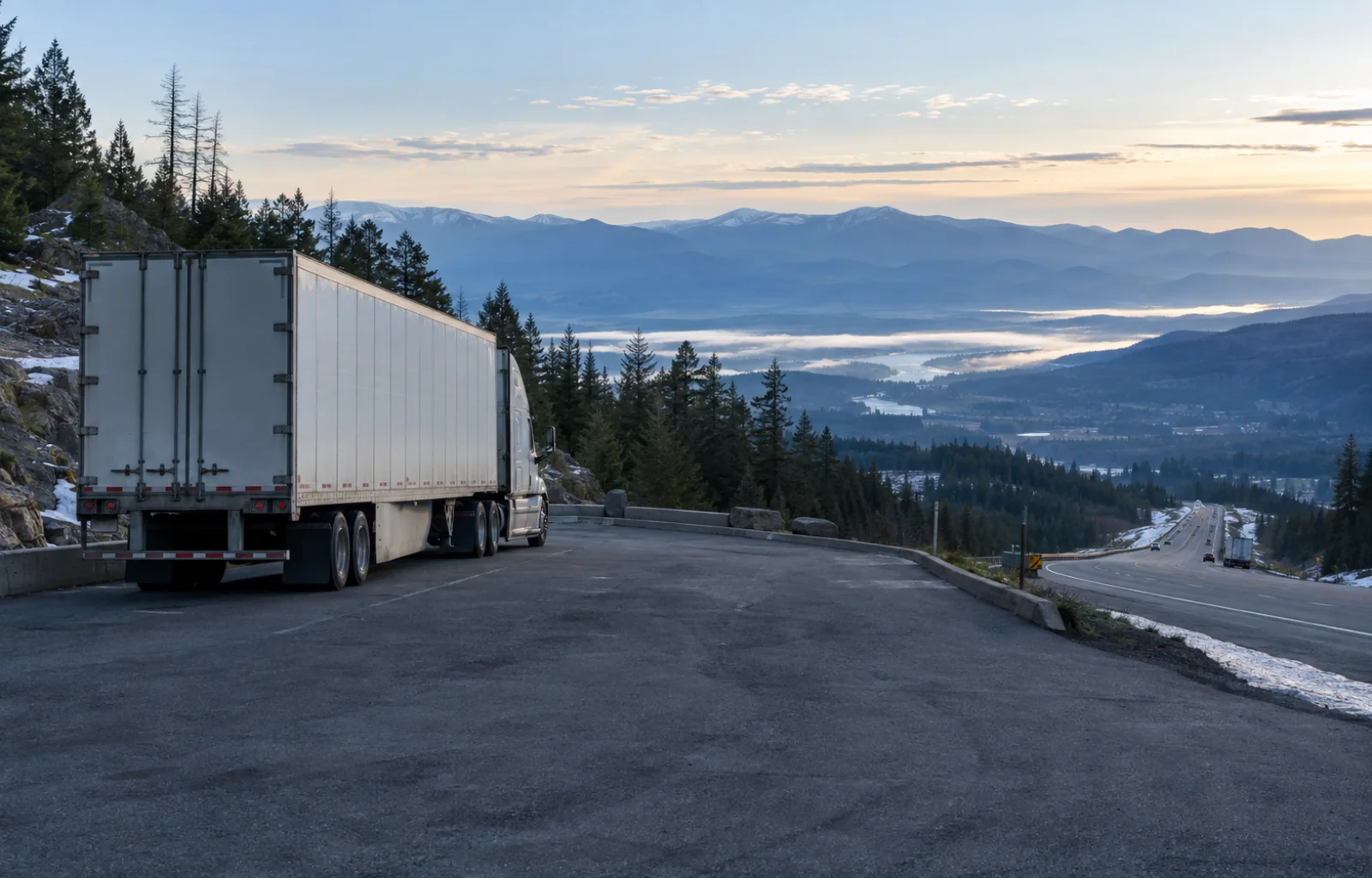
The top of a mountain grade can look like the easy part of a truck trip: a turnout, a view and a road falling away toward the next delivery. It is also the last calm place to settle questions that become harder once gravity starts adding speed. This road-safety resource draws on current federal and state guidance checked September 28. It reports no new crash, restriction or rule. Its question is practical: what must be decided before a loaded truck passes the brake-check area and begins a long descent?
Start with the grade as a route feature, not a surprise after the crest. The Federal Motor Carrier Safety Administration tells commercial drivers to account for mountainous routes, road conditions and travel time before departure, and to complete pre-trip safety checks, especially for brakes and tires. Oregon’s online commercial-driver manual says the safe downhill speed depends on the total weight of truck and cargo, the grade’s length and steepness, the road surface and weather. A posted limit or maximum-safe-speed sign is a ceiling, not proof that every load can descend comfortably at that number.
A turnout before the drop is a working checkpoint. Colorado’s transportation department tells truckers on Wolf Creek Pass to inspect brakes at the summit before an eight-mile westbound descent; it identifies a shoulder area for that purpose. The example is local, but the sequence applies wherever a designated brake-check area precedes a sustained grade: stop in a safe, lawful place, resolve a brake concern while stopped, and establish the descent plan before joining traffic. A plan made halfway down is a different and much narrower choice.
Industry sponsor Fewer handoffs. Better visibility. Stronger operations.
See how it works ↗
Fewer handoffs. Better visibility. Stronger operations.
See how it works ↗
The gear deserves a decision of its own. Colorado’s June 2026 road-safety campaign stresses low gears on steep grades and describes descending in the gear used to climb. Oregon’s CDL manual supplies an important qualification: that same-gear rule comes from older trucks. Modern trucks can climb in relatively high gears because of stronger engines and lower mechanical drag; they may need a lower gear for the descent than for the ascent. The defensible choice is the one suited to this vehicle, load and grade, made before downhill speed builds—not a slogan remembered from a different truck.
Why decide so early? Service brakes turn motion into heat. Oregon’s manual explains that repeated heavy use can reduce braking power, a condition called fade, until the driver has to press harder for the same result. It also warns that a brake out of adjustment shifts work to the others, increasing their heat. Federal Highway Administration escort training makes the same point for heavy loads: the braking effect of a low gear should carry the main share on a long or steep downgrade, with service brakes supplementing it. A trailer whose brakes are not doing their share cannot be made sound simply by choosing a lower gear.
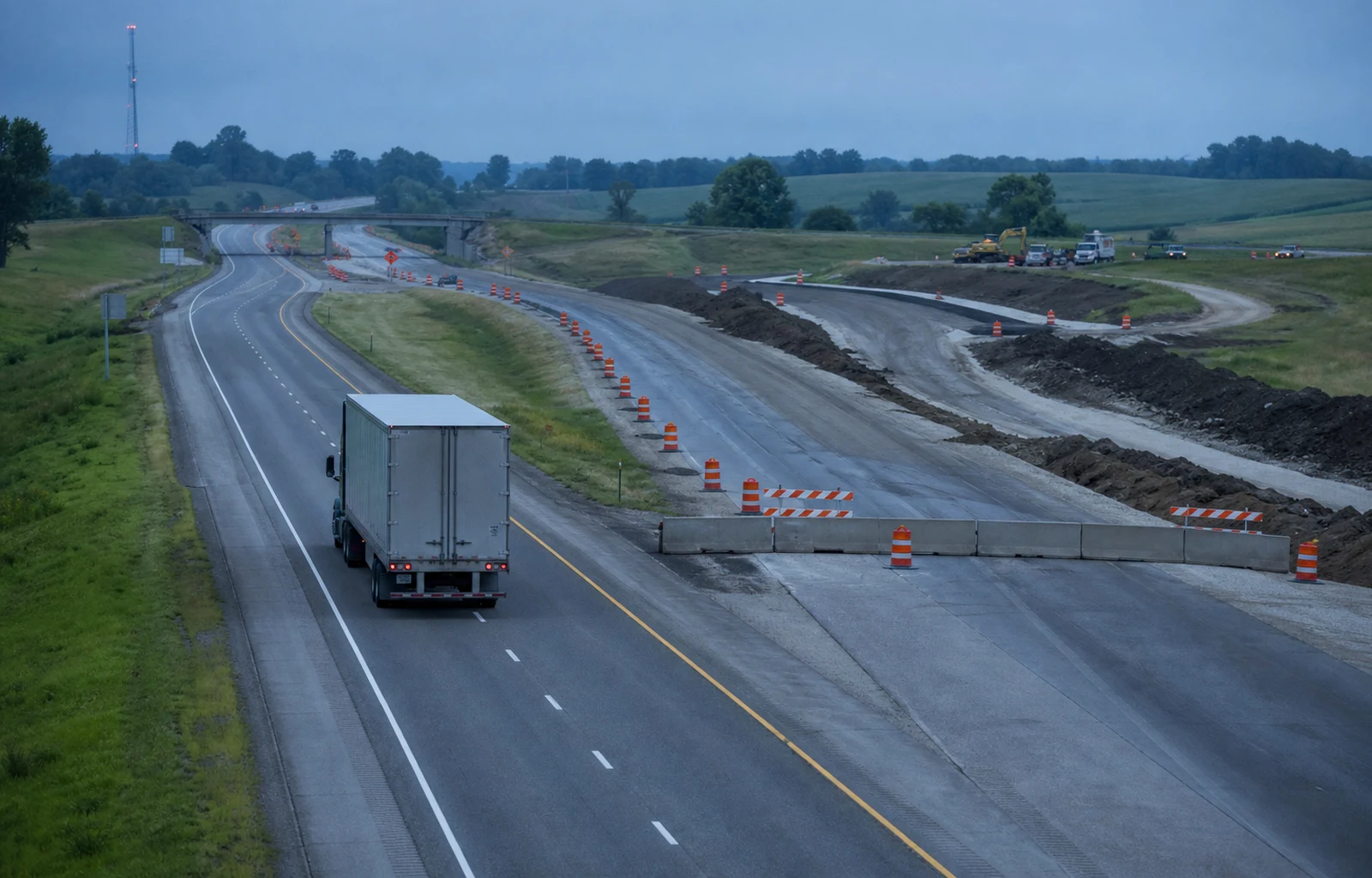
The manuals describe controlled, separate brake applications rather than constant pedal pressure. Oregon’s training explains applying the brakes firmly enough to slow, releasing them after speed falls below the selected safe speed, and repeating as speed returns. That description is training guidance, not a universal target speed for every highway or a substitute for the driver’s equipment instructions and the posted signs. The more important road-level point is that a vehicle already moving too fast has less room to correct its gear, cool the brakes or respond to a curve and traffic ahead.
This is not only a truck-cab problem. FMCSA cautions that large vehicles can gain speed quickly downhill and require more distance to stop. A motorist who closes in behind a slowly descending truck, or cuts back sharply in front of it after passing, can erase space the truck may need for a normal stop. For a customer or dispatcher, a planned summit check and a slower descent are part of the trip time, not evidence that the driver is falling behind. That scheduling implication is MilesNews analysis of the safety guidance, not an agency timetable.
An escape ramp is the emergency branch of the plan, not a substitute for brake checks. FHWA says ramp placement and advance signs are designed to give an out-of-control driver time to react; the entrance must remain clear. Oregon’s manual says a driver who loses brakes downhill should use an available escape ramp. Colorado likewise tells drivers not to hesitate to use one after losing control. Knowing where the ramps are before the grade makes the signs recognizable when seconds matter; the exact location and status must be checked for the route being driven.
Colorado’s 2026 campaign adds another reason to keep heat in view: overheated brakes can become an ignition source in dry conditions. That warning does not mean every warm brake creates a fire, but it widens the effect of a poor descent beyond the truck. The same state guidance urges paved pullouts for cooling and inspection. Any stop must be made only where it is safe and permitted, with a vehicle problem addressed before the trip resumes.
The useful handoff at the summit is therefore concrete: a brake system that has been checked, a low gear selected for the actual combination, a safe speed based on the signed grade and conditions, and knowledge of any escape ramps. If one of those pieces is unresolved, the downhill lane is a poor place to discover it. The point reaches beyond mountain freight: everyone sharing the road depends on heavy vehicles keeping a stopping option all the way to the bottom.
Route check
- Treat a designated brake-check area before a long descent as the place to settle vehicle condition, gear and safe-speed decisions.
- Choose the downhill gear for the actual truck, load and grade; Oregon cautions that modern trucks may need a lower gear than they used climbing.
- Know the marked escape ramps before the grade, preserve space around slow heavy vehicles and use an available ramp if braking control is lost.