
A new windshield needs a camera-readiness check
When a driver-assistance camera looks through replaced glass, a clear view is only part of the repair. Ask which vehicle-specific mounting, adjustment and completion checks belong before the next trip.
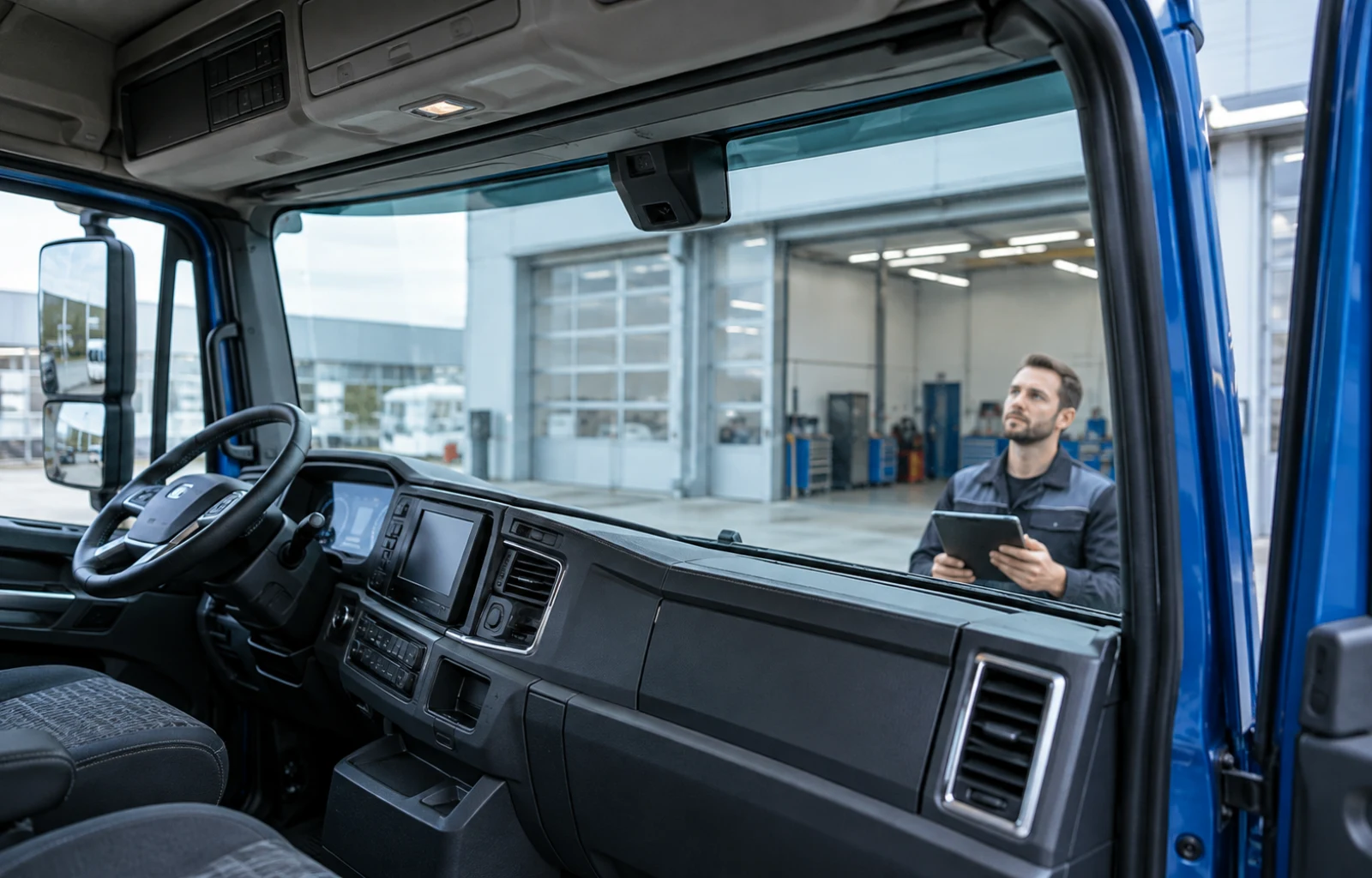
A fresh windshield can restore the driver’s view while leaving a separate question about the camera looking through it. Some lane warnings and other driver-assistance features depend on equipment mounted at the glass. Before a repaired truck returns to a delivery route, or a family car returns to the highway, the useful question is which camera checks the exact vehicle requires. This resource reviews manufacturer documents and repair research verified October 27. It reports no new defect, recall or universal calibration rule. The practical aim is to make the camera part of the repair conversation before the vehicle is collected, rather than discover an unresolved warning during the next trip.
The truck example shows why identifying the equipment comes first. Freightliner’s May 2018 service bulletin 54-291 describes installation of the Detroit Assurance lane-departure-warning camera for the specified Cascadia application. It tells technicians to check the camera’s programmed parameter because mounting positions differ, and requires a new camera base when windshield replacement or other work removes that base. It also specifies alignment checks. These are instructions for that installation, not dimensions or a repair method to apply to another truck. MilesNews takeaway: ask the repairer to identify the installed camera and current applicable service procedure; “we put the camera back” leaves important work unexplained.
A passenger-car example reaches a similar question through a different procedure. Subaru bulletin 07-211-23R, revised September 2024, lists 2023 Legacy, Outback and Ascent models and 2024 Impreza and Crosstrek models. It requires adjustment of the EyeSight wide-angle mono camera after windshield removal or installation, among other listed triggers, and refers technicians to the applicable service manual. The bulletin also warns against assuming it applies to a particular vehicle and directs repairers to current service information. For an owner, the transferable lesson is to confirm applicability by vehicle and equipment. A requirement found for one model is a reason to ask a precise question, not proof that every camera uses the same process.
There is evidence that the repair handoff deserves attention. In a February 2023 report, the Insurance Institute for Highway Safety described a survey of nearly 500 drivers about recent repairs to crash-avoidance features. About two-thirds of owners whose feature repairs involved windshield replacement reported technology issues afterward. That is an older survey of owners with repaired features, not a current failure rate for all replacement windshields, all drivers or commercial trucks. It nevertheless gives a concrete reason to discuss post-repair operation and follow-up. The research does not establish that a particular shop’s work failed, and it does not supply a substitute for manufacturer checks.
Industry sponsor One view for dispatch, drivers, and the back office.
Explore the TMS ↗
Before booking the work, MilesNews recommends asking three connected questions: which assistance functions use the affected camera, what mounting or adjustment work the manufacturer specifies, and who will complete and document that work. Ask whether any required calibration is included in the appointment or needs another qualified provider. At collection, request an explanation of the completed checks, any unresolved findings and the instructions that apply before using the features. Keep that information with the repair record. These are editorial consumer and fleet-planning suggestions; a generic invoice line or a clean-looking windshield cannot, by itself, answer the vehicle-specific technical questions.
The next drive should not become an improvised calibration experiment. Follow the repairer’s vehicle-specific release instructions and the owner’s manual, and seek clarification before relying on a feature whose status is unresolved. Report warning messages or unexpected assistance behavior to the repairer with the circumstances when it is safe to do so. NHTSA’s technology guide distinguishes warnings from systems that assist with steering or speed; at driver-assistance Levels 0 through 2, the driver remains responsible and attentive. Do not test automatic braking by deliberately approaching an obstacle. A family departure or a delivery deadline is a poor setting for trying to prove what a sensor can see.
The road-level benefit is a clearer handoff between the person repairing the vehicle and the person driving it. A carrier can plan the glass appointment around the work actually required; a household can ask about assistance readiness before collecting the keys; a receiving business can accommodate a repair-related arrival change while it is still a scheduling question. The shared-road consequence extends beyond the vehicle with new glass. Trucks, cars, cyclists and pedestrians all benefit when drivers understand the assistance available to them and retain their own observation and control. Finish the repair conversation before starting the miles.
Route check
- Identify the exact camera and current manufacturer procedure before windshield work.
- Ask who completes required mounting, adjustment or calibration checks and request the results.
- Resolve uncertain feature status with the repairer; keep driving responsibility with the driver.