
A quieter work zone can still stop a load
Labor Day schedules in Arizona, Ohio and Pennsylvania put two different road controls on nearly the same clock. Routine work restrictions may pause while some permitted loads must stop moving altogether.

A holiday work pause can make an interstate look simpler without making every trip unrestricted. Official 2026 Labor Day schedules in Arizona, Ohio and Pennsylvania put two different controls on nearly the same weekend clock: one limits planned traffic-control work, while the others limit when certain oversize or overdimension loads may move. The dates line up; the operating meaning does not.
Arizona's statewide holiday blackout schedule says no traffic restrictions will be allowed from Friday, September 4, through Tuesday, September 8, unless a district engineer or administrator approves an exception. It directs project traffic control to be pulled off the right of way by noon Friday and allows it to resume after 5 a.m. Tuesday. That is a construction and traffic-control constraint, not a promise that every lane, ramp or long-term work-zone configuration will be clear.
Ohio's hauling notice uses the same noon-Friday-to-sunrise-Tuesday window for a different purpose. The state says overdimension and combined overdimension-and-overweight vehicles or loads may not move during the listed holiday period. An overweight-only vehicle or load may move with a valid Special Hauling Permit. The distinction matters because a load's width, height or length can change the answer even when weight alone would not.
Pennsylvania's 2026 calendar also lists a Labor Day restriction from noon September 4 to sunrise September 8 for oversize and overweight movement. Its notice separately points carriers to the Pennsylvania Turnpike for that system's holiday rules. A state-road permit calendar therefore should not be treated as a universal answer for every facility inside the state.
The national lesson is not that these three states share one rule. They do not. It is that a holiday route can have at least two independent clocks: the road agency's clock for planned lane restrictions and the permitting authority's clock for a vehicle or load. Treating the first as permission under the second is an editorially identified planning error, not language from any one state notice.
Industry sponsor Built for carriers that want one operational view.
Meet Pro FleetSync ↗
Built for carriers that want one operational view.
Meet Pro FleetSync ↗
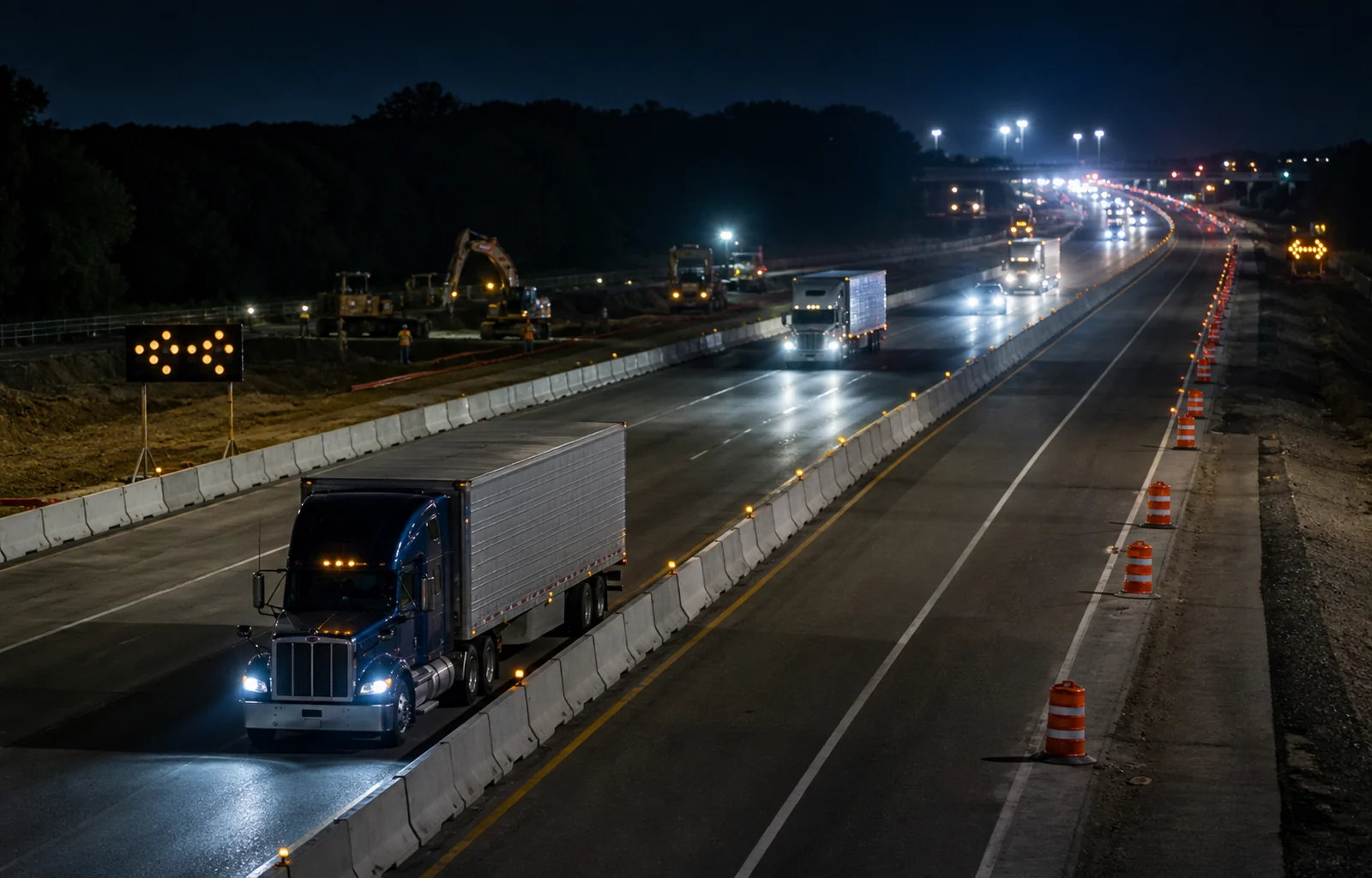
A lane-closure pause also cannot cancel an incident, emergency repair, weather control, posted bridge limit or traffic that is already using the road. That conclusion is a practical inference from the limited scope of holiday schedules. The documents describe what agencies or permitted movements are scheduled to pause; they do not certify future conditions across an entire route.
For a normal-size truck or passenger vehicle, the useful question is whether current conditions match the quieter construction plan. Check the responsible state's traveler-information service close to departure and again from a safe stop when the trip crosses into another system. For a permitted load, make the permit and holiday calendar a separate check rather than assuming a green route map settles movement authority.
Dispatch can make that handoff explicit with three lines: current route controls, holiday permit restrictions and the next verification point. That three-part workflow is editorial guidance derived from the state schedules, not a new federal rule. It keeps a lifted lane closure, a valid permit and a live road condition from being mistaken for the same approval.
The visible road may be quieter because crews and temporary traffic control have stepped back for the weekend. A wide or otherwise overdimension load can still be waiting for its own clock to restart. Read the holiday schedule by what it actually governs, then verify the road that exists when the wheels are ready to move.
Route check
- Do not treat a holiday construction pause as permission for an oversize or overdimension movement.
- Check state-road, turnpike and other facility rules separately when a route crosses authorities.
- Verify live traveler information because a published holiday schedule cannot guarantee future road conditions.