
A red light is still driving under truck phone rules
A stopped traffic queue does not create a phone break. The federal rules draw the line at a place where the truck can safely remain, and the distinction matters to everyone waiting for a delivery update.
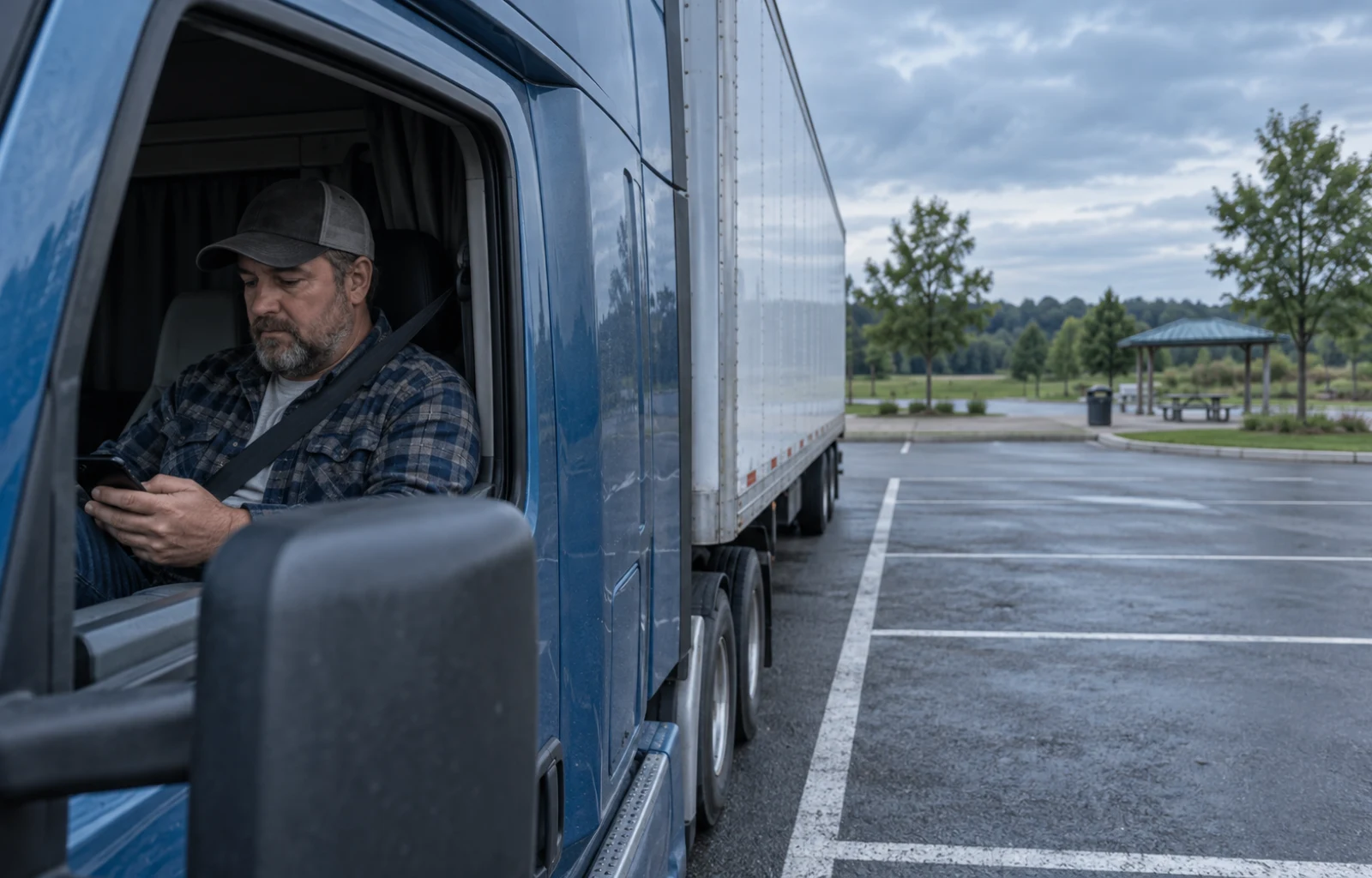
A delivery update arrives while a truck waits at a red light. The wheels have stopped, but the driver has not reached a phone break under federal commercial-vehicle rules. That is an easy distinction for a customer or family member to miss when an expected reply does not arrive. This resource examines the boundary between a traffic pause and a safe stop, using current federal regulations and agency guidance checked October 3. It explains an existing rule, rather than reporting a new restriction. The practical question is where a driver can actually leave the driving task long enough to deal with a message.
For covered commercial driving, 49 CFR 392.82 prohibits using a hand-held mobile telephone and bars a motor carrier from allowing or requiring that use. Its definition of driving includes a vehicle temporarily stationary because of traffic, a signal or another momentary delay. The exclusion requires the driver to move to the side of, or off, the highway and halt where the vehicle can safely remain. Editorial inference: a red signal or a stopped queue changes speed, not the nature of the driving task. An expected delay is therefore a poor promise of a callback window.
The texting provision, 49 CFR 392.80, has its own wording: operating a commercial vehicle with the motor running includes those temporary traffic stops. Its safe-location exclusion applies with or without the motor running. FMCSA explains that texting includes reading or manually entering electronic text, and that a dispatching device does not escape the prohibition when used for texting. A work message therefore does not become exempt merely because it concerns the load. MilesNews editorial advice: distinguish an arrival estimate already available to the office from a request that requires the person in the cab to read and respond.
The rule on calls also asks how the phone is used. FMCSA guidance describes holding it to call, dialing with more than one button, or reaching so far that the driver leaves the seated, belted driving position as prohibited use. It describes a compliant hands-free arrangement as close enough for a single-button action while the driver remains properly seated and restrained. Mounting a phone is only part of that arrangement; it is not permission to read messages or perform every screen task. These long-standing agency fact sheets remain useful explanations, but their older penalty figures are not used here.
A hands-free setup answers an equipment-and-operation question; it does not establish that a conversation is free of distraction. NHTSA describes distraction broadly, including talking, eating and adjusting navigation or entertainment systems when those activities draw attention from driving. FMCSA’s commercial-driver tips likewise discuss in-cab tasks beyond texting. Editorial inference: a complicated customer discussion or an address correction that needs repeated screen interaction can wait for a planned stop even when a call could meet the telephone rule. Preparing the destination and communication plan before departure reduces the number of problems that demand attention during the trip.
Industry sponsor Built for carriers that want one operational view.
Meet Pro FleetSync ↗
Built for carriers that want one operational view.
Meet Pro FleetSync ↗
The location still needs judgment. The federal exclusions require a place where the vehicle can safely remain stationary; they do not certify every shoulder or roadside edge as a suitable office. MilesNews editorial advice is to use a planned truck-compatible parking place and complete the communication before rejoining traffic. Both provisions contain a narrow exception for communication necessary with law enforcement or other emergency services. That exception concerns emergency-service contact, not an ordinary urgent delivery query. These federal commercial-driving provisions also do not describe every state passenger-car rule, parking restriction or company policy.
The people outside the cab can make this workable. As an editorial practice, an office can agree on parked check-in points, tell a receiver when the next update is expected, and avoid treating an unanswered message as a reason to send repeated prompts. A family member can leave a message that does not demand an immediate reply. The driver then has a clear task at the next suitable stop rather than a conversation competing with traffic. The useful distinction is simple: waiting for a light is still part of the trip; a phone break begins when the truck reaches a place where it can safely stay.
Route check
- A traffic signal or queue is still driving under the federal hand-held-phone rule.
- Texting on a dispatch device is covered too; a work purpose does not create an exemption.
- Plan communication at a truck-compatible place where the vehicle can safely remain.