
A tire blowout calls for control before braking
A sudden tire failure changes the first job behind the wheel. Federal and commercial-driver guidance puts vehicle stability ahead of a hurried stop, with an important exception for an imminent collision.
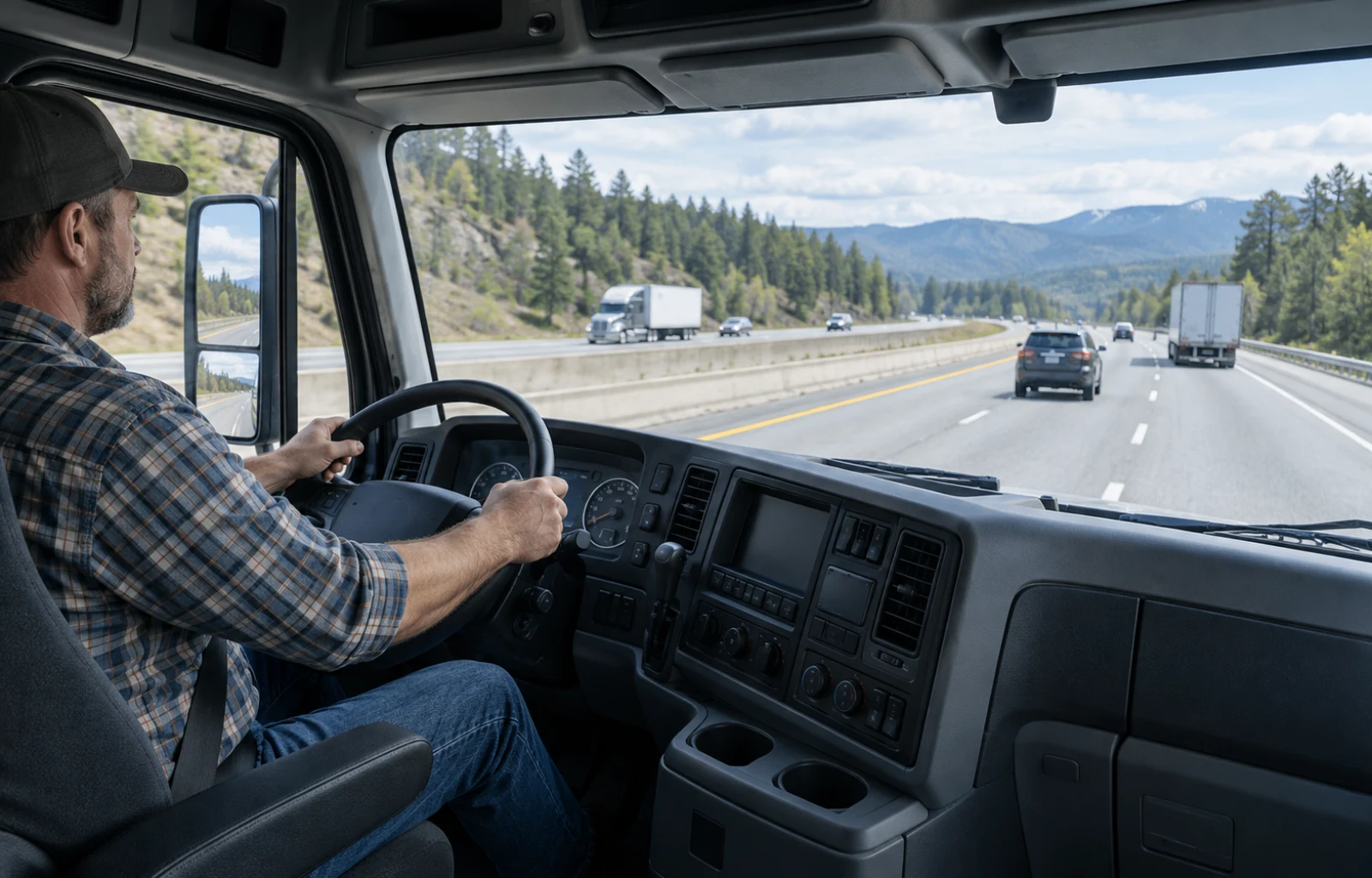
A loud bang at highway speed invites an immediate stomp on the brake. Tire-failure guidance asks drivers to resist that reflex long enough to keep the vehicle controllable. This resource examines the first moments after a blowout using NHTSA advice and state commercial-driver guidance checked October 2. It is a practical feature, not a report of a new crash or a newly issued rule. The question matters on any U.S. highway: how do you move from sudden failure to a safe stop without turning the first response into another hazard?
NHTSA defines a blowout as a rapid loss of tire pressure and makes balance and control the immediate goal. It warns against both hard braking and abruptly lifting off the accelerator. Its sequence begins with both hands on the wheel, maintaining speed only if possible and safe, then easing off the accelerator gradually. Steering adjustments should stabilize the vehicle while the driver looks toward the intended path. Slowing further and leaving the roadway come after stability returns and when the driver judges it safe. The speed qualification matters: this is not an instruction to accelerate through danger.
Commercial-driver guidance gives the braking advice a boundary. Oregon’s manual says to keep a firm two-handed grip because a failed front tire can pull at the steering wheel. It advises avoiding the brake until the vehicle slows, except when a collision is imminent; then braking gently and stopping off the road. That exception prevents a useful general sequence from becoming an absolute command. The instruction is about managing a specific failure while responding to the actual space and hazards ahead.
Industry sponsor Run the whole trip in one connected TMS.
See it in action ↗
Run the whole trip in one connected TMS.
See it in action ↗
Recognition may come through the hands or the seat before the driver can identify a wheel. California DMV’s truck-driver guidance lists a bang, heavy vibration and heavier steering as warning signs. NHTSA explains that a front failure tends to be felt more through steering, while a rear failure is felt more in the vehicle’s body or seat. A driver need not solve the precise tire diagnosis before giving vehicle control full attention. The sensations are clues to a problem, not a reliable roadside verdict about its cause.
A commercial vehicle can also hide the result after the initial disturbance. Oregon calls for checking every tire after stopping even when handling appears normal, because one failed tire in a dual pair may require a physical look to identify. That check belongs at a safe stopped location. MilesNews analysis: feeling the truck settle does not by itself establish that all of its tires remain serviceable, and searching for the failure while still driving competes with the immediate task of controlling the vehicle.
California’s passenger-driver handbook presents the same broad sequence for a different audience: grip the wheel, ease off the accelerator gradually, stabilize the vehicle, and then continue slowing toward a safe stopping place. These sources do not prescribe a universal number of seconds, a fixed stopping speed or a maneuver across several occupied lanes. Road geometry, traffic and the vehicle’s condition still govern the available stopping place. A short instruction remembered in advance is useful precisely because a driver cannot read a handbook during the failure. For a fleet safety briefing, a useful exercise is to separate three questions: what signals a failure, what protects control while the vehicle is moving, and what must be checked once it is safely stopped. That is MilesNews editorial guidance, not a new training requirement. Keep prevention and response as separate subjects: a pretrip tire inspection addresses roadworthiness before departure; this sequence addresses an emergency that is already happening. Neither substitutes for vehicle-specific instruction and practical driver training.
The takeaway fits both a delivery trip and a family journey. Hold control, avoid abrupt inputs, allow a controlled reduction in speed, and stop when and where conditions permit. Keep the imminent-collision exception in the commercial guidance attached to the advice about delaying braking. A blowout calls for a stop, but the first task is reaching that stop with the vehicle still under control.
Route check
- Use both hands and stabilize the vehicle; avoid abrupt braking or accelerator changes.
- Commercial guidance qualifies delaying braking when a collision is imminent.
- After a safe stop, check all tires even if the vehicle seemed to regain normal handling.