
A trailer’s air system cannot sign off on a leaking tire
Automatic inflation can replace lost air while a truck moves. CVSA's guidance and an open 2026 inspection question show why the light, the pressure reading and the tire's physical condition still need separate answers.
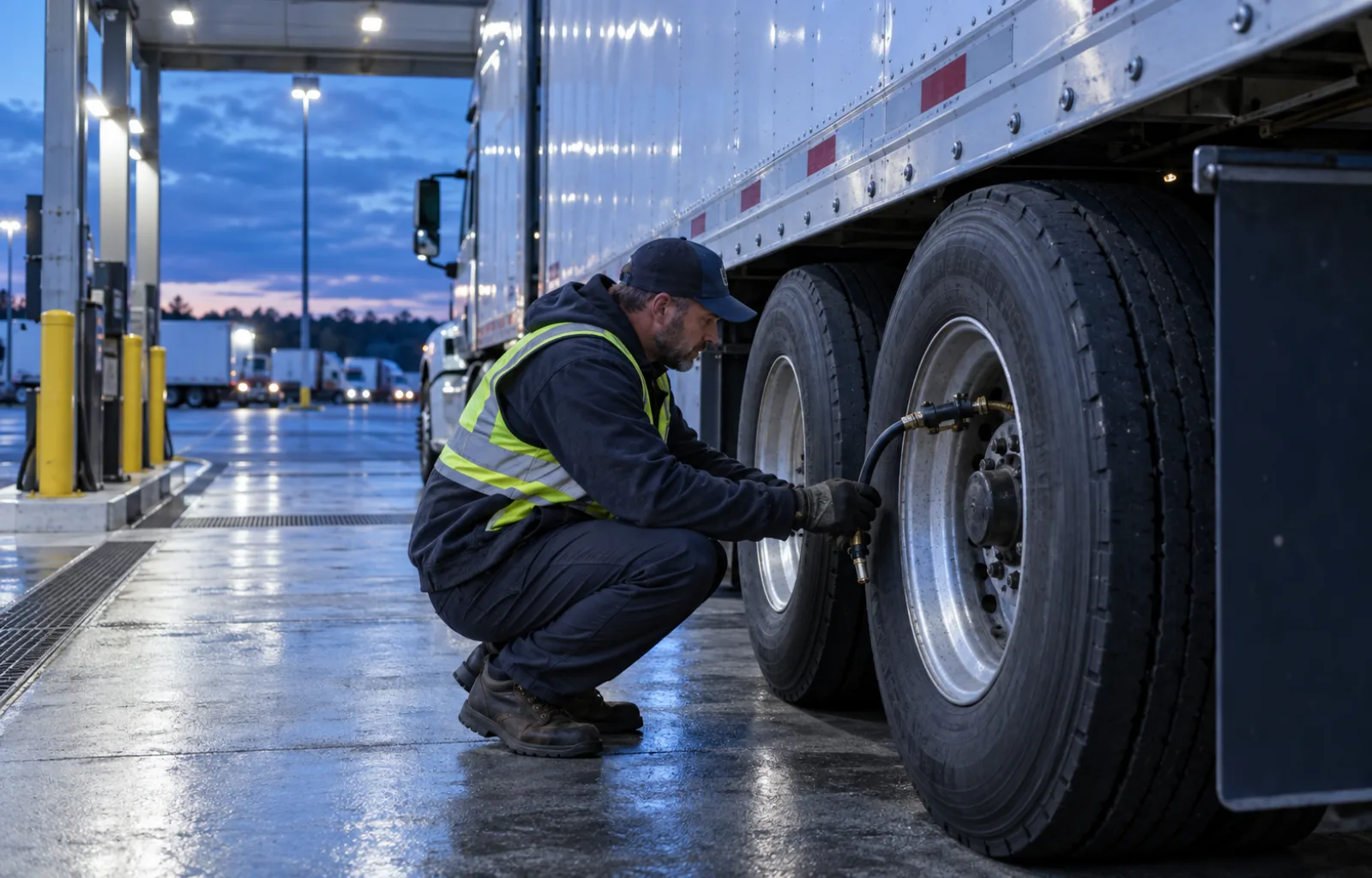
A trailer can keep adding air to a tire that is losing it. That sounds reassuring until the driver has to decide whether the tire is actually fit for another highway leg. An automatic tire-inflation system, or ATIS, moves air through the trailer to tires whose pressure falls below a set level. It can buy time and provide a warning. It cannot close a cut, repair a leaking bead where tire meets rim, or establish that a tire carrying a load is sound. For everyone sharing the road, the useful distinction is between a system that is working and a tire that is safe.
The Commercial Vehicle Safety Alliance's inspection bulletin explains the hardware in plain terms: compressed air from the trailer supply passes a protection valve, a controller and the wheel-end connections before reaching the tire. A light near the trailer's front can come on because a tire is leaking, a system component is leaking, or the system is charging after a tractor is connected. Some installations also use a thermal-event indicator. The same light can therefore point to different conditions; treating every flash as a failed tire would be as imprecise as treating every flash as harmless charging.
Timing and a physical check narrow the question. CVSA says that, on some systems, ordinary air venting can be heard when parking brakes are released and a controller adjusts pressure for a lighter axle load. A light that remains illuminated more than ten minutes after the air supply is connected may mean a tire is losing pressure, the bulletin says. It directs inspection for damage and leaks and repair before a damaged or leaking tire returns to service. If the indicator comes on during a trip, CVSA advises pulling over at the next safe opportunity to determine the cause of the air flow. That is guidance about a safe inspection point, not an instruction to stop abruptly in traffic.
Industry sponsor Run the whole trip in one connected TMS.
See it in action ↗
Run the whole trip in one connected TMS.
See it in action ↗
A July 2026 issue filed with CVSA puts a sharper edge on the problem. A Missouri State Highway Patrol officer described a hypothetical inspection of a trailer tire whose rim was bent after curb contact, allowing air to escape at the bead. The example says the ATIS is operating but cannot keep the tire above the pressure threshold described in the alliance's out-of-service criteria. The request asks CVSA to clarify that a bead leak belongs in a particular out-of-service wording that already addresses certain tread-area leaks. CVSA lists the issue as open. It is a request for a change, not an adopted rule, a finding about a particular carrier or proof that every bead leak meets that example's threshold.
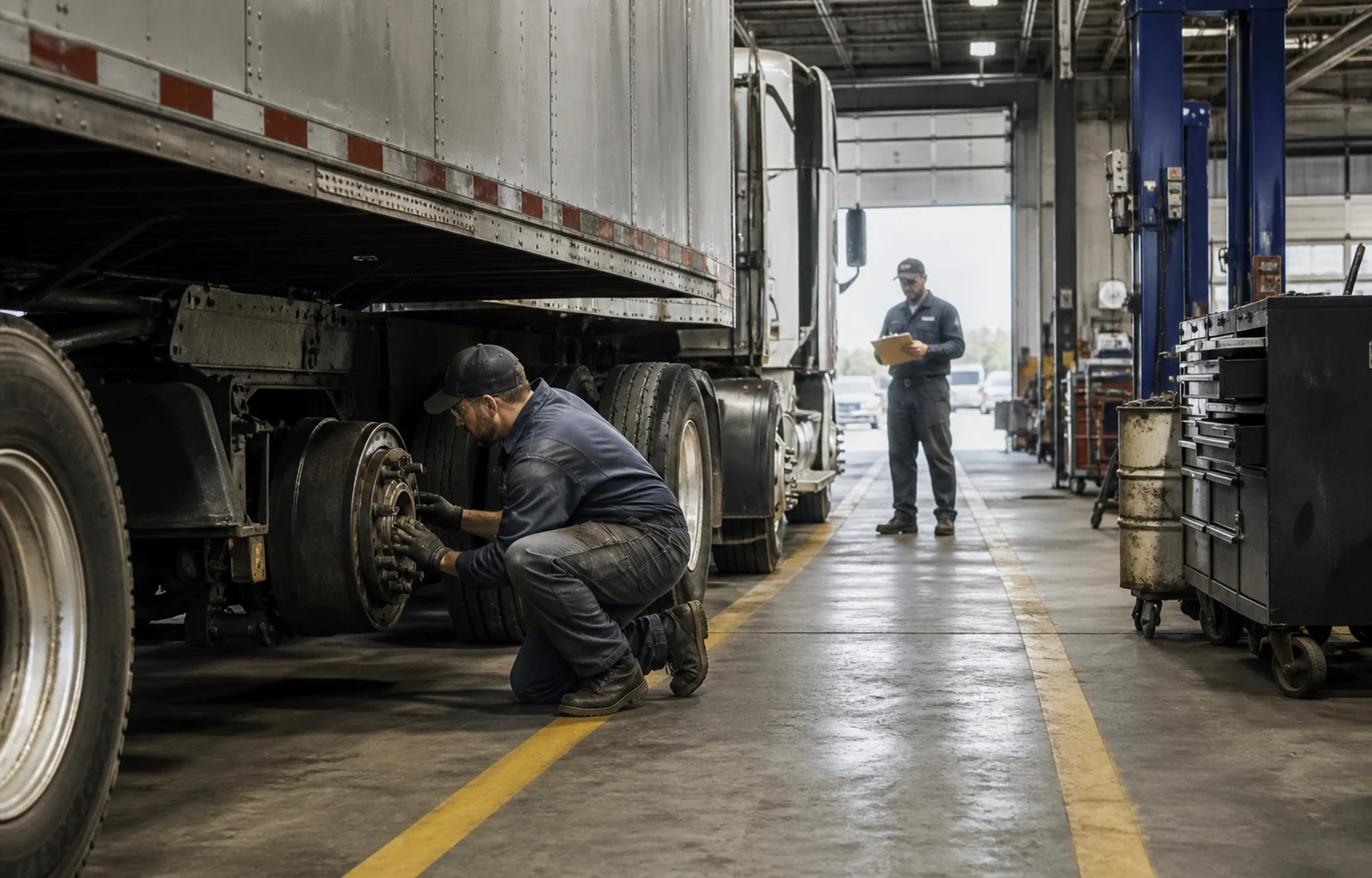
The federal floor is clearer than the open wording debate. Current 49 CFR 393.75 bars operation on a tire that is flat, has an audible leak, exposed belt or ply, or tread or sidewall separation. It also sets minimum major-groove tread depths of 4/32 inch on the front wheels of a truck or truck tractor and 2/32 inch for other covered positions. Those are different checks: air pressure does not erase an exposed cord, and sufficient tread does not make an audible leak acceptable. CVSA's own bulletin says ATIS equipment is not required to be installed or operative under these rules, but a separate tire defect caused or revealed by a faulty system remains subject to the federal requirements.
Pressure needs its own measurement. FMCSA's commercial tire advisory tells operators to gauge tires cold before each trip and to match pressure to the vehicle and tire loading information, rather than guessing from how the sidewall looks. The federal rule says a tire's cold inflation pressure cannot be below that specified for the load it carries. If operation has warmed the tire, the rule calls for estimating cold pressure by subtracting the applicable heat buildup factor from a measured pressure. Its table gives a 15 psi factor for tires rated above 4,000 pounds after an average 41 to 55 mph in the previous hour; other entries and conditions matter. That number is a defined regulatory calculation, not a universal amount to bleed from every warm tire.
CVSA describes ways to check the actual pressure on an ATIS-equipped wheel, including a check-port hose or a hose connection at the hub, depending on the equipment. A tire-pressure monitoring system can also report pressure and temperature to the cab or a fleet system. Those readouts help identify a trend; they do not replace an examination of the tire and wheel for cuts, bulges, unusual wear, a loose or damaged connection, or air escaping where it should not. FMCSA's advisory separately warns that underinflation and overloading can build heat and internal damage that leads to failure. A reading recovered by continuing air flow deserves a question about why the air was needed.
For a fleet, the most useful response is a short handoff between driver, maintenance and dispatch. Record when the light appeared, whether the trailer had just been coupled, what pressure was measured by an approved method, and what the tire, rim and hose looked or sounded like at a safe stop. Identify the axle and tire position so a technician can inspect the actual wheel, then document the repair or a qualified no-defect finding before the equipment is released. That sequence is MilesNews editorial guidance drawn from the sources, not a new federal checklist. It prevents an indicator from being cleared on a screen while the wheel still needs work.
The public consequence is easy to miss because the system is largely hidden. A trailer tire failure can put a heavy vehicle out of service on a shoulder, scatter debris into other lanes and delay the delivery riding behind it. Automatic inflation is useful technology precisely because it can keep a problem from becoming invisible for hours. The next step is human: read the signal, inspect the tire itself and make the road-ready decision from evidence rather than from the fact that the compressor can still pump.
Route check
- An ATIS light may signal normal charging, a system leak, a tire leak or, on some equipment, a thermal event; identify the cause at a safe inspection point.
- CVSA’s July 2026 bead-leak wording request remains open. The current federal tire rule still prohibits operating on a flat tire or one with an audible leak.
- Measure inflation against the load and equipment requirements and inspect the physical tire and wheel; air added by a system is not a repair.