
A truck’s following gap needs rebuilding after a cut-in
The empty pavement ahead of a truck is working space. Current safety guidance explains how to measure it, restore it and resist pressure from the vehicle behind.
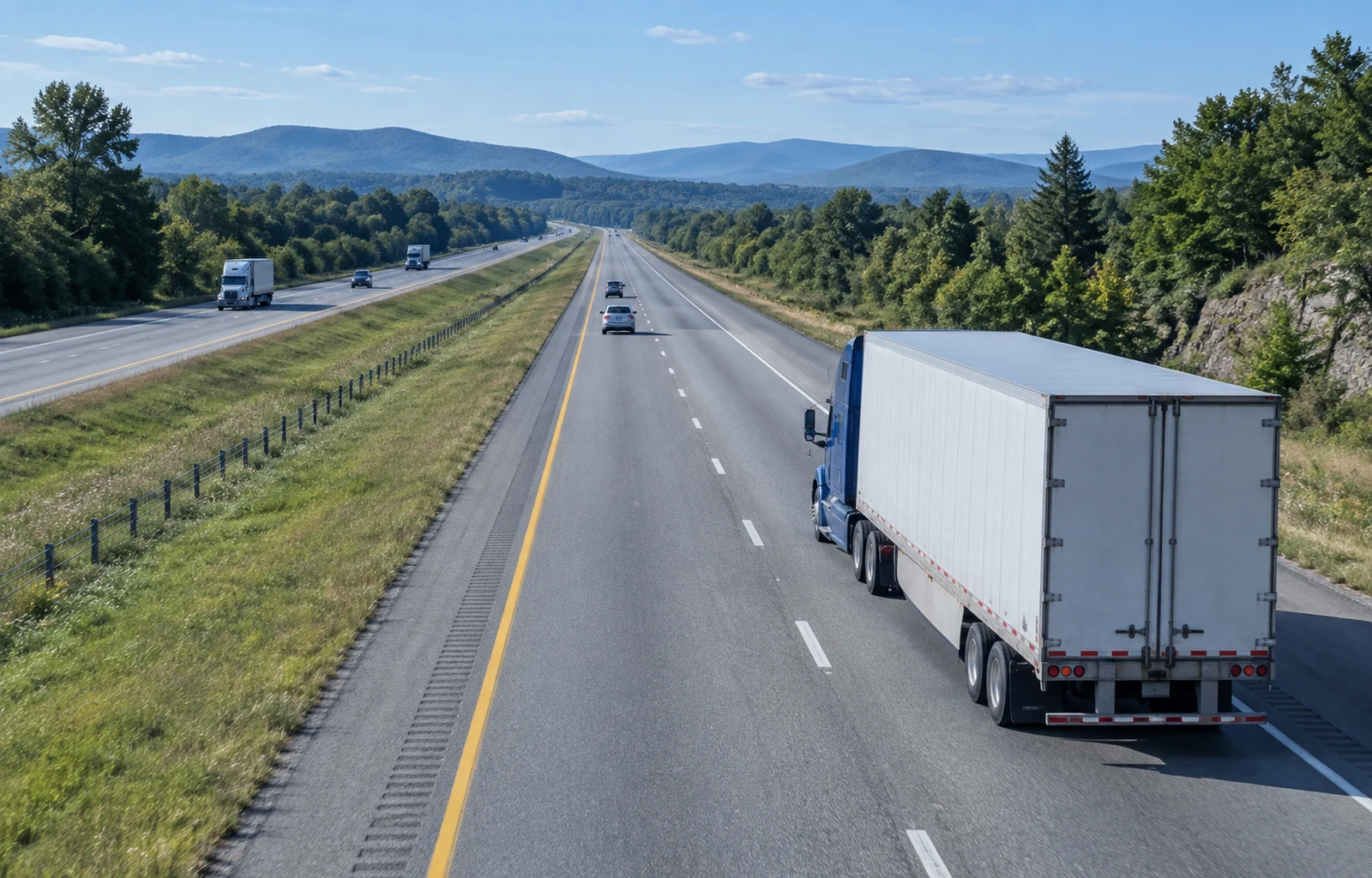
A car moves into the space ahead of a truck, and the traffic picture changes immediately. The gap the truck driver had been maintaining now ends at a different rear bumper. Treating that smaller interval as the new normal leaves less time for the next slowdown. This resource examines how to measure and restore following space using federal and state guidance checked October 15. It reports no new crash or rule. The question matters on ordinary highways nationwide: families and delivery vehicles depend on one another leaving room for a predictable response.
FMCSA’s commercial-driver guidance says large trucks need extra following space for braking and unexpected actions. It also explains that distance buys time to see and make decisions, not simply time to press a pedal. Its basic training rule uses at least one second per ten feet of vehicle length below 40 mph, with another second above 40 mph. Read the length part carefully: a remembered number for a shorter vehicle does not describe every tractor-trailer combination. The agency also calls for a larger interval when weather, road surface, visibility or traffic make conditions worse. These are safety guidelines, not a universal legal clearance for a particular gap.
Oregon’s commercial-driver manual makes the length calculation tangible: its 60-foot example needs six seconds at lower speeds and seven above 40 mph. To check an interval, watch the leading vehicle pass a fixed landmark and count the seconds until your vehicle reaches it. A shadow or pavement marking can supply the reference. The same manual warns that slippery roads require much more stopping space. MilesNews interpretation: measure the interval to the vehicle actually ahead now, rather than remember the gap that existed before someone merged. Repeat the observation after traffic changes; one earlier count cannot describe a later queue.
Industry sponsor Fewer handoffs. Better visibility. Stronger operations.
See how it works ↗
Fewer handoffs. Better visibility. Stronger operations.
See how it works ↗
For the car driver, leaving room after a pass is part of completing the maneuver. FMCSA’s passenger-vehicle guidance says to signal clearly, have the truck visible in the rearview mirror before moving in front, and leave extra space. Visibility in a mirror is therefore only part of the instruction. It is not proof that a close merge followed by immediate braking is safe. MilesNews editorial advice: do not use a truck’s carefully maintained gap as a shortcut to a nearby exit. If the maneuver would require taking its space and abruptly slowing, choose an earlier opportunity instead. That advice protects everyone who will reach the same slowdown behind you.
For the truck driver, the useful response to a reduced gap is to rebuild a suitable interval as conditions safely allow. This is MilesNews’s application of the following-distance guidance, not a prescription for a sudden maneuver. Keep watching the developing traffic rather than turning the encounter into a contest over who should have yielded. A clear gap may disappear repeatedly in dense traffic; that does not make the need for stopping room disappear. A receiver waiting for a delivery should understand the consequence: maintaining space can require accepting a slower progress through the queue instead of recovering every lost vehicle length.
A tailgater behind the truck creates a second pressure, but closing on the vehicle ahead compounds it. Oregon’s manual advises increasing the forward gap, avoiding quick changes, signaling early and reducing speed gradually when slowing is needed. It advises against speeding up or using brake-light tricks. More room ahead gives the driver a better chance to avoid an abrupt response that the following vehicle may not handle. NHTSA separately advises giving aggressive drivers space and using judgment to move safely out of the way of a driver trying to provoke risky behavior. None of this asks a driver to perform an unsafe lane change just to end the encounter.
NHTSA also warns that a posted limit can still be too fast for weather, repair work or poorly lit roads, and that speed increases stopping distance after danger is perceived. MilesNews’s planning takeaway is to protect both parts of the decision: a speed suited to conditions and space suited to the vehicle. For a fleet or family, a useful conversation is specific: where did the gap shrink, how was it checked again, and what allowed a calm response? The pavement ahead is a resource that needs continual renewal. Restoring it after a merge makes the next driver’s unexpected action less likely to become everyone else’s emergency.
Route check
- Measure following space in time and account for the actual vehicle length, speed and conditions.
- After another vehicle merges ahead, reassess the new interval and rebuild suitable space safely.
- Leave extra room when passing a truck; a tailgater behind is a reason to protect forward space, not erase it.