
A VIN search cannot clear a replacement air bag
NHTSA's latest fatality alert exposes a hole in the usual used-vehicle check: illegally imported inflators are aftermarket parts outside the VIN recall record, so crash history and trained inspection carry the decision.
A clean recall search is normally a useful part of a used-vehicle check. It is not enough for the replacement air bag now at the center of a national safety warning. The National Highway Traffic Safety Administration said September 3 that an eleventh person had died after a defective frontal driver air bag inflator marked DTN60DB ruptured. Because these inflators were installed as aftermarket equipment and are not tied to the vehicle identification number, NHTSA says a VIN search cannot show whether one is inside a particular vehicle.
The known record now covers 14 crashes, 11 deaths and three severe injuries from 2023 through August 2026. Earlier incidents involved Chevrolet Malibu and Hyundai Sonata cars. The newest fatal crash involved a 2018 Chevrolet Equinox, the first known rupture in that model. NHTSA says there is no information showing the danger is limited to those three models, which is why this is a vehicle-history question for used-vehicle owners and buyers rather than a model-specific shopping warning.
An inflator is the gas-generating part inside an air bag module. In a normal deployment, it remains intact while filling the cushion. NHTSA's final defect decision found that the DTN60DB-marked inflators can instead rupture and send metal debris into the passenger compartment. The agency immediately prohibited their sale and import this spring. It has since added the August fatality and a June severe-injury crash to its public case list, showing why the warning still requires action after the ban.
The gap begins with how the parts entered service. NHTSA says most known vehicles had been in a prior crash and received a replacement driver air bag after the original deployed; theft is another possible reason an air bag may have been replaced. The agency believes the suspect inflators were likely imported illegally, and it cannot identify a complete affected population. A vehicle's factory equipment list and open-recall result therefore answer a narrower question than the one a used-vehicle buyer needs to ask: who supplied the air bag that is in the steering wheel now?
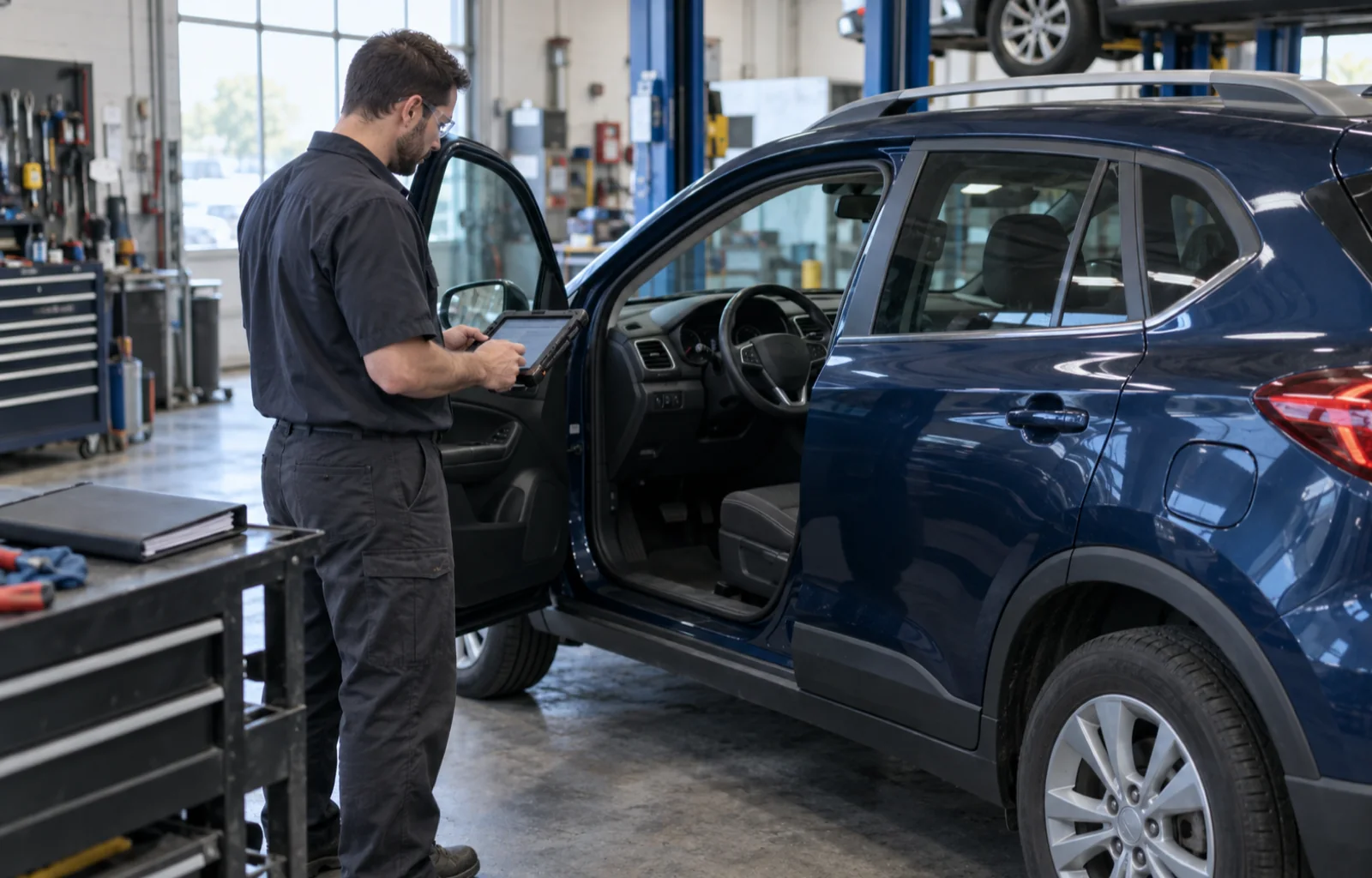
NHTSA tells owners and buyers to review the vehicle's history for an air bag deployment, prior crash or total-loss event, reported theft, or repair at a non-certified service center. Its technician guidance adds an important limit: commercial history reports can be good indicators but may not capture every crash. The practical check has three layers—history, repair documentation and professional inspection. A history report can raise the question; invoices or written proof can establish that genuine original-equipment replacement parts were used; a qualified technician can examine a vehicle when that trail is incomplete.
Industry sponsor From load to settlement, keep it connected.
Follow the workflow ↗
From load to settlement, keep it connected.
Follow the workflow ↗
That inspection is not a do-it-yourself steering-wheel project. NHTSA directs owners to a dealership for the vehicle manufacturer or a reputable independent repair shop and warns people not to remove the air bag cover or inspect the inflator themselves. Its technician guidance also cautions professionals not to electronically probe or energize air bag terminals because doing so can detonate the device. The published markings and visual clues are for trained technicians working through the agency's guidance, not a roadside identification exercise.
If a DTN60DB inflator is found, NHTSA says the vehicle should not be driven until the part is replaced with genuine original equipment. The agency also says a traditional recall is unlikely because the inflators were likely imported illegally and no list of affected vehicles exists. Owners are currently responsible for the inspection and replacement cost. That is a difficult distinction, but it prevents a dangerous delay: the absence of a mailed recall or free scheduled remedy does not convert an unknown replacement part into a cleared one.
For small fleets, service companies and households that move used cars, pickups or support vehicles between drivers, the transferable lesson is to preserve collision-repair history with the vehicle rather than only with the person who approved the invoice. That is MilesNews editorial guidance, not a new federal recordkeeping rule. A handoff note can flag an air bag deployment, the repair facility, the installed part documentation and any remaining inspection question before the next driver treats a clean dashboard and clean VIN result as a complete safety check.

A normal recall review still matters. NHTSA's VIN tool identifies unrepaired manufacturer campaigns for many vehicles, and its SaferCar app can monitor vehicles and separately entered equipment. This warning does not make those tools unreliable; it defines their boundary. A recall database can report what manufacturers and the agency can connect to a VIN. It cannot reconstruct an undocumented crash repair or identify an illegally supplied component that was never assigned to that vehicle record.
The road-level decision is narrow enough to use today. If a used vehicle has a known, documented original air bag history, continue the regular recall routine. If its history is unknown—or shows an air bag deployment, theft or uncertain repair since 2020—move the question to a qualified shop instead of trying to settle it from the driver's seat. Fourteen cases across multiple states do not establish how many suspect inflators remain in the country, and NHTSA says it cannot make that estimate. They do establish why a zero-recall screen is not the finish line for this particular replacement air bag.
NHTSA asks anyone whose vehicle is found to contain a DTN60DB inflator to report it to the agency and law enforcement. Its Vehicle Safety Hotline is 888-327-4236, available Monday through Friday from 8 a.m. to 8 p.m. Eastern time. The agency's online warning and technician guidance should be checked for updates before an inspection because NHTSA says its guidance may change as the investigation continues.
Route check
- A VIN recall result cannot identify a DTN60DB aftermarket inflator because the suspect part is not tied to the vehicle record.
- Review crash, air bag deployment, theft and repair history; move an uncertain case to a dealership or reputable independent technician.
- Do not inspect the steering-wheel air bag yourself, and do not drive a vehicle in which a DTN60DB inflator is found until it is replaced.