
A wet road can take traction before it looks flooded
Hydroplaning, wet brakes and floodwater are different hazards. Recognizing the difference changes the decision before the next puddle, curve or delivery deadline.
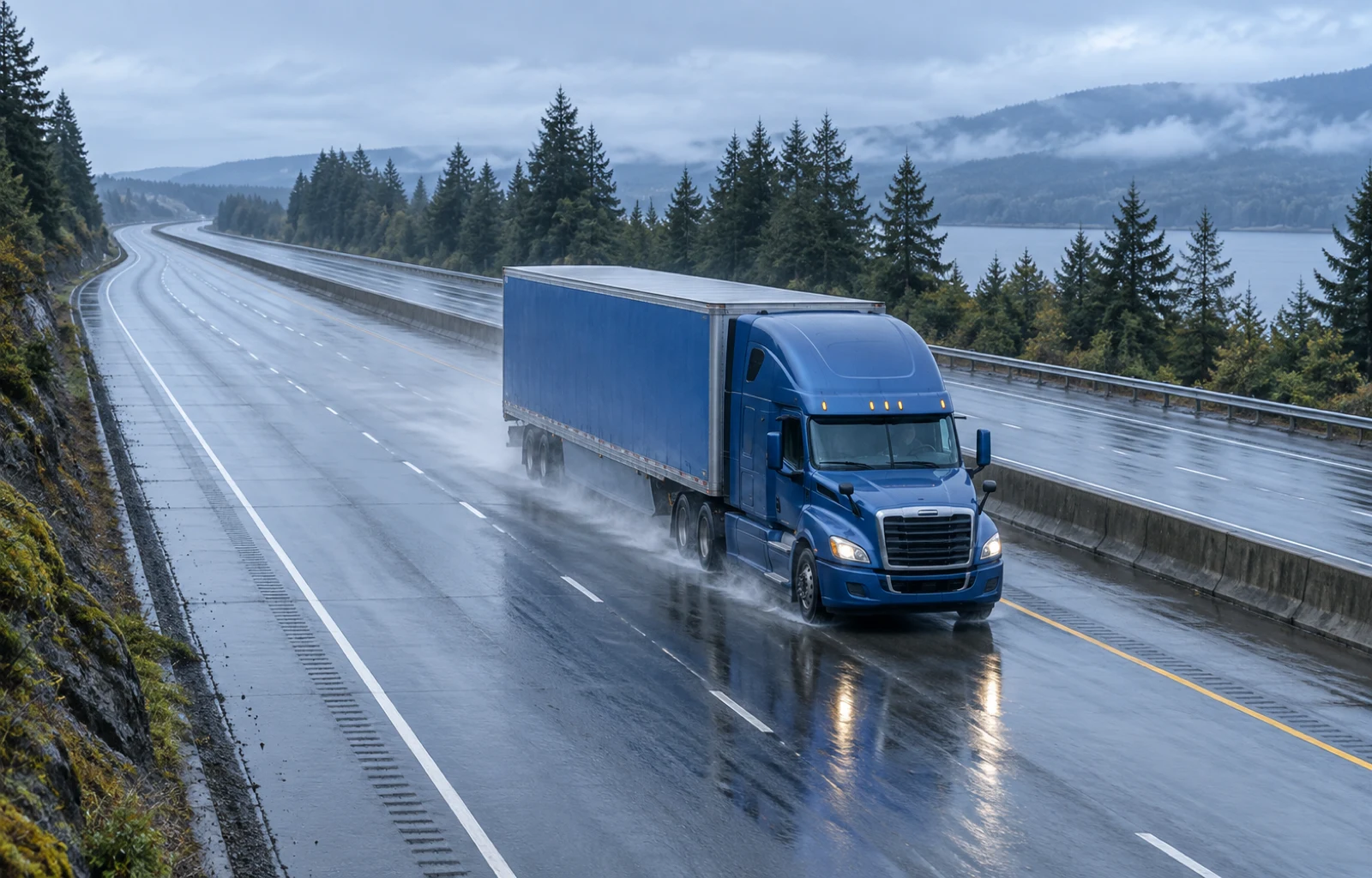
A road does not have to disappear under floodwater to stop giving a driver reliable grip. On an ordinary rainy trip, reflective pavement can demand a different response from the dry miles behind it. Hydroplaning, water-affected brakes and a flooded crossing are separate problems; one generic wet-weather warning hides the decision each requires. This resource uses federal and state guidance checked October 16. It reports no new storm or crash. The practical question for truck drivers and everyone sharing their route is what to recognize before steering and braking stop working as expected.
Oregon’s commercial-driver manual describes hydroplaning as water or slush separating tires from pavement, leaving little or no traction. Steering and braking may be ineffective. It warns that this can happen with relatively little water, and at speeds as low as 30 mph when there is a lot of water. Low tire pressure and worn tread increase the likelihood. Reflections, tire splashes and raindrops on pavement indicate standing water. Thirty miles per hour is a warning example, not a safe target: the manual does not promise that every tire and road combination keeps its grip below that speed.
The useful action comes earlier. FMCSA’s safe-speed guidance tells commercial drivers to adapt to changing weather and traffic and emphasizes control through curves and ramps. MilesNews interpretation: make the speed decision while tires still have dependable contact, rather than wait for a loss of response to prove a puddle mattered. A posted maximum does not describe the traction in a particular wheel track. For motorists around a truck, slower progress through rain may reflect a changing surface rather than a mechanical problem or an invitation to crowd it.
Industry sponsor Fewer handoffs. Better visibility. Stronger operations.
See how it works ↗
Fewer handoffs. Better visibility. Stronger operations.
See how it works ↗
If hydroplaning occurs, Oregon advises releasing the accelerator and, for a manual transmission, depressing the clutch so the wheels turn freely; it says not to brake to slow a hydroplaning vehicle. Water in the brakes is another problem: the manual warns of weak, uneven or grabbing brake action, potentially producing pulling, wheel lockup or a jackknife with a trailer. Reporting changed braking after heavy rain therefore requires describing the symptom rather than assuming every wet-road problem has the same cause. Vehicle-specific training remains essential.
For commercial vehicles within its scope, 49 CFR 392.14 requires extreme caution when hazardous conditions impair visibility or traction, reduced speed under those conditions, and discontinuing operation when conditions become sufficiently dangerous. Operation must wait until the vehicle can be driven safely again. The rule includes a narrow provision concerning passenger safety; a freight deadline is not that provision. MilesNews planning advice: dispatchers and receivers should accept a traction-related delay as a change in trip conditions. A useful update identifies the affected segment and the need to reassess, without asking the driver to troubleshoot a schedule while moving.
Floodwater calls for a separate boundary. The National Weather Service warns against entering a flooded road or going around a barricade because water can hide a damaged roadbed. Depth can be deceptive and conditions can change quickly. FMCSA’s hazardous-weather card likewise tells drivers to avoid flooded roads and change an unsafe route. MilesNews interpretation: vehicle-control advice for wet pavement cannot establish that submerged pavement exists or is sound. Do not use a brake-drying procedure or another vehicle’s passage as permission to enter floodwater.
The trip plan should preserve three conversations: available tire grip, reliable braking, and whether the road is passable at all. FMCSA advises checking weather and route conditions in advance and completing pre-trip tire and brake checks. It also warns that ordinary navigation may omit commercial-vehicle restrictions. If rain forces a route change, an apparently clear side road still needs a truck-suitability check. For a family awaiting someone’s arrival or a business awaiting a delivery, the useful expectation is a revised arrival estimate after a safe reassessment. Keeping a trip moving is valuable only while the driver can keep the vehicle under control.
Route check
- Slow for the actual wet surface before traction is lost; 30 mph is not a hydroplaning safety threshold.
- Distinguish loss of tire grip from changed brake performance and follow vehicle-specific training.
- Avoid flooded roads; a larger vehicle and an apparent detour do not establish safe passage.