
A wrong-tank fill needs a stop before the restart
Diesel and DEF serve different systems. Identify the fill point first, and make a suspected mix-up a service call before the truck moves.
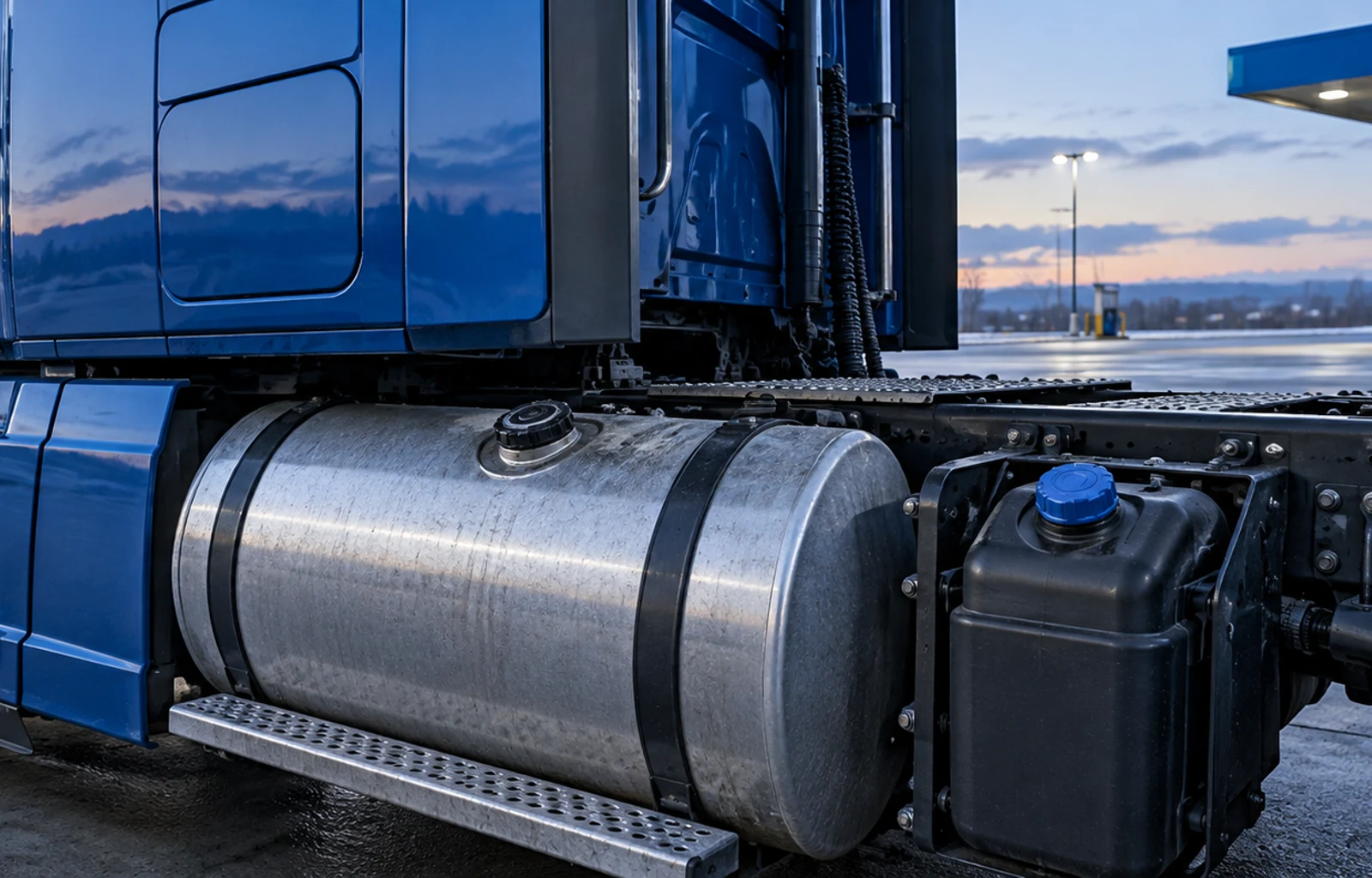
A fuel stop can interrupt a delivery for a reason that has nothing to do with the price on the sign: fluid entering the wrong tank. Diesel exhaust fluid, usually shortened to DEF, belongs in a separate system from diesel fuel. For drivers changing trucks, helping with a refill or using a portable container, the useful question is what to confirm before pouring—and what to do if the mistake is discovered afterward. This resource examines existing manufacturer and supplier guidance verified October 23. It reports no new contamination incident or recall.
Freightliner’s 108SD and 114SD driver manual gives a concrete identification example. It describes DEF as a fluid used in the aftertreatment system to reduce nitrogen oxides in the exhaust. For the trucks covered, the DEF tank uses a blue cap and a 19-millimeter filler opening intended to keep a diesel outlet hose from entering. Those details help identify that equipment; they do not establish a universal tank location for every vehicle. MilesNews recommends finding the actual truck’s fill points and reading their markings before opening a container. A nearby opening is not enough evidence that it is the right opening.
Clean handling matters even when the correct tank has been found. DEF supplier Yara recommends dedicated dispensing equipment, intact container seals and protection from dirt. Its guidance says not to mix DEF with fuel, oil, tap water or other liquids. MilesNews advice is to stop a refill when the container or its prior use is uncertain, and obtain the specified fluid and suitable equipment. A convenient funnel previously used for another product can undermine the separation the truck’s two reservoirs were built to provide.
The consequences run in both directions. A Detroit service bulletin dated May 31, 2013, covering EPA10 and GHG14 applications, explains that DEF entering diesel fuel can cause corrosion and major fuel-system or injector damage. Diesel entering the DEF system can damage seals. The bulletin also explains why an apparently clear fuel-tank sample cannot reliably dismiss the mistake: DEF and diesel do not mix, and contamination can settle or already have traveled into the system. These are technical findings for the bulletin’s stated applications, not a new defect announcement or a repair prescription for every engine.
When a wrong-tank fill is recognized, Yara’s instruction is to leave the engine unstarted and avoid driving the vehicle to a more convenient position. It calls for draining the affected tank where the vehicle stands. MilesNews recommends arranging that response through qualified service personnel and alerting the fuel-stop operator so the stationary truck can be managed safely. Do not treat adding more of the correct fluid as a repair or start the engine to see whether it runs. If it has already run, report that fact promptly to service rather than experimenting with another restart.
Industry sponsor From load to settlement, keep it connected.
Follow the workflow ↗
A useful handoff preserves the sequence. MilesNews recommends recording the truck identity, product and container or pump used, the opening filled, approximate quantity, and whether the ignition or engine was operated afterward. Save the receipt and product details for maintenance; let the appropriate service procedure determine inspection, cleanup and return to use. For dispatch and the customer awaiting a delivery, that means revising the trip around a service decision. The prevention step is small enough for any stop nationwide: identify the product and its destination before filling. Once they have been mixed, keeping the truck still gives the service team a clearer starting point.
Route check
- Identify the actual truck’s diesel and DEF fill points before pouring.
- Use clean, dedicated DEF equipment and the specified fluid.
- After a suspected wrong-tank fill, avoid starting or driving; arrange qualified service.