
After the cleanup, check the mat below the pedals
A clean driver footwell can still have the wrong mat, a loose retainer or a second layer. Before the next trip, check the space the pedals actually need.
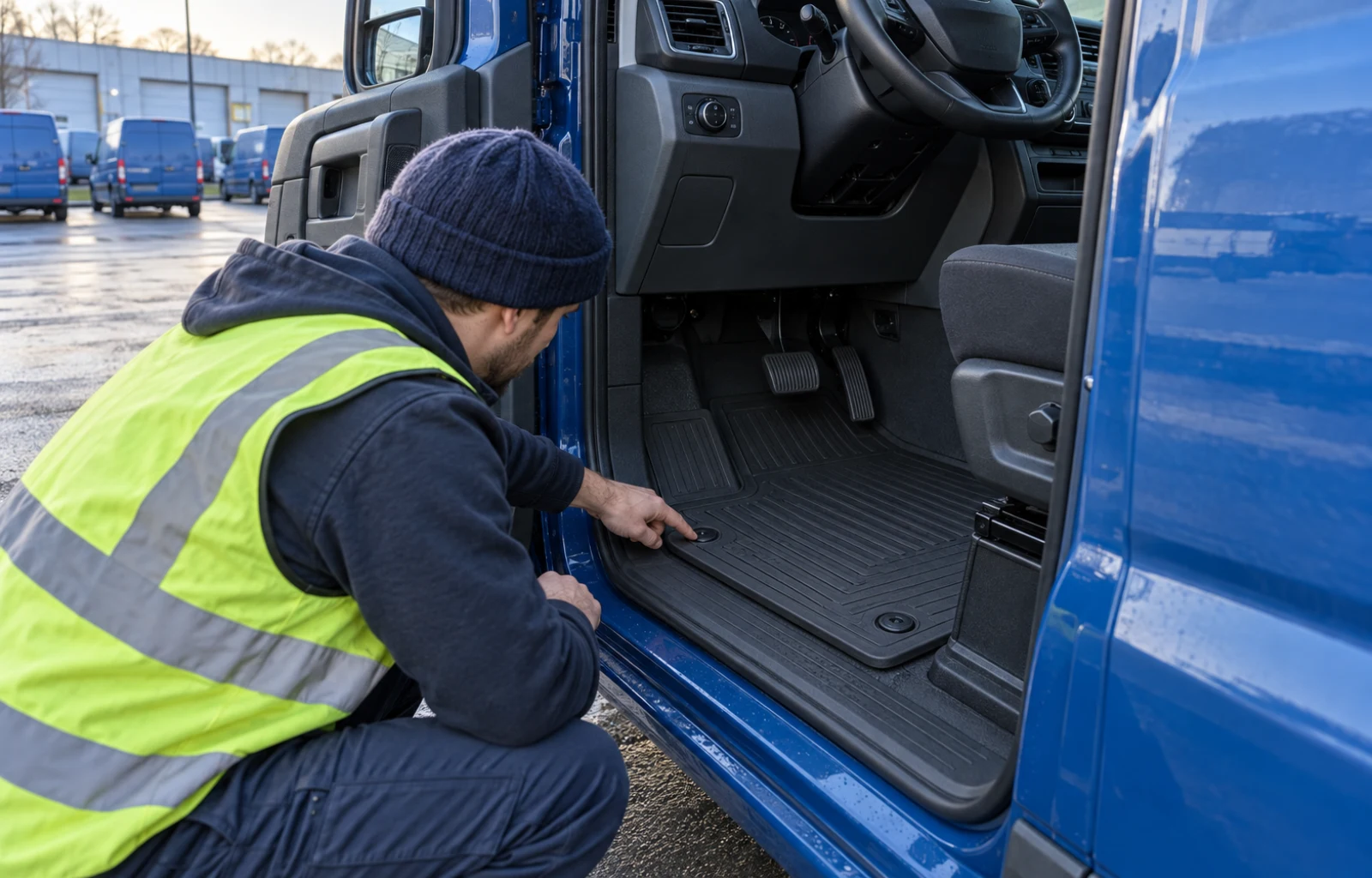
A vehicle can look ready after a wash while a small part of the departure check remains unfinished: the mat beneath the driver's feet. Removing it to shake out dirt, swapping in a seasonal liner or borrowing a vehicle changes what needs checking before the wheels move. Does this mat belong in this footwell, is it held in place as intended, and can the pedals work without interference? MilesNews reviewed manufacturer instructions and federal investigation records October 30 for this practical resource. It is a fit-and-installation check, not an announcement of a new recall.
Ford's online floor-mat guidance calls for a mat made for the vehicle, attachment to its floor posts and regular checks that it remains secure. It warns against adding another mat layer and against loose objects reaching the pedal area. For a driver, those are separate observations: matching the outline does not establish that the retainers are engaged, and engaging retainers does not make a stack of mats acceptable. A cleanup is a useful moment to check all three conditions together, following the instructions for the actual vehicle.
The reason for that care is mechanical, rather than cosmetic. In its 2011 report on Toyota unintended acceleration, NHTSA documented pedal entrapment involving unsecured or incompatible mats. One investigated loaner car carried a mat intended for a different vehicle; the agency concluded that entrapment caused the excessive speed in that case. This is historical evidence of a failure mechanism, not a claim that today's vehicles share a single defect or that every acceleration complaint has the same cause. It shows why a mat that appears usable can still be wrong for a particular pedal-and-floor arrangement.
Toyota's archived 2009 recall instructions make the installation questions concrete: identify the mat for the specific model and year, use the prescribed retaining hooks, avoid stacking and check that the accelerator, brake and clutch, where fitted, are unobstructed. That document also gave affected owners an interim removal instruction while a remedy was being developed. Its campaign instructions belong to those vehicles and that recall; they are not a current universal repair procedure. Owners need their vehicle's current manual and any applicable recall instructions before deciding how to install or replace equipment.
Industry sponsor One view for dispatch, drivers, and the back office.
Explore the TMS ↗
For a delivery van or family car, MilesNews recommends making the handoff after cleaning explicit. Identify the driver mat, check its attachments according to the manual and clear loose belongings from the footwell before departure. Perform any pedal-clearance check only with the vehicle safely parked and secured, using its manufacturer's procedure. Do not reach down to rearrange a mat while driving. If the mat shifts, cannot attach correctly or interferes with a pedal, resolve the fit or installation problem before using it; ask the vehicle provider or qualified service shop when the correct arrangement is unclear.
Commercial trucks need the same vehicle-specific discipline without borrowing a passenger-car procedure. Cab floors, pedal layouts and retaining systems differ. Freightliner provides model-based driver and maintenance manuals and VIN-specific training resources, a better starting point than assuming that another truck's liner will fit. MilesNews analysis: a fleet can include the floor covering in its cleaning and vehicle-assignment handoff, so the next driver knows whether anything was removed or changed. This recommendation concerns control clearance; it does not replace a truck's required inspection or diagnose a pedal fault.
The benefit reaches beyond the person in the cab. The delivery vehicle leaving a depot, the borrowed car entering traffic and the truck pulling away from a stop all share space with people who depend on predictable control. A mat's color or cleanliness says little about whether it belongs beneath those pedals. Before the next departure, settle the application, attachment and clearance questions while the vehicle is stationary. A small accessory deserves that check because it sits beside controls used on every mile.
Route check
- Use the mat and retaining system specified for the actual vehicle.
- Keep the driver position to the permitted single layer and clear loose objects.
- Check installation and pedal clearance while safely parked, following the vehicle manual.