
Before a truck backs up, agree on how to stop
A helper can make a reversing truck safer only when both people understand the signals, stay visible and know when movement must stop. The preparation matters at delivery yards, roadside worksites and neighborhood service stops.
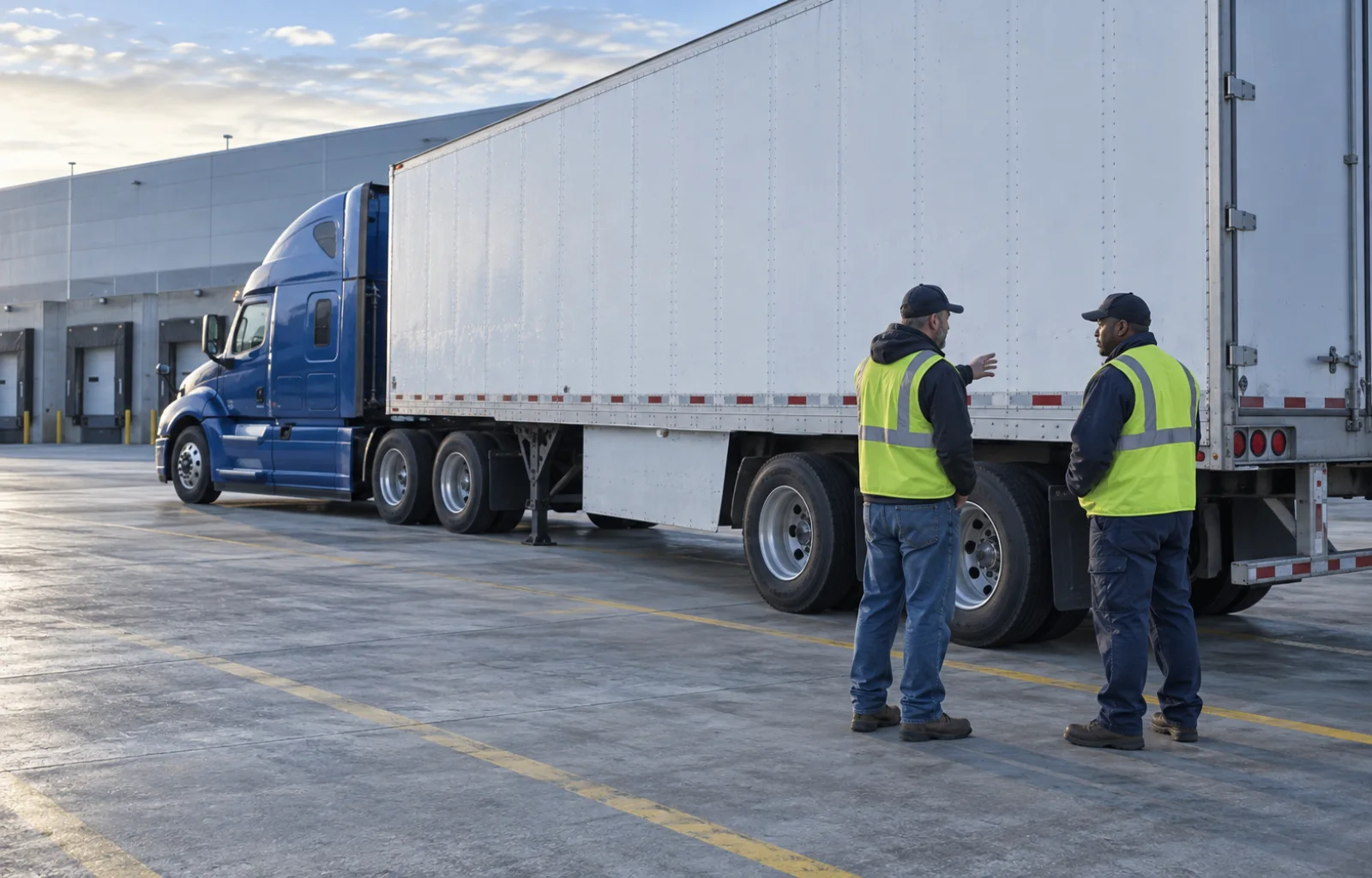
A truck can arrive at the right address and still face its hardest movement before unloading. Reversing into a delivery space puts the driver, a helper and anyone crossing nearby into the same small area. The useful question is not simply whether someone is standing outside to help. Do both people know what will stop the truck? This shared-road resource examines existing backing guidance checked October 5, drawing on federal workplace-safety material and a commercial-driver manual. It reports no new rule or incident. Its relevance extends from freight yards to construction access and neighborhood collection routes: a safe arrival includes the people on foot.
OSHA’s backover-prevention guidance recommends agreeing on hand signals before reversing and maintaining visual contact throughout the movement. If the driver loses sight of the spotter, its instruction is to stop immediately. A spotter is the person helping the driver observe the movement and hazards outside the cab. A wave from someone who has not discussed the plan can be ambiguous. MilesNews editorial advice: settle the intended path, identify the helper and confirm the stop signal while the vehicle is stationary. Do not make the first exchange a guess through a mirror.
The helper needs attention as well as visibility. OSHA recommends giving spotters no additional duties during the maneuver, avoiding distracting personal devices and providing high-visibility clothing, particularly at night. Those recommendations address a weakness in an otherwise sensible arrangement: someone watching a reversing truck can become distracted by a second task. Editorial implication for receivers and yard teams: scheduling a helper should include protected time to do that work. Asking the same person to guide the truck and handle another arrival can undermine the communication the driver is relying on.
The driver still has a path to inspect. Oregon’s CDL manual recommends avoiding backing where possible, walking the intended route beforehand, checking side and overhead clearance, using both mirrors and moving slowly. It also favors backing toward the driver’s side when possible because the view is better. A helper adds observation; the helper does not remove those checks. Editorial advice: if the view or instructions become uncertain, secure the stopped vehicle using the appropriate procedure before getting out to reassess. An earlier look establishes what was there at that moment, not what may enter the space afterward.
NIOSH’s 2024 refuse-truck guidance makes the moving relationship especially clear. It advises stopping when the spotter needs to change position, keeping the spotter outside the vehicle’s path and signaling a stop if someone or something enters the area behind the truck. It also warns spotters against walking backward. The source concerns waste-collection work, not every tractor-trailer maneuver; MilesNews identifies the transferable lesson as a planned pause when observation changes. Moving to a better viewpoint should happen with the truck stopped. A helper should not have to keep pace with a reversing vehicle while searching for a safe place to stand.
Industry sponsor From load to settlement, keep it connected.
Follow the workflow ↗
From load to settlement, keep it connected.
Follow the workflow ↗
Cameras and detection equipment can add information, but their presence does not settle the human plan. NIOSH describes technology as an aid to safe work practices, not a replacement. MilesNews editorial inference: a visible camera screen cannot establish that a pedestrian will remain clear, that a helper understood the signal, or that everyone knows when to pause. Likewise, an audible backing warning tells nearby people that a hazard exists; it does not reserve the space. For families, customers and other drivers, the practical response is to wait outside the maneuvering area rather than slip behind the vehicle to save a few seconds.
OSHA labels its suggested solutions informational and separately explains that applicable backing requirements vary with the equipment and work setting. Follow the rules and procedures for the actual operation. The preparation described here is a coordination question worth asking before the movement begins: who is helping, what signals are understood, where will that person remain visible, and what changes require a stop? For a business awaiting a delivery, leave room and time for that conversation. For the driver and helper, treat a pause as part of completing the maneuver. A few feet remaining to the dock do not make uncertain communication safer.
Route check
- Agree on the backing plan and an understood stop signal before the truck moves.
- Stop immediately if visual contact with the spotter is lost; stop before the spotter changes position.
- Keep the helper focused and clear of the vehicle path, and keep pedestrians outside the maneuvering area.