
Daytime running lights do not finish the dusk check
A bright dashboard and lit front lamps cannot confirm what traffic behind you sees. The useful check follows the light switch all the way around the vehicle.
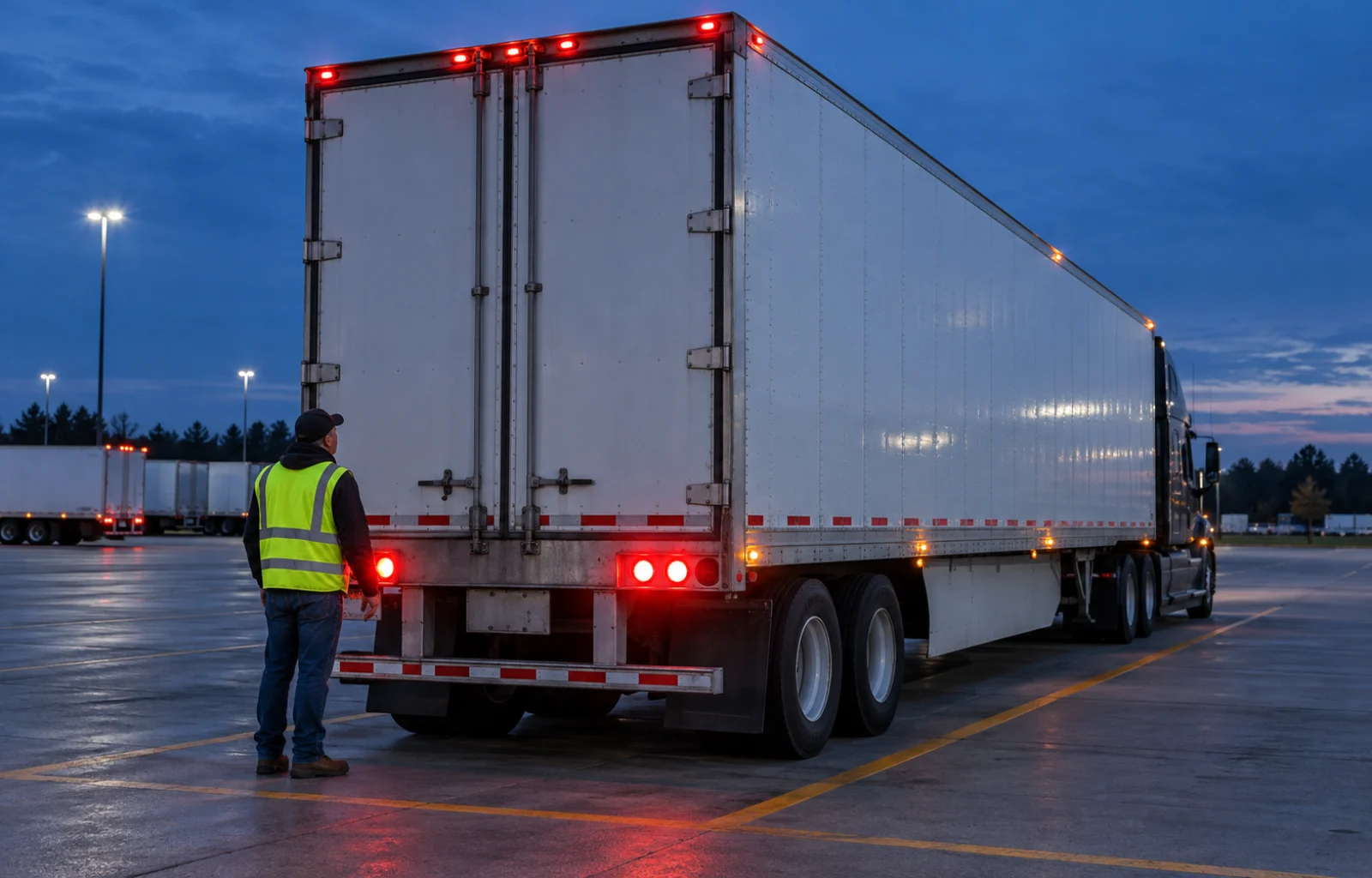
A truck leaves a brightly lit parking area with light visible at its front. That alone cannot answer the question for the car approaching from behind: are the rear lamps on? The same uncertainty can follow a family car out of a shopping center. MilesNews checked current public lighting guidance and a truck manufacturer’s manual on October 25. This practical resource reports no new incident, recall or U.S. lighting deadline. It explains why the change from daytime visibility to dusk or poor weather needs a check of the actual lighting mode and the vehicle’s exterior.
Transport Canada warns that an illuminated dashboard does not necessarily mean the headlights and taillights are on. Daytime running lights help a vehicle be seen during daylight; the agency says they do not provide adequate light for darkness or bad weather. Its advice is to turn on the headlights in those conditions. Equipment varies: Canadian requirements introduced in September 2021 allow several approaches, including taillights operating with daytime lamps, automatic exterior lighting in darkness, or a dashboard that remains dark as a reminder. That is Canadian regulatory context, not a new requirement for U.S. vehicles. The practical point travels across the border: do not assume every vehicle couples its front and rear lights the same way.
The distinction also appears in heavy-truck controls. Freightliner’s New Cascadia driver’s manual describes optional daytime running lights that activate with ignition on and the parking brake released, then switch off when the headlights are turned on or the parking brake is applied. Separately, on vehicles equipped with a rain-light sensor, the automatic position activates low-beam headlights and exterior lights when ambient light falls to a preset level. Those descriptions apply to the equipment covered by that manual. They do not establish what another truck, another model year or a particular trailer is doing. MilesNews recommends locating the actual vehicle’s instructions before the trip, especially after changing trucks or using unfamiliar equipment.
Make the check while safely parked. Oregon’s commercial driver manual treats headlights, clearance and identification lamps, side markers, taillights, turn signals and stop lamps as distinct inspection items. It also calls for cleaning lights and reflectors during the walk-around. MilesNews editorial advice: select the lighting mode appropriate to the conditions, then verify the relevant lamps around both tractor and trailer rather than ending the check at the cab. Use the vehicle’s approved inspection method or a trained helper for brake and signal functions. Keep the vehicle secured throughout; releasing a parking brake merely to demonstrate daytime lights is unnecessary for this preparation check.
Industry sponsor Keep every mile and every document connected.
Take a closer look ↗
A lamp that is switched on can still be hidden or defective. For commercial vehicles covered by the federal equipment rules, 49 CFR 393.9 requires the lamps specified by that subpart to remain operable and generally prohibits obstruction of required lamps and reflective material by dirt, loads, coverings or equipment. The section includes a limited exception for certain front-end conspicuity treatments obscured by a load. MilesNews recommends reporting the precise failed or obscured lamp and vehicle location to maintenance. A working headlight cannot resolve a separate trailer-light defect, and turning a switch again is not a repair diagnosis.
The question is about recognition as well as the driver’s view. MilesNews analysis: a following motorist needs to recognize the vehicle ahead, while someone alongside needs to understand its length and movement. A departure check that considers front, side and rear serves all those road users. For a household, that means learning the difference between the daytime, automatic and headlight settings before an unfamiliar car’s first evening trip. For a delivery operation, it means allowing time to identify a lighting problem before the vehicle joins traffic, with an arrival estimate that can accommodate repairs.
Before pulling out, ask three concrete questions: which lighting mode is selected, which exterior functions have actually been checked, and is any defect still unresolved? This is an editorial preparation aid, not a complete inspection procedure or a summary of every state’s lighting law. Follow the manual for the vehicle and the applicable rules for the route. The useful evidence is outside the cab: the right lamps operating, visible and ready for the conditions the next road presents.
Route check
- A lit dashboard or front daytime lamps do not establish that the rear lights are on.
- Learn the actual vehicle’s lighting controls and check tractor and trailer functions while secured.
- Report failed or obscured lamps before departure; a switch setting cannot clear an equipment defect.