
Headlight glare review meets tonight's sight limit
NHTSA is opening a lighting-rule review that includes glare, headlamp aim and height. The road-level question connects that work to the view a driver needs before the brakes can do their job.
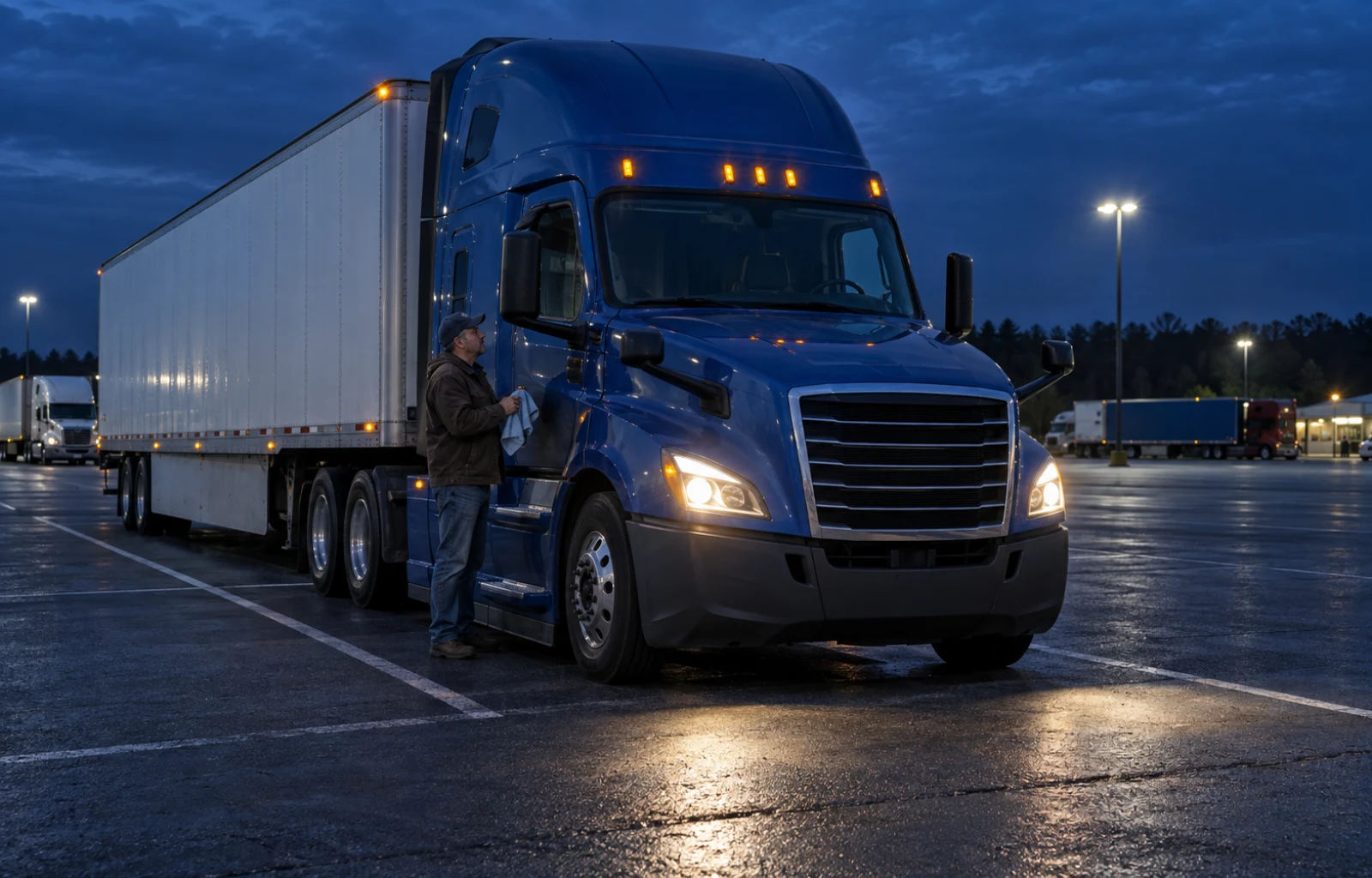
The glare that meets a driver on a dark road is entering a new federal conversation. On October 6, the National Highway Traffic Safety Administration announced a negotiated rulemaking effort to modernize Federal Motor Vehicle Safety Standard No. 108, which covers vehicle lighting. Its agenda includes glare, headlamp height and aim, LEDs, automatic high beams and dusk sensors. For truck drivers, families and anyone traveling beside a delivery vehicle at night, the immediate question remains practical: how much road can the driver actually see, and is there room to stop inside that view?
NHTSA says the transportation secretary will appoint up to 18 stakeholders from lighting, equipment, safety, research and engineering organizations. The agency is seeking comments on the effort's scope and committee balance, along with membership nominations, by November 9 through docket NHTSA-2026-1981. This announcement describes a rulemaking process; it does not announce a newly effective headlight specification or a replacement deadline for today's truck. MilesNews analysis: the useful watch point is whether future proposals address the interaction between seeing farther and imposing glare on someone else, rather than treating more light as an answer by itself.
That interaction has a physical explanation. FHWA's 2008 crosswalk-lighting research describes nighttime visibility in terms of contrast between a person and the background. Headlamps, clothing, surrounding surfaces and fixed lighting all affect that contrast. This is historical research, checked today, rather than a new test of modern truck lamps. Its relevant lesson is that a bright-looking road scene and a detectable person are different things. Editorial implication: a driver can see an illuminated sign or a distant row of lamps without having a comparably clear view of an unlit person nearer the pavement. The brightness that catches the eye does not establish a usable stopping corridor.
Oregon's current commercial-driver manual connects sight distance to the whole stop. Recognition, reaction and braking each consume distance; the truck travels before the brakes begin their work. Its night-driving guidance says speed must allow a stop within the headlight range. It also warns that dirty or improperly aimed lamps reduce useful visibility and can interfere with other drivers. Those are training principles, not a single speed prescription for every vehicle. MilesNews analysis: planning a night leg requires judging the visible path and the truck's response together. A familiar route or an unchanged posted limit does not restore a hazard that darkness has concealed.
Industry sponsor One view for dispatch, drivers, and the back office.
Explore the TMS ↗
One view for dispatch, drivers, and the back office.
Explore the TMS ↗
Preparation therefore involves the view through the glass as well as the lamps outside it. Oregon's commercial-driver manual calls for clean windshields and mirrors because dirt can turn bright lights into additional glare. California DMV's truck-driver guidance separately advises against dark or tinted corrective lenses at night, even when a driver thinks they help with glare. Oregon's manual also calls for a qualified person to correct headlamp adjustment. Editorial advice: report an abnormal beam or damaged lighting through the vehicle's maintenance process, and address reachable dirt safely while parked. Do not turn the parking bay into an improvised lamp-modification experiment. The aim is a serviceable system and a clear view before the truck rejoins traffic.
The encounter with an oncoming vehicle is shared work. California's current general-driver handbook advises looking toward the right edge of the lane instead of directly into bright headlights, keeping the approaching vehicle in peripheral view, and avoiding retaliatory high beams. It also advises slower travel while eyes adjust after leaving a brightly lit place. Use high beams only where safe and lawful and dim them for other road users as required. Editorial implication for a truck-stop departure: the lighting that made the forecourt easy to navigate does not promise the same visibility beyond its exit. Make the transition at a speed supported by the actual road ahead.
A fleet can make that question concrete without waiting for a new standard. MilesNews editorial advice: include a driver-reported night-visibility problem in the maintenance handoff, distinguish a dirty viewing surface from an aim or equipment concern, and let a changed road view change the trip estimate. A receiver waiting for a delivery can support the same choice by accepting an updated arrival time. The federal review may eventually improve the equipment rules. Tonight's trip still depends on clean, working equipment, considerate beam use and enough visible road for the vehicle to stop. Those decisions matter on rural highways, city approaches and the last dark mile into a business alike.
Route check
- The October 6 announcement opens a lighting-rule review; it does not announce a new lamp-replacement deadline.
- Match speed to the usable view ahead, including the distance consumed by recognition and reaction before braking.
- Prepare clean glass and serviceable lamps while parked, report aim or equipment concerns, and avoid adding glare for other road users.