
I-394's two open lanes are only half the route brief
Eastbound I-394 is running in the former E-ZPass lanes through November while key ramps stay closed. A Minneapolis delivery plan has to account for the lane shift, the interchange move, and the recovery route.
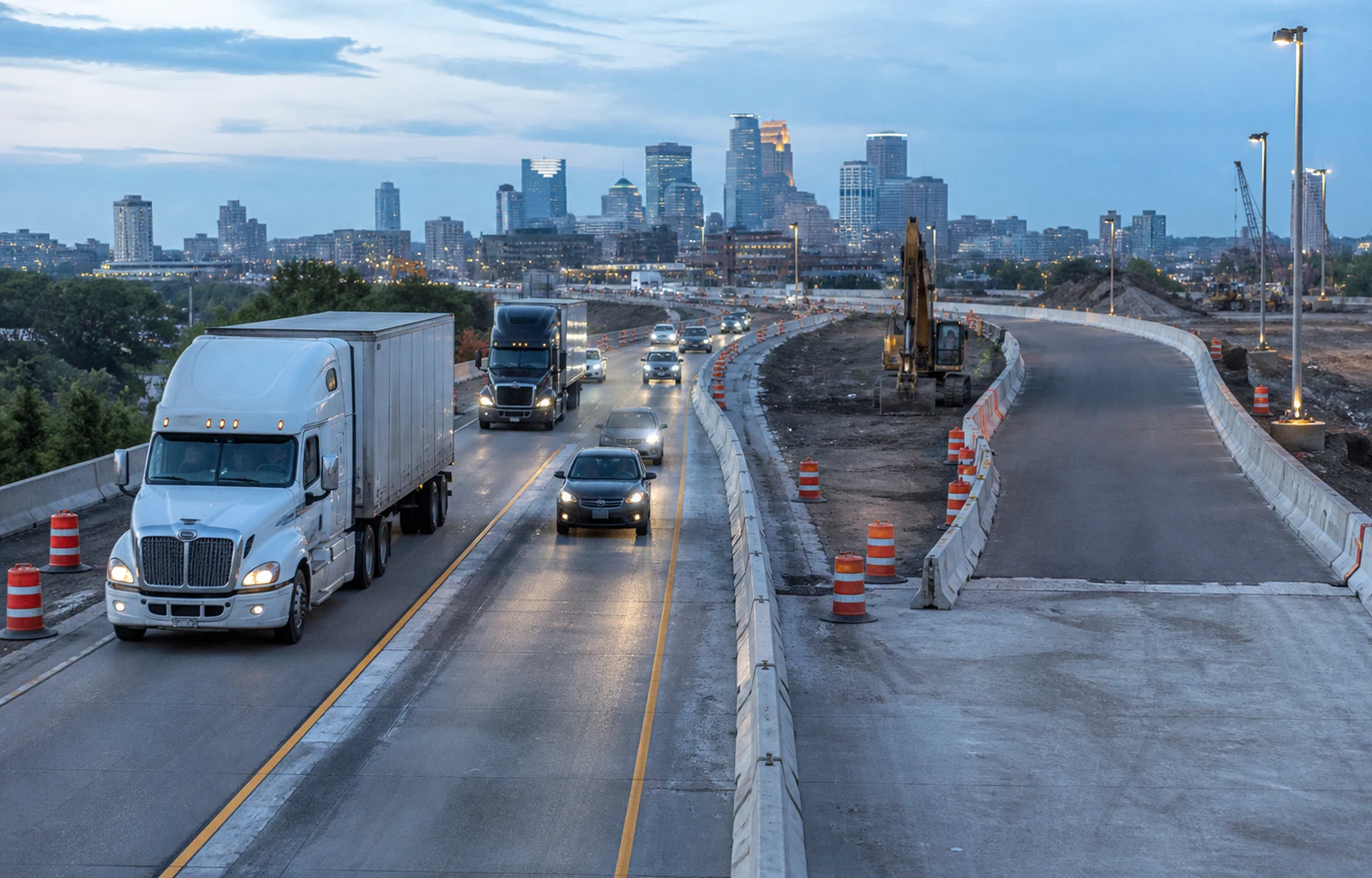
MnDOT's current I-394 and I-94 project page says eastbound I-394 is reduced to two lanes between Louisiana Avenue and downtown Minneapolis through November. Traffic is shifted into the E-ZPass lanes, and the temporary pattern removes the usual E-ZPass toll, carpool, and transit-lane operation.
That sounds like a lane-count notice, but a truck route feels the change earlier. The driver has to settle into the shifted roadway, watch for narrower decision windows, and arrive at the downtown end ready for another constraint: eastbound I-394 is reduced to one lane near the 12th Street exit.
The interchange plan matters just as much as the through lanes. MnDOT lists the eastbound I-394 ramp to westbound I-94 as closed through November. The agency's posted detour uses Highway 169 to I-694, turning a familiar downtown connection into a much larger highway move.
Industry sponsor Fewer handoffs. Better visibility. Stronger operations.
See how it works ↗
Fewer handoffs. Better visibility. Stronger operations.
See how it works ↗
Several local access choices are also unavailable. Ramps between I-394 and Penn Avenue are closed, Cedar Lake Road cannot enter eastbound I-394, and Xenia Avenue or Park Place Boulevard traffic must first go west to General Mills Boulevard before returning east.
Dispatch should therefore brief the exact interchange movement, not simply note that I-394 is under construction. The route note needs the chosen entrance, the intended downtown exit or I-94 connection, and the official recovery path if the truck reaches a closed ramp.
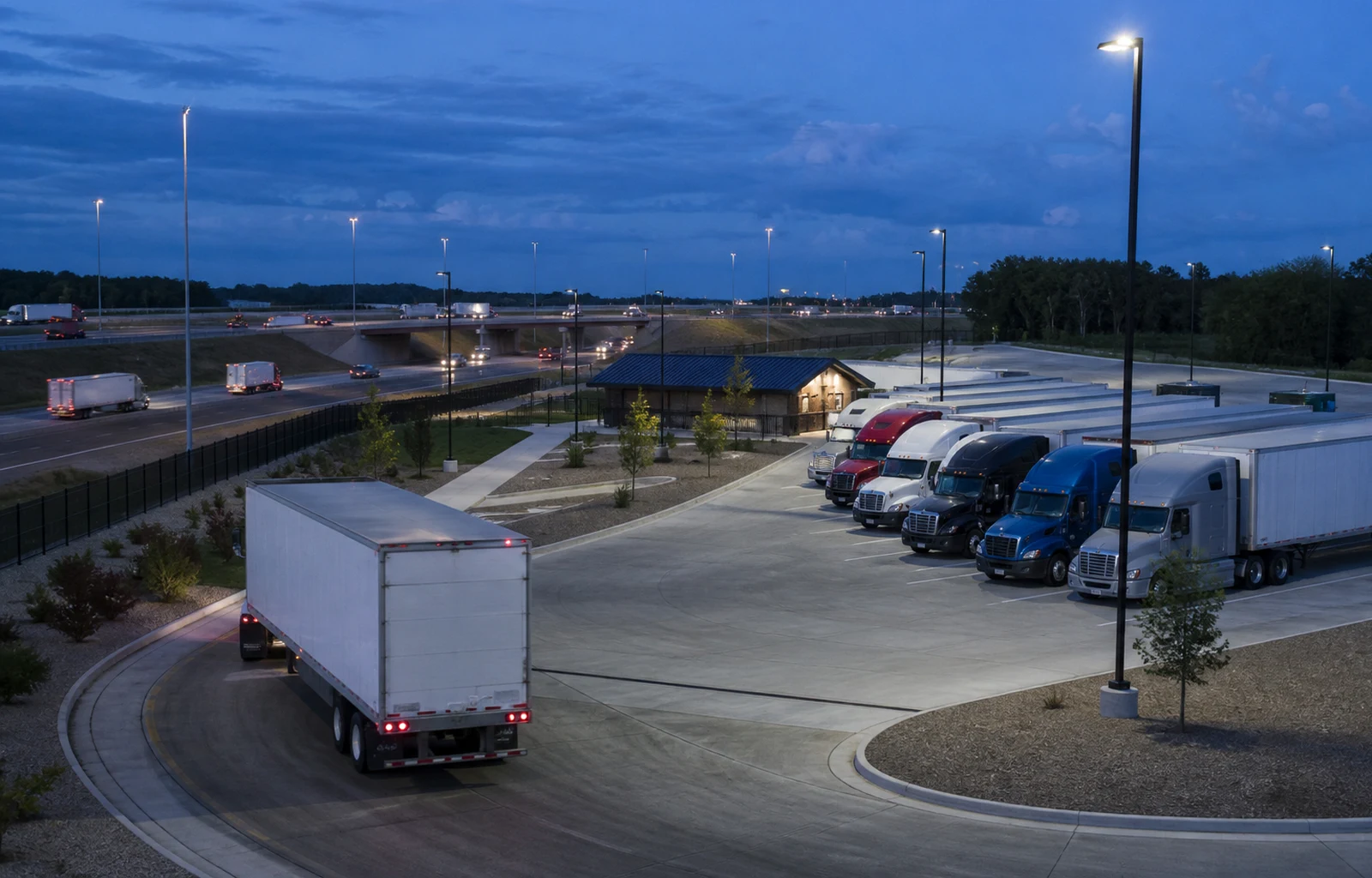
An improvised local shortcut is not the safe default for a commercial vehicle. Before substituting city streets, verify current restrictions, clearances, turns, delivery access, and any permit-route requirements that apply to the equipment. MnDOT directs travelers to 511 Minnesota for the latest traffic impacts because project-page details can change overnight or with weather.
The corridor also has overlapping work around St. Louis Park and nearby west-metro routes. A backup that merely shifts the truck onto another active project may trade one predictable delay for a less familiar one. Compare the full path before departure rather than choosing an alternate at the first queue.
Appointment math should include the recovery route, not just average congestion. If the trip depends on the closed eastbound I-394-to-westbound I-94 movement, calculate the Highway 169 and I-694 detour in the dispatched miles and clock. If the customer can accept a different approach, confirm that approach before the truck enters the two-lane section.
A useful driver brief can stay short: two eastbound lanes in the former E-ZPass roadway, the one-lane pinch near 12th Street, the selected ramp sequence, one verified alternate, and the next safe place to stop and recheck 511. That is enough to turn a construction headline into an operating plan.
After the delivery, record where time was actually lost. Separate the lane shift, ramp detour, customer approach, and ordinary traffic. The distinction will make the next Minneapolis route more accurate while the pattern remains in place through November.
Route check
- Brief the exact I-394 entrance, exit, and interchange movement before departure.
- Put the Highway 169 and I-694 detour into dispatched miles when the westbound I-94 ramp is needed.
- Recheck 511 Minnesota before entering the work zone and before choosing a local alternate.