
Nevada is planning parking data before pouring every space
A draft freight investment plan identifies truck-parking availability systems on I-80 and I-15. The promise is earlier information, not a substitute for capacity.
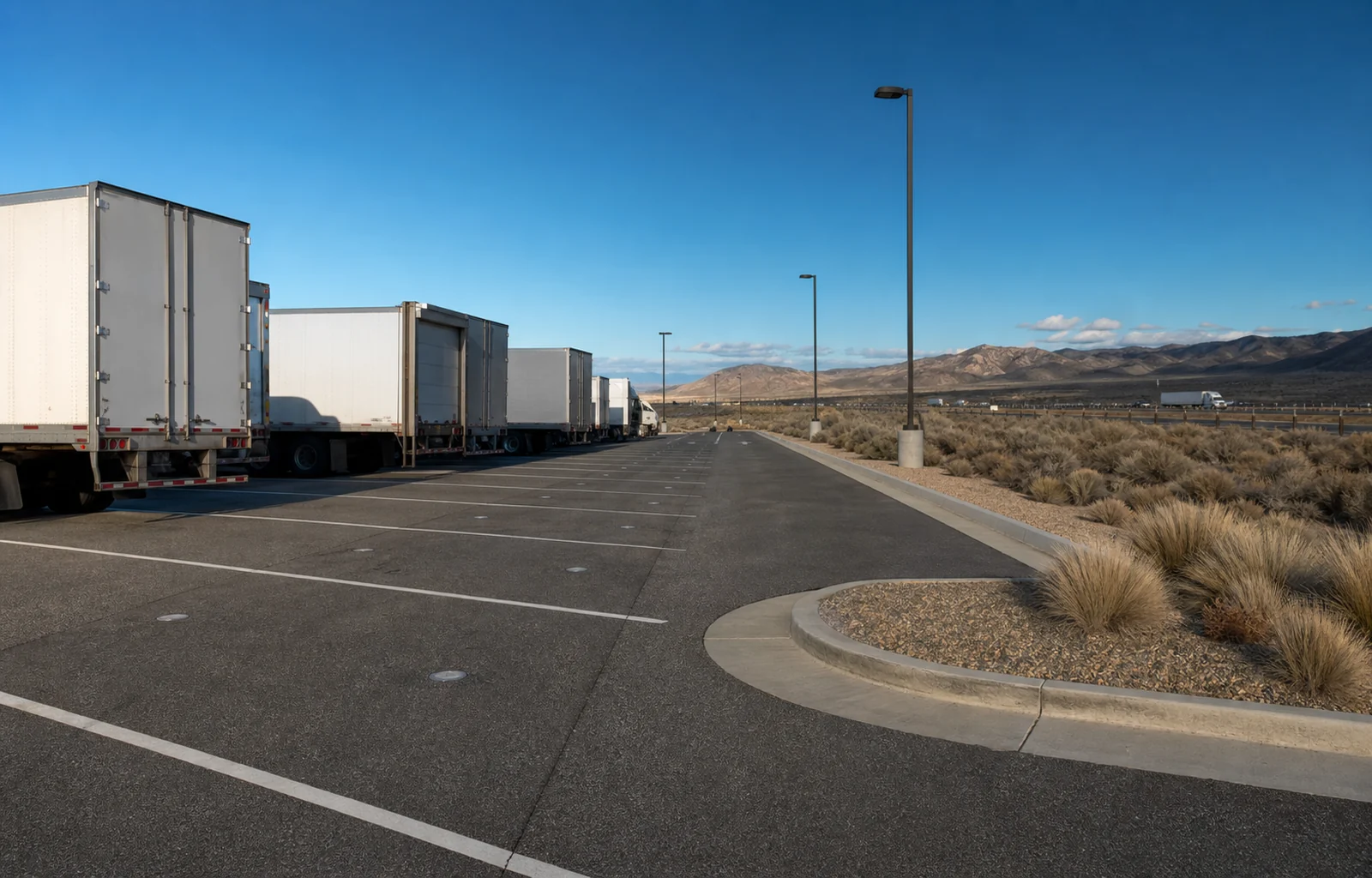
Nevada's 2026 freight program material identifies truck-parking availability systems as planned investments on two of the state's most important long-haul corridors. The draft lists five locations along I-80 and six along I-15, with funding shown in future federal fiscal years.
The dates matter: these are planned investments, not a promise that live space counts are available at every listed site today. Drivers and dispatchers should continue to verify current services and parking information before relying on a location.
The operating value of an availability system is time. If a driver learns that the preferred lot is full while there is still enough clock and distance to choose a safe backup, the information changes the trip. If it arrives at the ramp, it is mostly an explanation of the problem.
Nevada's geography makes the distinction visible. Long distances, mountain weather, emergency closures, and concentrated demand near major corridors can turn a nominal parking location into an essential recovery point. Information and physical capacity have to be planned together.
A fleet should treat availability as a signal rather than a reservation unless the system explicitly provides one. Counts can change between the last update and arrival. The route plan still needs a second option and a clear point where the driver stops chasing the first choice.
Industry sponsor From load to settlement, keep it connected.
Follow the workflow ↗
From load to settlement, keep it connected.
Follow the workflow ↗
For agencies, reliability will matter more than a polished display. Drivers need to know how current the count is, whether temporary or emergency spaces are included, and what happens when sensors or communications fail.
The strongest outcome is not simply a smarter parking lot. It is a corridor where a driver can see the problem early, choose safely, and avoid spending the final legal minutes searching in the dark.
Route check
- Treat planned TPAS locations as future infrastructure until verified live.
- Use availability as a signal, not an assumed reservation.
- Keep a second parking option on long Nevada corridors.