
Read the coolant level without opening a hot system
A manufacturer’s hot-check instruction is not permission to loosen a hot cap. Separate the level reading, the cool-down and the repair decision before the next trip.
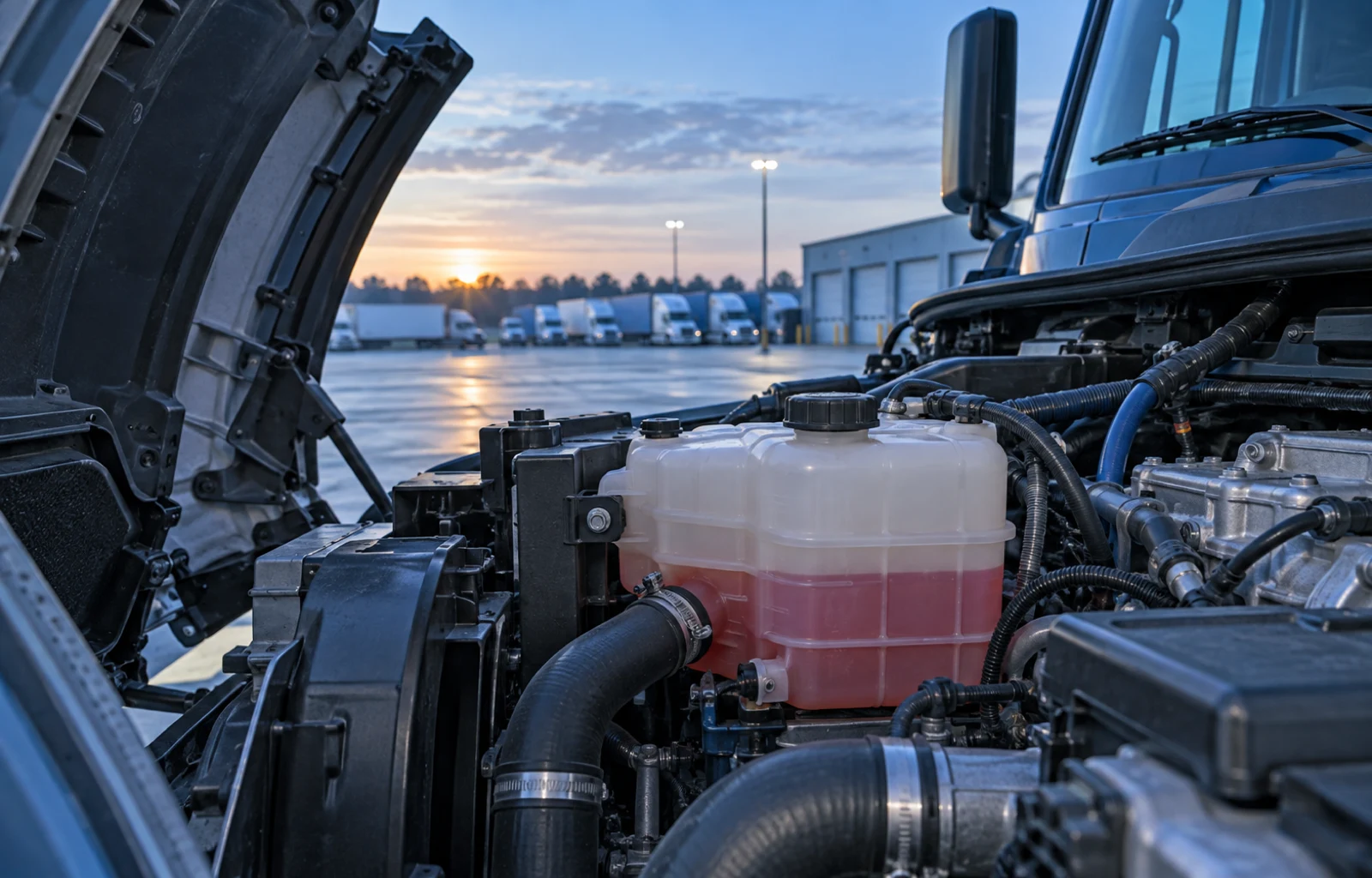
A coolant check can start with a look and turn dangerous at the cap. For a truck stopping between deliveries, the useful distinction is between reading the level and opening the system to add fluid. They are separate actions, and a procedure that calls for observing warm coolant does not automatically permit opening a warm tank. This vehicle-care resource examines existing manufacturer instructions and federal preparation advice verified October 22. It reports no new defect, recall or weather event. The question matters on trips nationwide: how can a driver identify a cooling-system concern without turning a routine stop into a hot-fluid exposure?
Detroit’s Gen 5 operator manual provides a concrete example under its coolant hot-check instructions for the DD15. The procedure calls for checking the surge-tank level after coolant reaches 50 degrees Celsius, or 122 degrees Fahrenheit, and identifies the range between the tank’s low and full marks as correctly filled. Its next step is crucial: stop the engine and let it cool before adding approved coolant if needed. It also warns that overfilling can push coolant through the overflow. These are instructions for the specified engine application, not a universal temperature target or a roadside procedure for every truck. Use the manual for the actual vehicle and engine.
The cap carries its own warning. Western Star’s 47X, 48X and 49X maintenance manual says the engine and cooling system must be completely cool before the surge-tank cap is loosened or removed. Pressure released too soon can discharge scalding coolant. That maintenance section also distinguishes the filler cap from a separate pressure-relief cap on the illustrated tank; it describes testing the latter with equipment and selecting a correctly rated replacement. MilesNews practical advice is to leave cap testing and replacement to the appropriate maintenance process. A cap that fits the opening is not proof that its pressure rating is right.
Fluid selection is another decision, even after safe access has been established. NHTSA’s vehicle-preparation guidance recommends adequate coolant meeting the manufacturer’s specifications and directs owners to the vehicle manual. It also recommends checking for leaks, testing coolant and replacing old coolant as needed. Although presented on its summer-driving page, those are equipment checks a driver can discuss with maintenance before an autumn trip as well. MilesNews advice is to identify the specified product before any authorized top-up. A bottle’s appearance, the fluid’s color or another driver’s spare supply should not replace that specification check.
A useful report separates what was observed from what is merely suspected. MilesNews recommends noting the unit, the warning displayed, when it appeared, the level visible under the prescribed checking conditions, and any leakage seen from a safe position. Keep clear of hot surfaces and moving components, and follow the vehicle’s shutdown and access instructions. Do not invent a universal wait time or diagnose a leak from one reading. The Gen 5 example shows why checking conditions belong in the report: a bare statement that the tank looked low omits part of the observation maintenance needs.
Industry sponsor Built for carriers that want one operational view.
Meet Pro FleetSync ↗
For dispatchers, families waiting for a driver and businesses expecting a delivery, the practical implication is time for a decision before the next miles begin. MilesNews recommends resolving an unexplained warning, loss of fluid or uncertain specification with maintenance rather than treating a refill as proof of repair. The driver’s contribution is a clear observation and safe access boundaries; the repair process determines the cause and return to service. Reading a level can be useful information. Opening a hot system to obtain it is an avoidable escalation.
Route check
- Read the actual engine and vehicle procedure before checking coolant.
- A warm level check does not authorize loosening a hot pressure cap.
- Report checking conditions and symptoms; a refill alone does not establish a repair.