
Road debris prevention starts beyond the cargo
A national study points to detached vehicle parts as well as lost loads. The useful road-level response combines prevention with a location report that keeps people out of traffic.
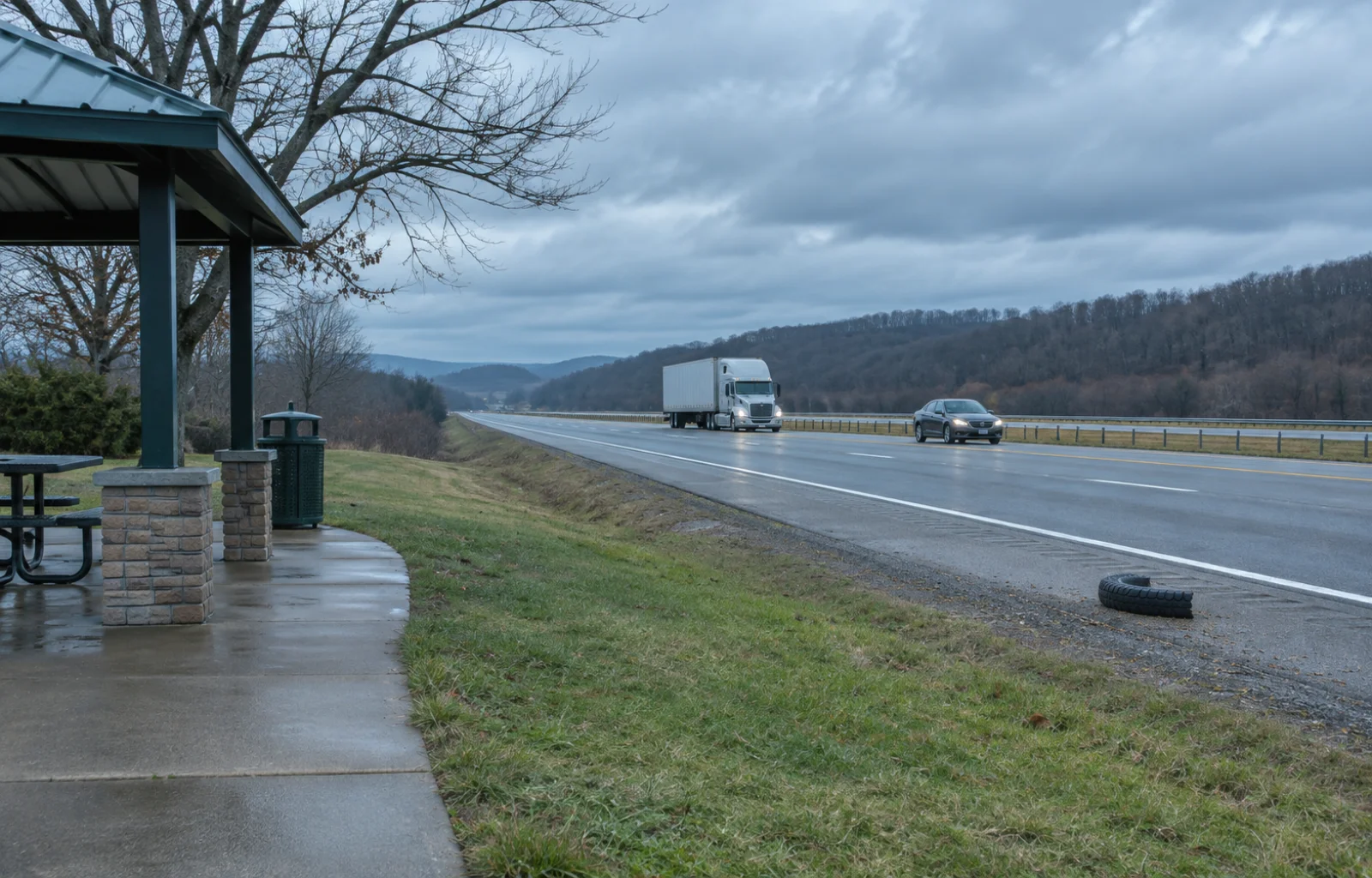
A piece of tire tread beside the lane and a box bouncing out of a pickup create a shared-road problem through different failures. One calls attention to vehicle condition; the other to what was loaded and restrained. Both can interrupt a delivery run or a family trip, and both can expose someone else to danger during removal. This resource checks existing research and agency guidance on November 5. It asks what drivers and businesses can do before debris reaches the highway, and what information is useful once an obstruction is already there. It is not a report of a new crash or a newly announced rule.
AAA Foundation for Traffic Safety’s November 2025 research estimated approximately 53,000 debris-related crashes annually in the United States during 2018–2023. Detached vehicle parts were the most common debris source identified, alongside cargo and natural material. The national estimate combined a detailed review of 901 Michigan police reports with federal crash data; it is an estimate, not a direct count of every debris incident. Crashes involving attempts to avoid debris tended to be more severe than those involving contact with it. These findings explain why the issue reaches beyond load straps, without prescribing a universal emergency maneuver.
Before departure, NHTSA asks drivers to consider whether anything could fall or blow out, whether the load is restrained on its sides and top, and what would happen during hard braking or a bump. Its guidance calls for large items to be attached directly to the vehicle or trailer, appropriate restraints, a sturdy cover where needed, and a second check. For a household moving furniture or a business carrying tools, MilesNews’s practical interpretation is to test the whole arrangement rather than count the visible straps. A closed tailgate does not answer whether an object can escape above it.
The Texas Department of Insurance adds a condition check for the restraint equipment: inspect straps, chains and attachment points for damage before a trip and replace damaged gear. It also advises tightly fastening covers over small loose material and monitoring loads during travel. This general advice does not determine the devices or capacity required for a particular commercial shipment. MilesNews recommends keeping commodity-specific instructions with the loading job so the person checking the vehicle knows what an acceptable arrangement looks like. A plan that depends on finding an extra strap at the highway entrance is unfinished preparation.
Vehicle condition belongs in the same conversation. Arizona DOT advises checking that the towing vehicle and trailer are roadworthy and that the vehicle is rated for the load. MilesNews’s inference from that guidance and the research is to give defects and loose equipment a clear route to correction before departure, alongside the cargo check. A delivery business can make that handoff concrete: identify the vehicle, describe the concern, and establish who will resolve it before release. Do not assume that cargo restraint also verifies the tires, body hardware or trailer condition.
Industry sponsor From load to settlement, keep it connected.
Follow the workflow ↗
Once large debris is in the highway, the task changes from prevention to reporting. Arizona DOT treats a large obstruction in the highway as an emergency and directs people to call 911; Texas advises staying clear and notifying authorities. MilesNews recommends having a passenger make the report or stopping somewhere safe before using a phone. Give the road name, direction, nearest exit or mile marker, and the lane or shoulder involved if those details can be observed safely. Describe what you actually saw, and avoid returning on foot to confirm an uncertain detail. Leave removal and traffic protection to responders.
The useful distinction for everyone behind the vehicle is between stopping a hazard from leaving and helping responders find one that already has. Businesses can review cargo restraint and defect correction together; motorists can apply the same departure questions to a small trailer or a weekend furniture haul. After an obstruction appears, a clear report is more valuable than an improvised recovery attempt in moving traffic. No national statistic tells a driver which instantaneous maneuver is safe in a particular lane. Preparation, space to observe the road, and a safe reporting handoff remain separate parts of the trip.
Route check
- Check vehicle condition as well as cargo restraint before departure.
- Secure and inspect the full load, including loose material and covers.
- Report dangerous highway debris from safety; leave traffic control and removal to responders.