
The automated corridor still has to work as one road
USDOT's new automated-vehicle strategy reaches freight, passenger traffic and state lines. Its practical road test is whether new vehicles can share today's corridor before digital upgrades add anything.
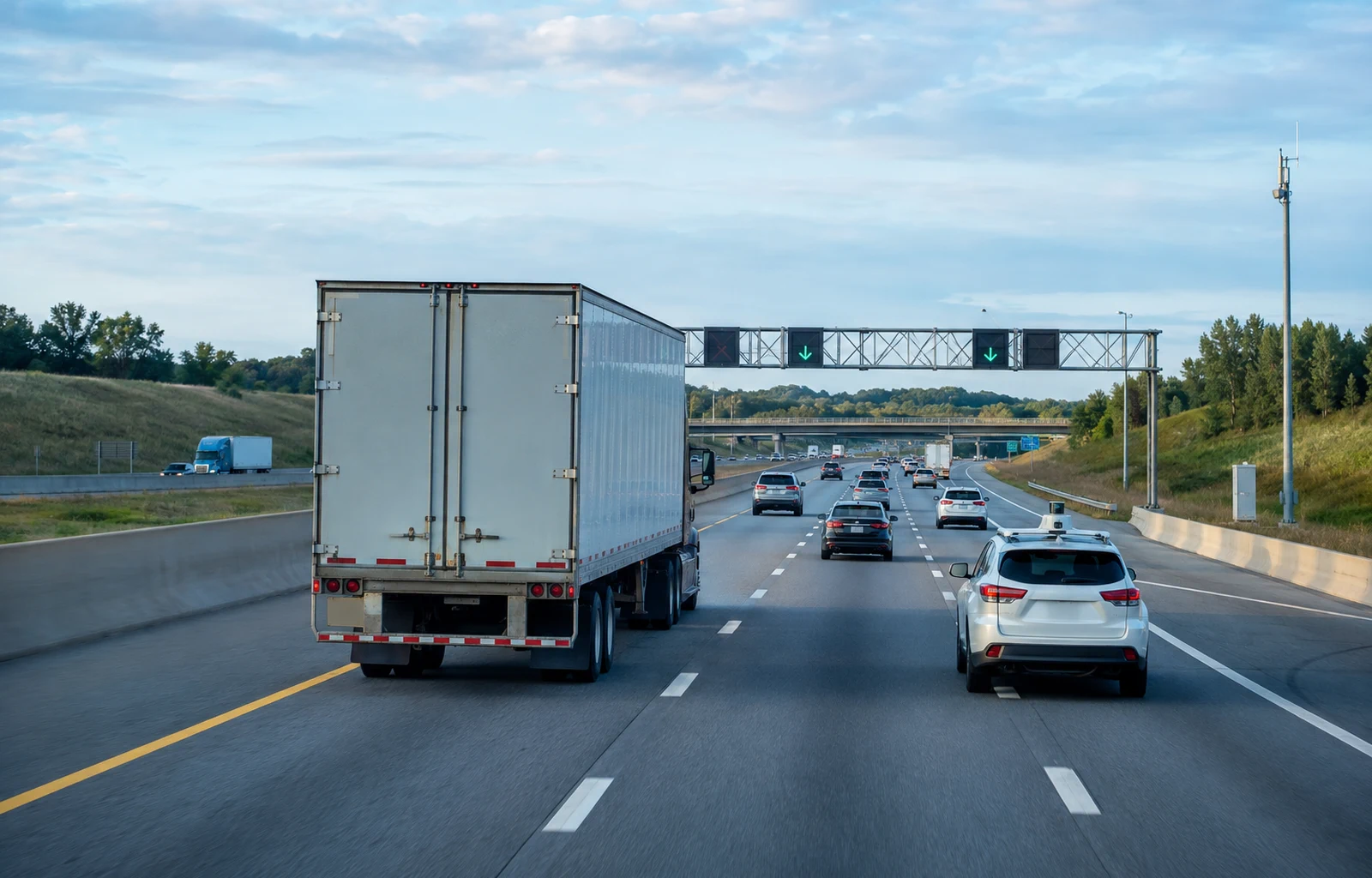
The federal automated-vehicle plan now has a national road map, but it does not turn every highway into a special technology corridor overnight. The U.S. Department of Transportation released its Automated Vehicles National Strategy on September 3 for fiscal years 2026 through 2030. The document covers passenger and freight uses and notes that trucks equipped with automated driving systems already carry commercial cargo on some interstates.
The most immediate public fact is coexistence. USDOT expects conventional manually driven vehicles to remain on public roads as automated adoption grows. It also says automated vehicles must comply with existing federal standards unless an exemption is granted, while state and local governments continue enforcing traffic laws. The new strategy is a policy direction, not a blanket exemption, a deployment map or a new rule of the road for everyone driving today.
USDOT draws an important boundary around the pavement itself. The strategy says an automated vehicle's safety-critical driving cannot depend on information or smart infrastructure supplied by someone else. It also says transportation agencies are not expected to make automated-vehicle-specific physical or digital investments as a condition of deployment in the foreseeable future. In plain road terms, the vehicle has to operate safely with the infrastructure that is actually available.
Digital improvements still matter, just in a supporting role. One of the strategy's four goals is to facilitate interoperable corridors by bringing federal agencies, states and industry together around compatible data structures and exchange protocols. USDOT points to real-time information for events such as emergency closures and temporary road realignments. That is a plan to reduce state-line seams in road data, not evidence that a single national feed is already complete.
Industry sponsor One view for dispatch, drivers, and the back office.
Explore the TMS ↗
One view for dispatch, drivers, and the back office.
Explore the TMS ↗
The same distinction applies to signs, signals and markings. The Federal Highway Administration intends to use ongoing research when considering revisions for a future edition of the Manual on Uniform Traffic Control Devices. The strategy does not announce that today's posted controls have been replaced or that a road user should interpret a sensor-equipped vehicle differently. Until a responsible agency changes a control, the visible lane arrow, signal, speed limit and closure remain the road instruction.
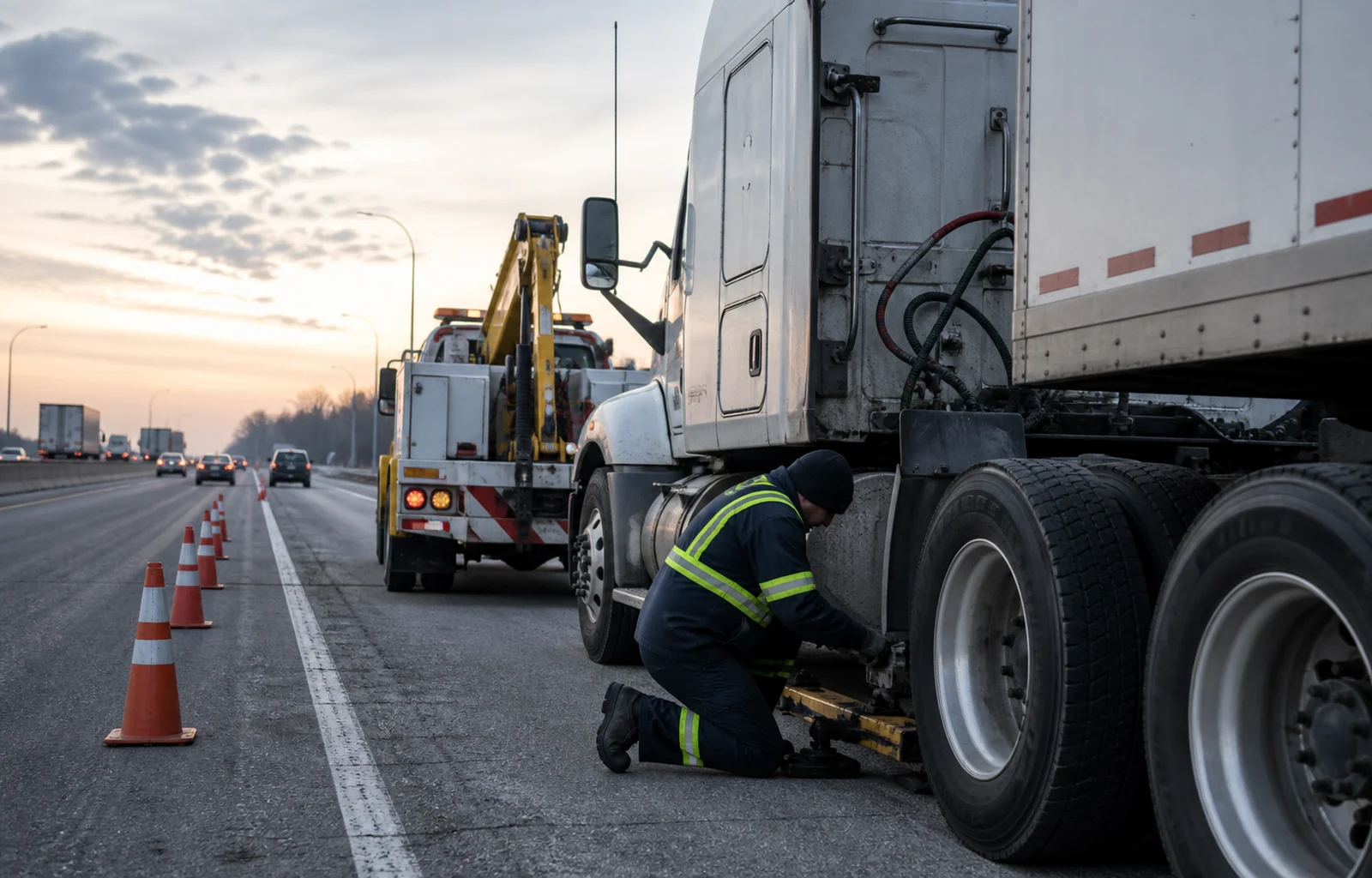
Commercial vehicles have a separate regulatory layer inside the strategy. USDOT says the Federal Motor Carrier Safety Administration is developing operational safety regulations for trucks and buses equipped with automated driving systems. If finalized, those rules would update parts of the federal motor-carrier regulations for safe introduction and oversight. The words if finalized matter: a rulemaking in progress is not a current permission slip, and the strategy says FMCSA continues carrier oversight, compliance work, maintenance review and inspections.
Vehicle-performance standards are also still moving through process. The National Highway Traffic Safety Administration is developing an advance proposal for objective automated-driving competency standards while continuing crash reporting, defect investigations, recalls and other enforcement. Older federal automation publications remain useful only where they do not conflict with the new strategy, which USDOT says now supplies its current overall direction. That makes the September document a framework for upcoming work, not a certificate that every automated system performs the same way.
For people sharing the road, the defensible response is deliberately ordinary. Follow the posted control, leave normal space, and treat an automated vehicle as another road user whose next movement cannot be assumed from visible hardware. It would be an editorial inference—not a finding in the strategy—to assume a roof sensor can see every temporary condition or that a digital corridor can prevent every abrupt stop. The federal plan itself emphasizes a mixed system in which automated and human-driven vehicles use the same public road.
For freight operations, the sharper question is what survives a state line. A route may cross different licensing systems, traffic-law enforcement practices, closure feeds and temporary-control formats while the truck remains on one trip. USDOT's interoperability goal is aimed at that institutional seam. Until common data exchanges are actually deployed, current state traveler-information systems and posted controls remain the practical sources for a specific route and time.
A national strategy clears the broad-audience test because it reaches roads and commercial traffic across the country. Its wider significance is not a promise of driverless lanes tomorrow. It is a test of whether vehicles, regulators and road agencies can make new automation fit one mixed-traffic system: safe on the road that exists, accountable under current authority and more consistent when a corridor crosses jurisdictions. The automated corridor still has to work as one road before it can claim to be a smarter one.
Route check
- Treat the strategy as federal direction for 2026–2030, not as a new nationwide traffic rule or deployment schedule.
- Automated vehicles must operate safely without depending on special smart-road infrastructure for safety-critical driving.
- Use posted controls and current state traveler information; cross-state digital interoperability remains a goal in progress.