
The Labor Day road watch has already started
NHTSA's nationwide impaired-driving campaign is active through September 7. For overnight drivers, the practical change begins before the holiday traffic does: more enforcement, more shoulder activity and one more reason to leave room in the trip plan.
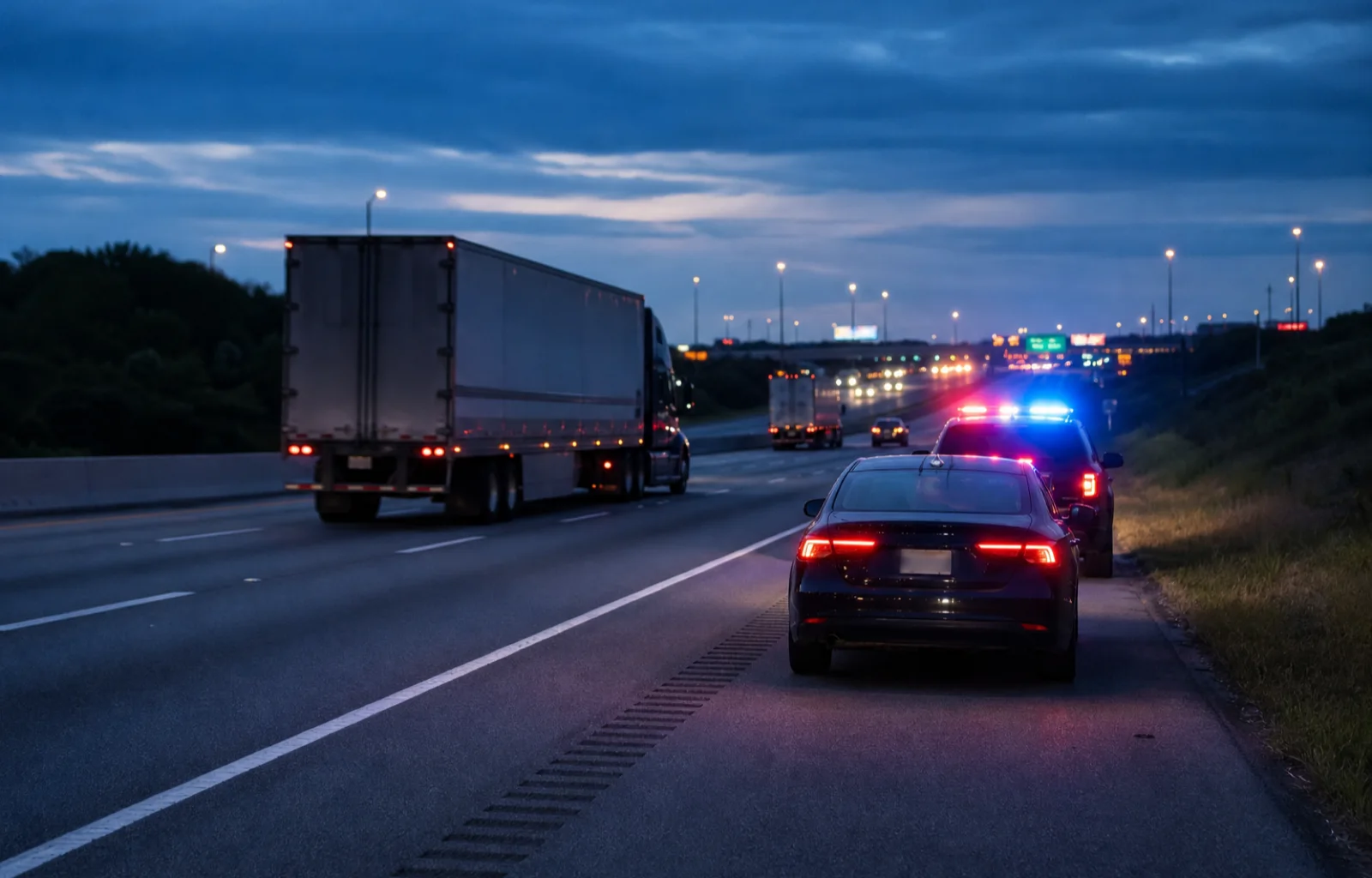
The Labor Day road-safety push is already on the highway. The National Highway Traffic Safety Administration launched its 2026 Drive Sober or Get Pulled Over campaign on August 18, and the national high-visibility enforcement period runs from August 19 through September 7. That timing matters because the road watch begins more than two weeks before the holiday itself.
This is not a closure notice or a single-state checkpoint map. NHTSA describes a nationwide campaign supported by increased law enforcement, while individual agencies decide how and where they operate. The road-level result can vary by jurisdiction: drivers may see more marked patrol vehicles, traffic stops and emergency lighting, but NHTSA does not publish one route-by-route enforcement schedule.
The campaign is tied to a measurable holiday risk. NHTSA reports that 505 people died in traffic crashes during the 2024 Labor Day holiday period. Of those deaths, 170, or 34 percent, occurred in crashes involving at least one driver with a blood alcohol concentration of .08 or higher. The number describes people killed, not citations issued or stops made.
Night driving deserves particular attention. NHTSA says the rate of alcohol impairment among drivers involved in fatal crashes in 2023 was three times higher at night than during the day. For a professional driver whose working day may begin after dinner or run through the early morning, that national pattern overlaps the ordinary freight clock rather than only the holiday-weekend getaway.
Industry sponsor Keep every mile and every document connected.
Take a closer look ↗
Keep every mile and every document connected.
Take a closer look ↗
The practical response is not to guess where enforcement will be. It is to plan for the road around it. A stopped vehicle and patrol car on the shoulder can compress attention, change traffic speed and prompt late lane changes by surrounding motorists. Allowing more following distance and creating space when it is safe and lawful are sensible operating choices; any specific delay from enforcement activity is an editorial inference, not an NHTSA forecast.
Dispatchers and drivers can also keep the campaign in the pretrip brief without turning it into a warning about one corridor. Note the August 19-to-September 7 window, expect nighttime conditions to demand extra scanning and preserve enough schedule margin that a cluster of flashing lights does not become a rushed decision. State traffic and 511 services remain the place to check actual incidents and congestion close to departure.
For everyone else sharing the road, the central instruction comes before the ignition. NHTSA urges people who have used alcohol or another impairing substance to arrange a sober ride instead of driving. Passengers, hosts and families can make that plan early, before a celebration becomes a transportation problem and before a professional driver meets the consequences miles later.
The national campaign lasts through Labor Day, but its safest route choice is immediate and ordinary: do not drive impaired, do not assume another driver's behavior will be predictable, and give roadside activity room. The calendar may explain why enforcement is more visible. It does not change the basic job of bringing every lane, shoulder and decision into focus.
Route check
- Expect NHTSA's nationwide impaired-driving enforcement campaign to remain active through September 7.
- Build extra attention and following distance into overnight trips, when impaired-driving risk has historically been higher.
- Use state traffic and 511 services for actual incidents; NHTSA does not publish a route-by-route enforcement map.