
Unloading the trailer changes the wind-restriction check
A wind sign can apply differently after a delivery. This resource explains the weight to compare, the limits of that comparison and why a truck above the cutoff still needs a safety decision.
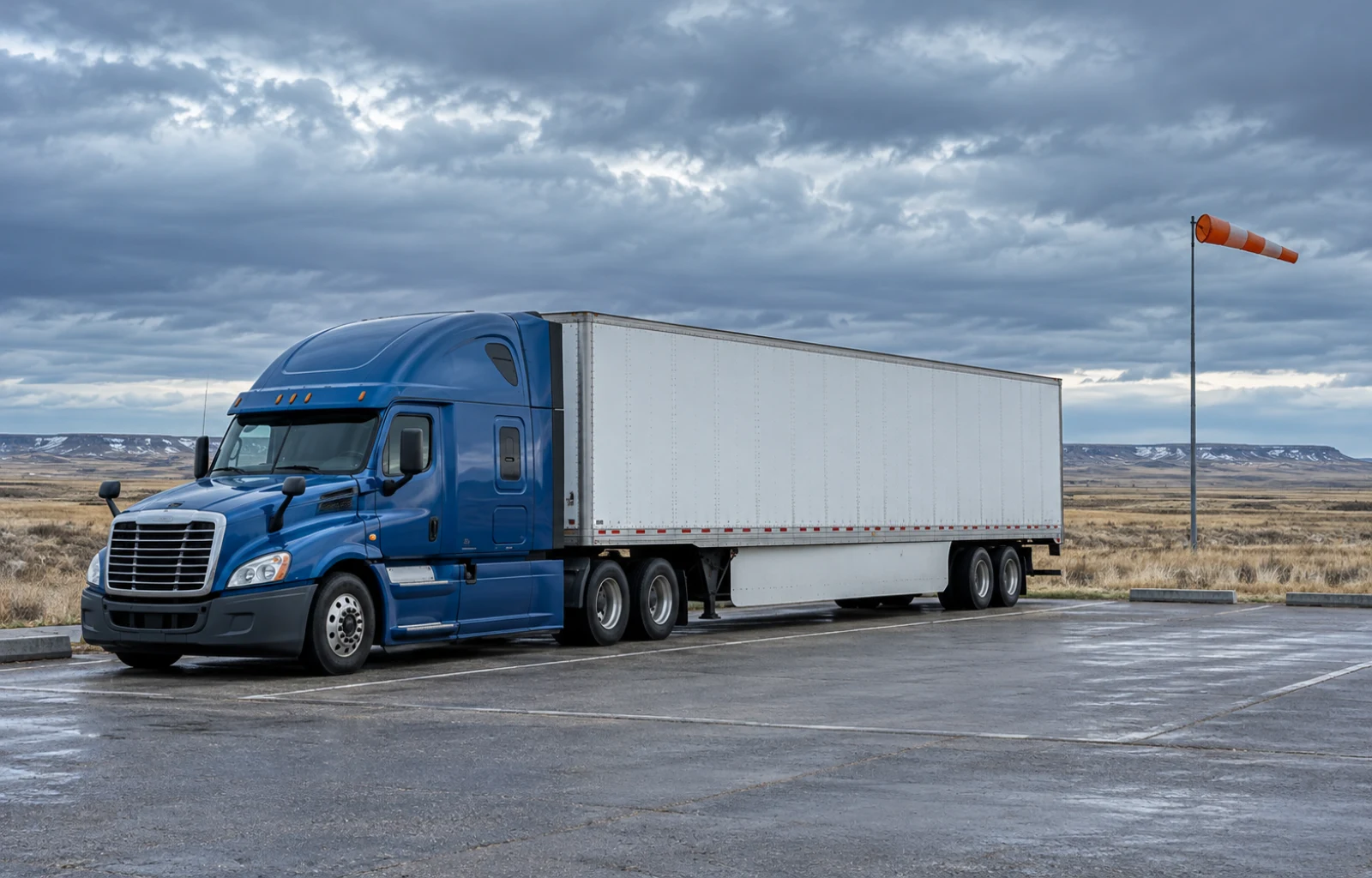
A truck can leave a delivery with the same trailer shape and much less weight behind it. That makes the return leg a different wind-planning problem, even if the road and destination are familiar. This practical resource, based on official guidance and research checked October 8, asks a specific question: when a highway wind restriction lists a vehicle weight, which weight should the driver compare? It reports no new storm or closure. The answer matters to deliveries across exposed corridors and to families traveling beside tall trailers: a successful outbound trip does not establish the conditions for coming home.
Wyoming provides a documented example. Its Department of Transportation says the weight in its wind-closure guidance is gross vehicle weight: the total truck and payload at that time, including people and the contents of tractor and trailer. Cargo weight alone is therefore an incomplete comparison. MilesNews analysis: an earlier loaded weight can also misdescribe the vehicle after unloading. Establish the current combination's weight through the carrier's reliable weighing and load-information process before comparing it with a posted restriction. This is an interpretation of Wyoming's guidance; other states' controls must be read on their own terms.
The sign also needs its full context. Wyoming's 511 definitions say weight-based closures depend on wind speed, roadway orientation and geometry, among other factors, and apply to a road segment. A partial closure can affect only some vehicles or one direction. Editorial advice: retain the actual wording, affected segment, direction and time of the road-agency update, rather than passing along a bare weight number. If the vehicle class or restriction is unclear, resolve that with the responsible highway authority before entering. A route showing as open for a passenger car does not answer the restriction question for a tall commercial trailer.
Being above a listed weight is not a guarantee. WYDOT's frequently asked questions warn that unpredictable wind and sensor locations can leave blow-over risk for vehicles near the cutoff; drivers above it are permitted to proceed but still need judgment. The agency recommends waiting in a safe rest area, parking area or town if wind makes control difficult, regardless of vehicle weight or shape. Its guidance identifies enclosed trailers with large vertical sides as particularly susceptible. MilesNews inference: do not turn a favorable weight comparison into pressure to continue, or treat the limit as a target for an improvised load change.
Industry sponsor Keep every mile and every document connected.
Take a closer look ↗
Keep every mile and every document connected.
Take a closer look ↗
Research helps explain why a universal gust number would be a poor substitute. A September 2024 Mountain-Plains Consortium study from Colorado State University modeled airflow around a simplified trailer section, rather than certifying complete trucks for particular trips. Its research brief says the aerodynamic behavior remained dependent on flow conditions in ways that challenge simplifying assumptions in earlier work. This is older research verified today, not a new truck test. Editorial interpretation: a number circulated between drivers cannot account for every vehicle and road situation. Neither this study nor an app's wind reading establishes a nationwide safe-to-drive threshold.
People in smaller vehicles have a role too. The National Weather Service advises drivers caught in strong winds to slow down, keep both hands on the wheel and maintain distance from trucks, buses and vehicles towing trailers; a strong gust can overturn a trailer. It also directs people toward sturdy shelter during a high-wind warning. MilesNews editorial advice: give a truck room rather than lingering alongside its trailer, and do not mistake another driver's progress for evidence that your vehicle can safely continue. Where weather, visibility or road controls change, the next decision should follow the actual conditions and official instructions.
A useful delivery handoff can be brief. As an editorial practice, record whether unloading changed the combination's weight, who will confirm the current restriction while the driver is parked, and which suitable stopping place is available before the exposed segment. Tell the receiver or customer when a hold changes the arrival estimate. Recheck the controlling road-agency notice before restarting; an older screenshot cannot establish that a restriction has ended. The transferable lesson is to compare the current vehicle with the current control, then leave room for the driver to stop when control becomes difficult. The cargo may be gone, but the trailer's broad side is still traveling through the wind.
Route check
- For Wyoming's weight-based wind guidance, compare the current total combination weight, including contents and people; cargo weight or an earlier loaded weight is incomplete.
- Read the vehicle class, segment, direction and current notice together. Apply each state's own restrictions.
- A weight above the posted cutoff does not guarantee control. Confirm a safe stopping option and recheck restrictions after a hold.