
Work-zone intelligence has to reach dispatch before the cab
FHWA's work-zone guidance treats freight travel information as an operating strategy. The information still fails if it arrives after the truck enters the taper.
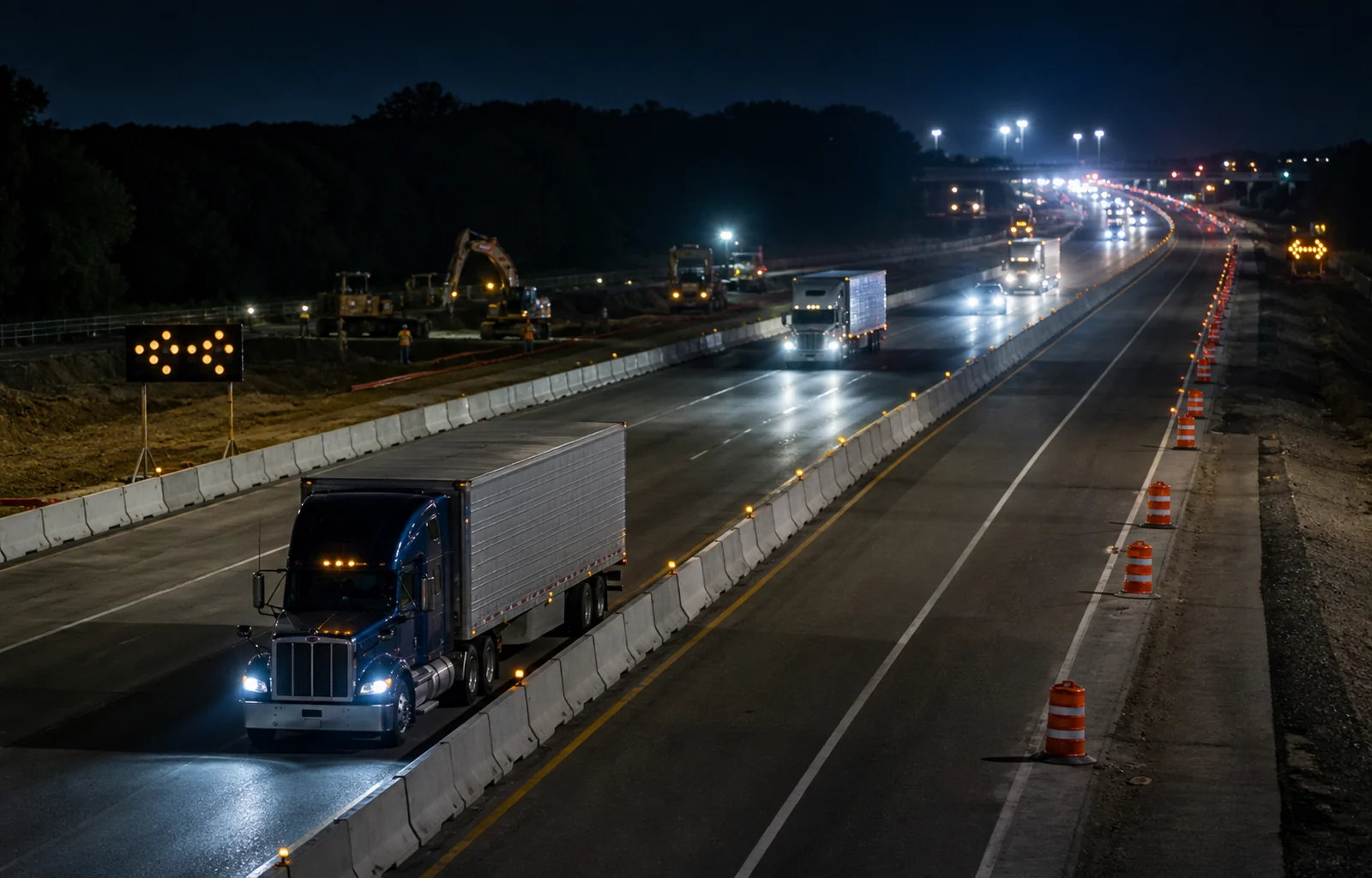
FHWA's work-zone transportation guidance identifies freight travel information as a specific management strategy when truck traffic is significant. Useful details include truck restrictions, incidents, planned closures, and other conditions that freight operators can act on before reaching the work zone.
The timing is as important as the content. A driver who learns about a closed ramp after entering a barrier-separated lane may have no safe way to recover. Dispatch needs the information early enough to change the route, appointment, or departure.
A practical work-zone brief should distinguish long-term configuration from tonight's activity. A lane shift that lasts for months and a fifteen-minute rolling closure affect the trip differently, even on the same corridor.
Industry sponsor Run the whole trip in one connected TMS.
See it in action ↗
Run the whole trip in one connected TMS.
See it in action ↗
State 511 systems, project pages, daily construction alerts, and customer instructions each answer different questions. Use the project page for the baseline, the current alert for today's change, and the customer for the final approach. Do not ask one source to do every job.
Truck-specific constraints deserve their own line. Reduced lane width, missing shoulders, ramp geometry, overwidth limits, and local detours can matter even when general traffic continues moving.
When the route passes through the zone at night, confirm where the driver can safely stop before and after it. Work-zone shoulders may be unavailable, and a planned parking location can be affected by the same construction.
The best work-zone information ends in a decision: proceed on the planned route, use the verified alternate, change the departure window, or hold. A folder full of alerts without a chosen action is not route intelligence.
Route check
- Separate the long-term traffic pattern from today's closure window.
- Call out truck-specific width, shoulder, ramp, and detour constraints.
- Turn alerts into one chosen route decision before departure.